Custom Fit
A scan or impression records the prepared tooth so the restoration can be made with accurate contours and contacts.
Port Dover Family Dentistry
Dental inlays and onlays in Port Dover restore selected damaged back teeth with a precisely fitted indirect restoration that preserves healthy tooth structure.
Let’s get you smiling
Tell us how we can help. Our team will follow up to confirm a time.
Dental inlays and onlays in Port Dover
An inlay or onlay is a custom restoration made outside the mouth and bonded into a prepared tooth. An inlay fits within the raised cusps of a back tooth, while an onlay also covers one or more weakened cusps.
This approach may be considered when damage is too extensive for a direct filling but enough healthy tooth remains that full crown coverage is not necessary. Suitability depends on the crack or decay, bite forces, moisture control and remaining tooth structure.
Preserve sound structure
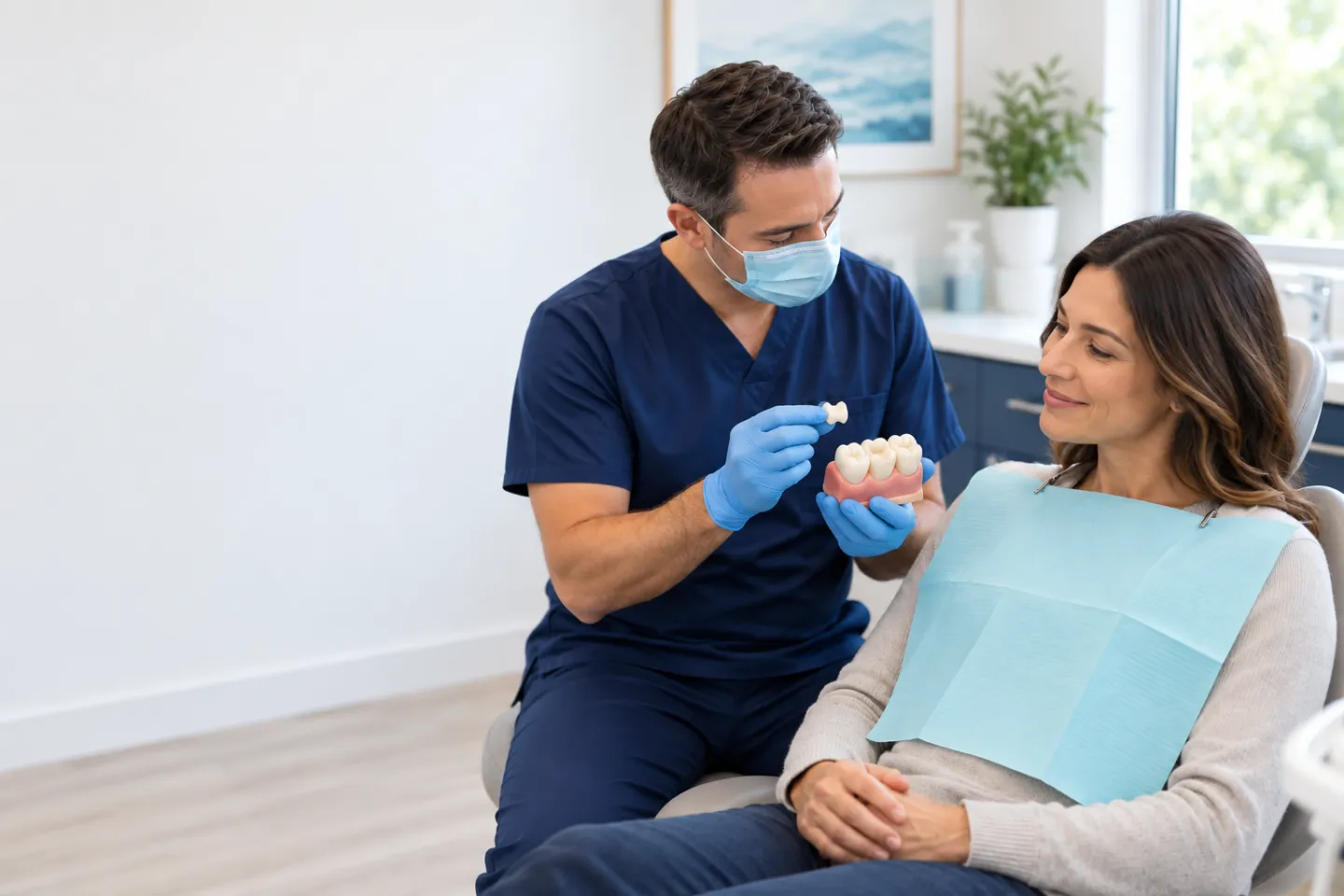
Inlays and onlays are designed to replace the damaged portion precisely while retaining healthy enamel and dentin wherever clinically appropriate.
Precision restorative care
The recommendation balances conservation with strength. The restoration must be large enough to protect weakened areas without removing sound tooth unnecessarily.
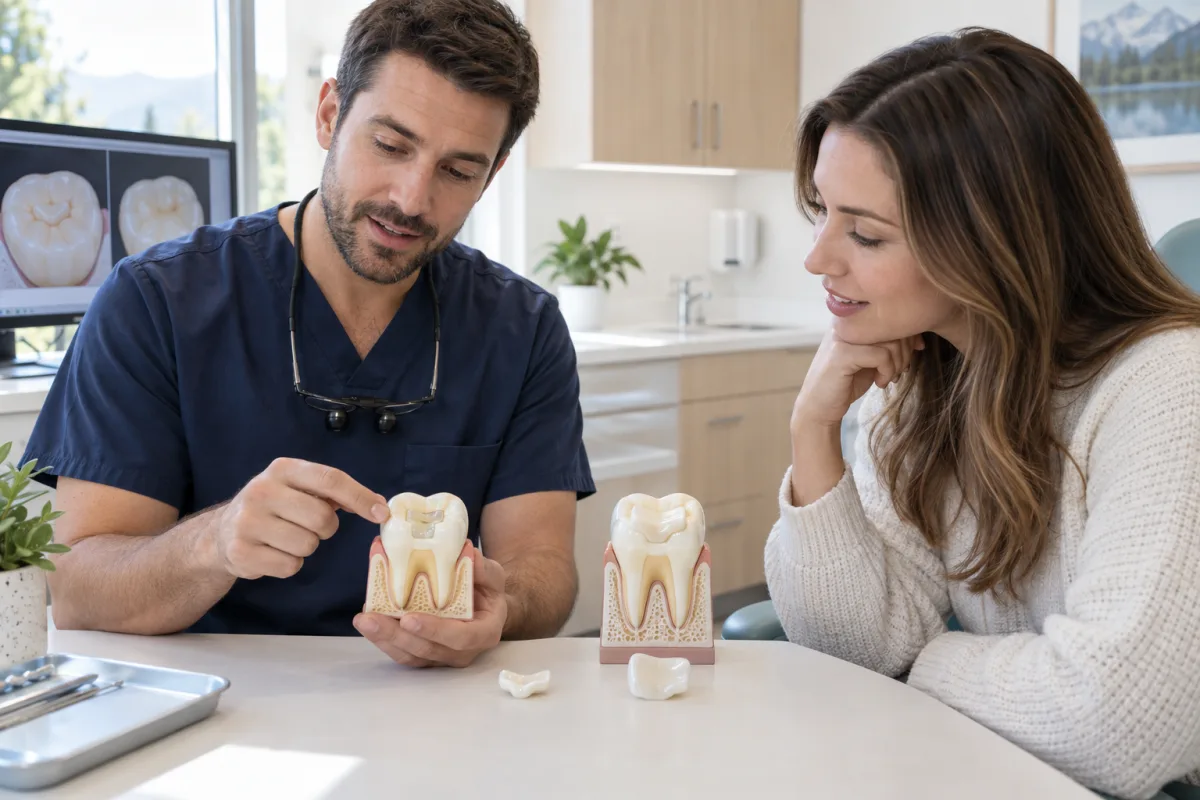
A scan or impression records the prepared tooth so the restoration can be made with accurate contours and contacts.
An onlay can cover a weakened cusp and help distribute chewing forces across the repaired tooth.
The preparation may retain more healthy tooth structure than a full crown when the clinical situation allows.
Ceramic, composite or metal options are selected according to appearance, strength, space, bite and patient priorities.
An inlay or onlay is not automatically better than a filling or crown. The most conservative predictable option depends on the individual tooth and how much stable structure remains.
Designed for your tooth
The workflow may take one or more appointments depending on the restoration material and where it is fabricated.
Decay, a failed restoration or unsupported structure is removed while preserving sound tooth. The preparation is shaped for the chosen restoration.
A digital scan or impression records the tooth and bite. A temporary may protect the tooth while the final restoration is made when more than one visit is needed.
The final inlay or onlay is tried in, bonded or cemented, finished and adjusted so the bite and contacts feel appropriate.
A precise digital record
A digital scan or conventional impression captures the preparation, neighbouring teeth and opposing bite. These records guide the restoration’s edges, chewing anatomy and contact with the next tooth.
Before final placement, we check that the inlay or onlay seats fully, floss passes appropriately and the bite feels balanced. Small adjustments and polishing help the restoration function like part of the tooth.
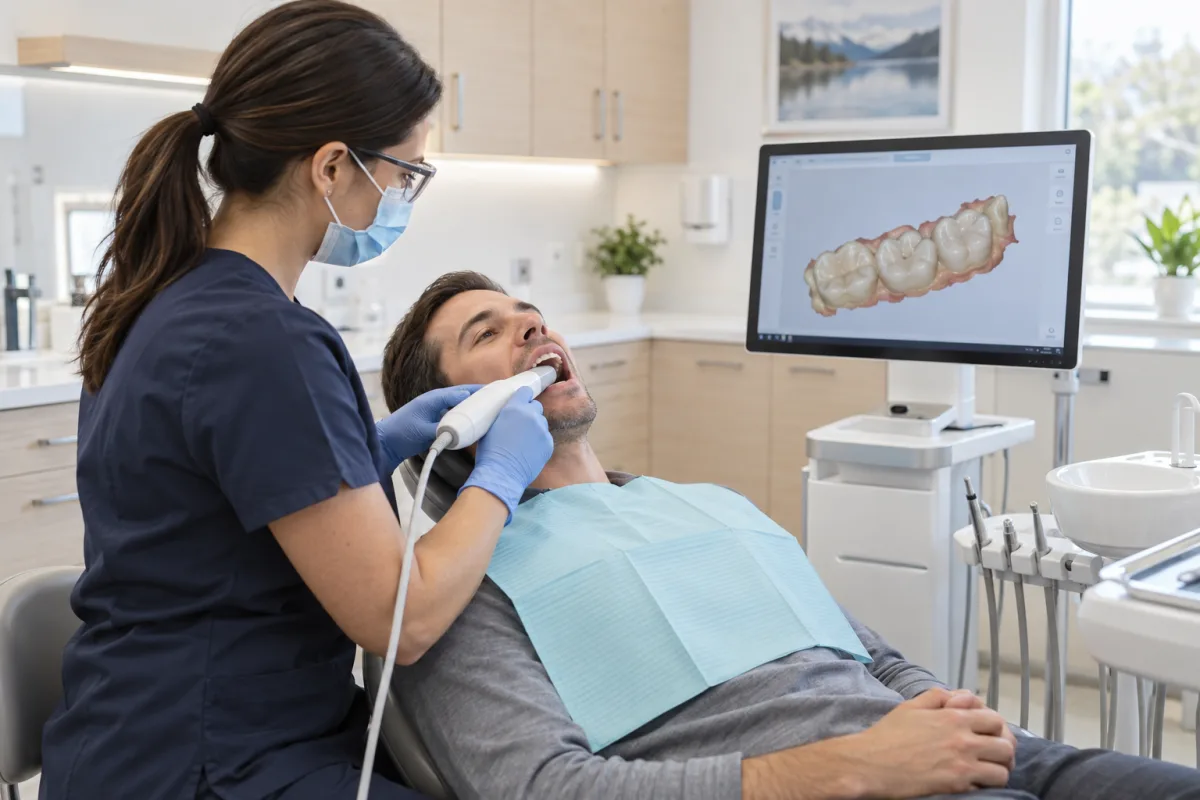
The restoration is designed to meet the prepared tooth closely and create a surface that can be cleaned.
The shape helps maintain contact with neighbouring teeth so food is less likely to pack between them.
The biting surface is checked against the opposing tooth and refined before treatment is complete.
Choosing the right restoration
We compare direct fillings, inlays, onlays and crowns according to the size and location of damage, the strength of each cusp and the forces placed on the tooth.
An inlay may restore a moderate area inside the raised cusps when those cusps remain well supported.
An onlay can extend over one or more vulnerable cusps to provide broader protection during chewing.
Replacing an extensive restoration may require a stronger custom-made option if the surrounding tooth has become thin or cracked.
A crown, root canal treatment or another plan may be more appropriate when damage is extensive or the pulp and root are involved.
Persistent pain, a deep crack, decay below the gumline or insufficient enamel for bonding can change the recommendation. The tooth must be examined before a restoration type is selected.
Protecting the restoration
The restoration cannot decay, but the supporting tooth can develop decay at its edges and the surrounding gums still need daily care.
Brush twice daily with fluoride toothpaste and clean between the restored tooth and its neighbours using floss or another recommended tool.
If a temporary restoration is used, avoid very hard or sticky foods on that side and contact us if it loosens or breaks.
Do not chew ice or use your teeth to open packages. A night guard may be discussed if clenching or grinding threatens the restoration.
Call if the tooth feels high, develops persistent pain or sensitivity, traps food, moves or chips. Early adjustment can prevent additional stress.
Conservative restorations
We can assess the damage and compare a filling, inlay, onlay, crown and other appropriate options.
Inlay and onlay questions
An inlay fits within the cusps of a back tooth. An onlay extends over one or more cusps to replace and protect a larger weakened area.
A direct filling is shaped in the tooth during the appointment. An inlay or onlay is fabricated to the recorded shape of the preparation and then bonded or cemented in place.
A crown covers most or all of the tooth above the gumline. An inlay or onlay replaces a selected portion and may preserve more healthy structure when full coverage is unnecessary.
Options may include ceramic, laboratory composite or metal. Appearance, bite force, available space, tooth position and clinical needs guide the choice.
Often, but not always. The workflow depends on the material and fabrication method. Your dentist will explain whether a temporary restoration and second visit are needed.
Longevity varies with the material, restoration size, bite forces, grinding, oral hygiene and the health of the supporting tooth. Regular examinations help monitor the margins and bite.
Recognized year after year
Best Dentists in Norfolk
Proudly recognized among Norfolk’s top-rated dental practices for six consecutive years.

2021 Winner

2022 Winner

2023 Winner

2024 Winner

2025 Winner

2026 Winner
Stories from our patients
Watch a patient’s experience and browse more five-star reviews from people who have visited our Port Dover dental clinic.
Patient video
A patient shares the welcoming atmosphere and positive experience they found at our Port Dover office.
Google reviews
Swipe or use the arrows
Read all reviewsOur community
Your next visit can start today
New patients and CDCP patients are welcome. Tell us how we can help and our Port Dover dental team will follow up with you.
Evening appointments Monday and Tuesday