
Patient video
Welcoming and Wonderful Practice
A patient shares the welcoming atmosphere and positive experience they found at our Port Dover office.
★★★★★

Port Dover Family Dentistry
Tired of a denture that slips? Implants can anchor it more firmly. Port Ryerse patients can find out about suitability, staging and care at our Port Dover office.
Let’s get you smiling
Tell us how we can help. Our team will follow up to confirm a time.
Caring for Port Ryerse patients at our Port Dover office
Every dental service for Port RyerseMore stability for dentures
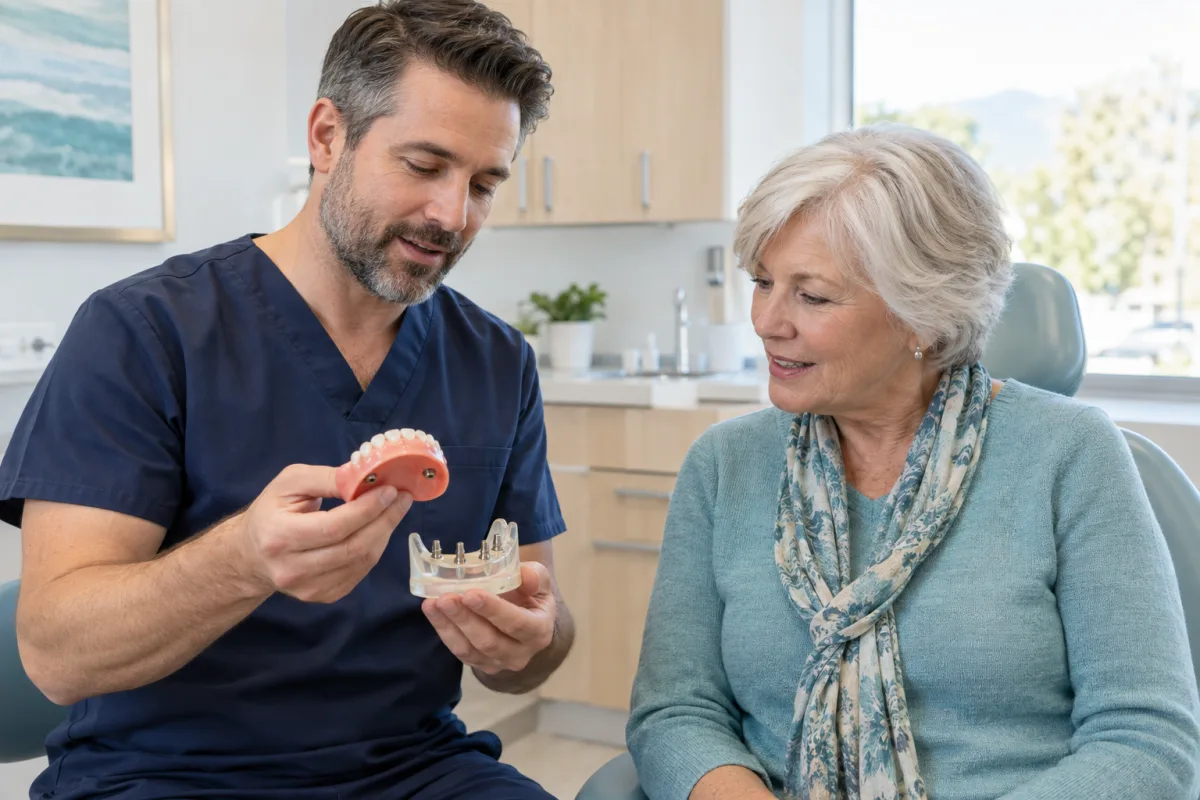
Conventional dentures rest on the gums and rely on suction and muscle control, which can be difficult, especially for lower dentures. Implant-supported dentures attach to implants placed in the jawbone, which reduces movement and can make chewing and speaking more comfortable. They require surgery and healing time, so careful assessment comes first.
If loose dentures have been a frustration for you in Port Ryerse, our Port Dover office can assess whether implant support is an option. The dentist will review bone levels, gum health and medical history and explain how treatment might be staged.
How they work
Snap-on or overdentures clip onto two or more implants using attachments. They remain removable for cleaning, but are much more stable than conventional dentures. Lower overdentures on two implants are a common approach for people struggling with a loose lower denture.
Fixed implant prostheses are secured to several implants and can only be removed by the dentist. They may feel more like natural teeth but usually require more implants, more bone and higher costs. The dentist will explain which designs suit your bone, budget and preferences.
Suitability
Sufficient bone is needed to hold the implants. Long-term denture wearers may have lost bone, which might require grafting or limit options. Imaging, sometimes three-dimensional, helps evaluate bone volume and the position of nerves and sinuses before planning.
Smoking, uncontrolled diabetes, certain medications and some medical conditions can affect healing and implant success. Being able to clean around attachments matters too. Share your health history openly so the dentist can give realistic advice about risks and expected outcomes.
Treatment process
Implants are placed under local anaesthetic, sometimes with sedation, and given time to bond with bone, often several months. Your existing denture may be adjusted to wear during healing. Follow post-operative instructions carefully and attend check-ups so healing can be monitored.
Once healed, attachments are connected and either a new denture is made or your current one is modified to clip onto the implants. The dentist checks fit, bite and comfort. You will be shown how to insert, remove and clean the denture and attachments.
Maintenance
Remove and clean a snap-on denture daily, brushing the attachments and gums around implants. Plaque around implants can cause inflammation and bone loss. Interdental brushes or water flossers may help. The hygienist will recommend tools suited to your setup.
Attachments wear over time and may need replacement to maintain grip. The denture itself may need relining as gums change. Regular checkups allow the dentist to check implants, attachments and tissues and catch problems before they become serious.
Planning your appointment
Call our Port Dover office to book an assessment and bring your current denture. Mention how long you have worn dentures and what difficulties you have noticed.
Ask about the expected number of visits and time between stages so you can plan around other commitments.
Before you book
Have a question about your situation? Our team can help you plan a visit.
It depends on the design. A lower snap-on denture might use two implants, while fixed options typically need more. The dentist will recommend a number based on bone, bite and your goals.
Sometimes an existing denture can be modified to attach to implants if it fits well and is in good condition. Otherwise, a new denture may be recommended.
They are generally more stable than conventional dentures, and many people find eating easier. They still differ from natural teeth. Expectations should be discussed during planning.
Implants are placed with local anaesthetic, and many people report manageable soreness afterward. The dentist will discuss pain relief and recovery expectations before treatment.
Implants can last many years with good care. Attachments and the denture itself wear and need periodic replacement or relining. Regular maintenance helps them function well.
Choosing between a full or partial denture depends on the teeth you still have. Port Ryerse patients can plan fit, function and care at our Port Dover office.
Implants replace missing roots and teeth but take careful planning and healing. Port Ryerse patients can explore suitability and timelines at our Port Dover office.
Recognized year after year
Best Dentists in Norfolk
Proudly recognized among Norfolk’s top-rated dental practices for six consecutive years.

2021 Winner

2022 Winner

2023 Winner

2024 Winner

2025 Winner

2026 Winner
Stories from our patients
Watch a patient’s experience and browse more five-star reviews from people who have visited our Port Dover dental clinic.
Patient video
A patient shares the welcoming atmosphere and positive experience they found at our Port Dover office.
Google reviews
Swipe or use the arrows
Read all reviewsYour next visit can start today
New patients and CDCP patients are welcome. Tell us how we can help and our Port Dover dental team will follow up with you.
Evening appointments Monday and Tuesday