
Patient video
Welcoming and Wonderful Practice
A patient shares the welcoming atmosphere and positive experience they found at our Port Dover office.
★★★★★
Port Dover Family Dentistry
Tired of a denture that slips? Lynedoch patients can learn how implants may anchor a denture, what treatment involves and how to care for it at our Port Dover office.
Let’s get you smiling
Tell us how we can help. Our team will follow up to confirm a time.
Caring for Lynedoch patients at our Port Dover office
Every dental service for Lynedoch patientsMore secure dentures
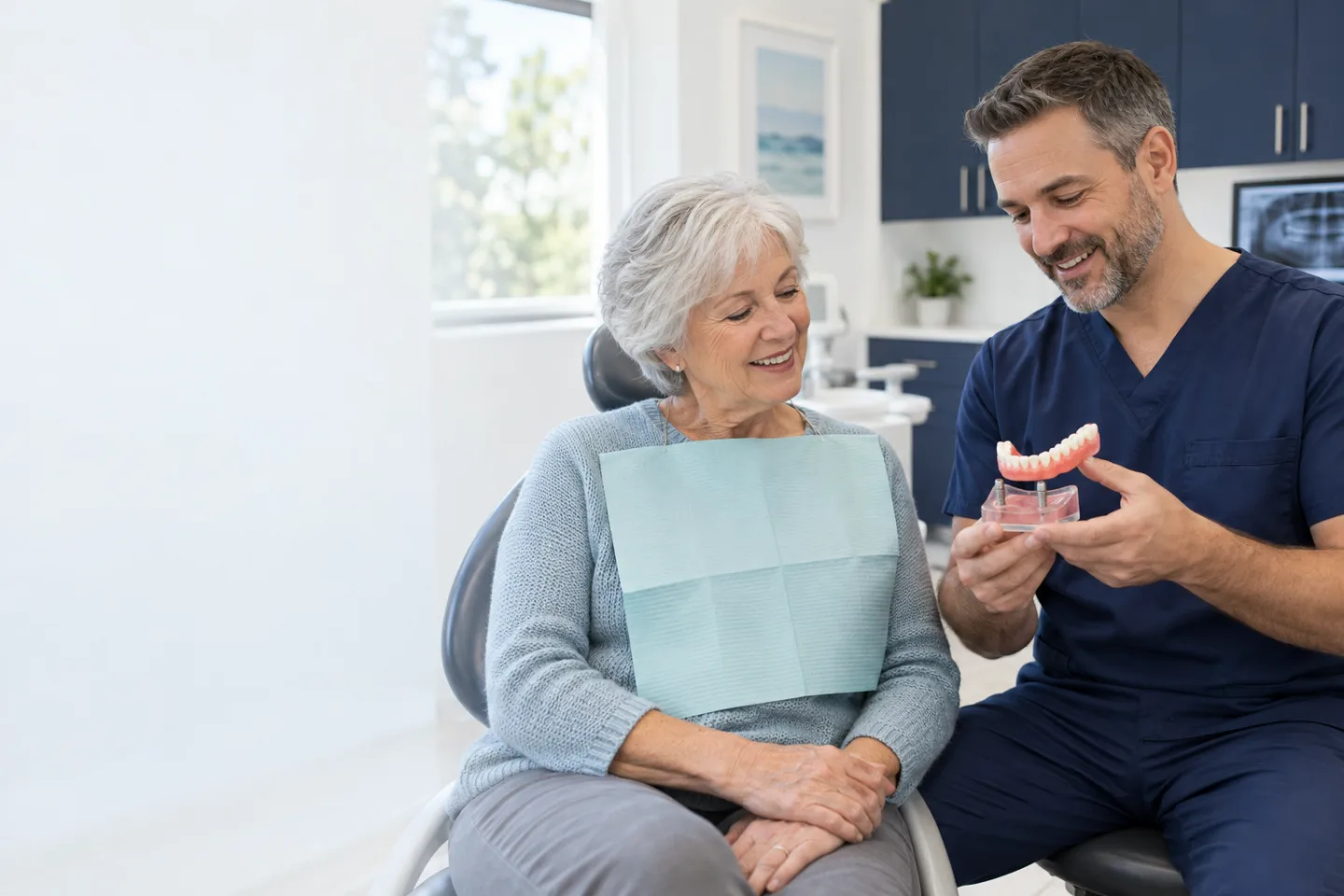
Conventional dentures rest on the gums and rely on suction and shape for retention, which can be a challenge, particularly on the lower jaw. Implant-supported dentures use a small number of implants placed in the jawbone as anchors. The denture clips or locks onto them, often giving more stability while chewing, speaking and laughing.
Lynedoch residents frustrated with a loose denture, or facing the loss of remaining teeth, can explore implant-supported options at our Port Dover office. The dentist will discuss whether implants are suitable, compare removable and fixed designs and outline the number of visits treatment usually involves.
Why consider implants
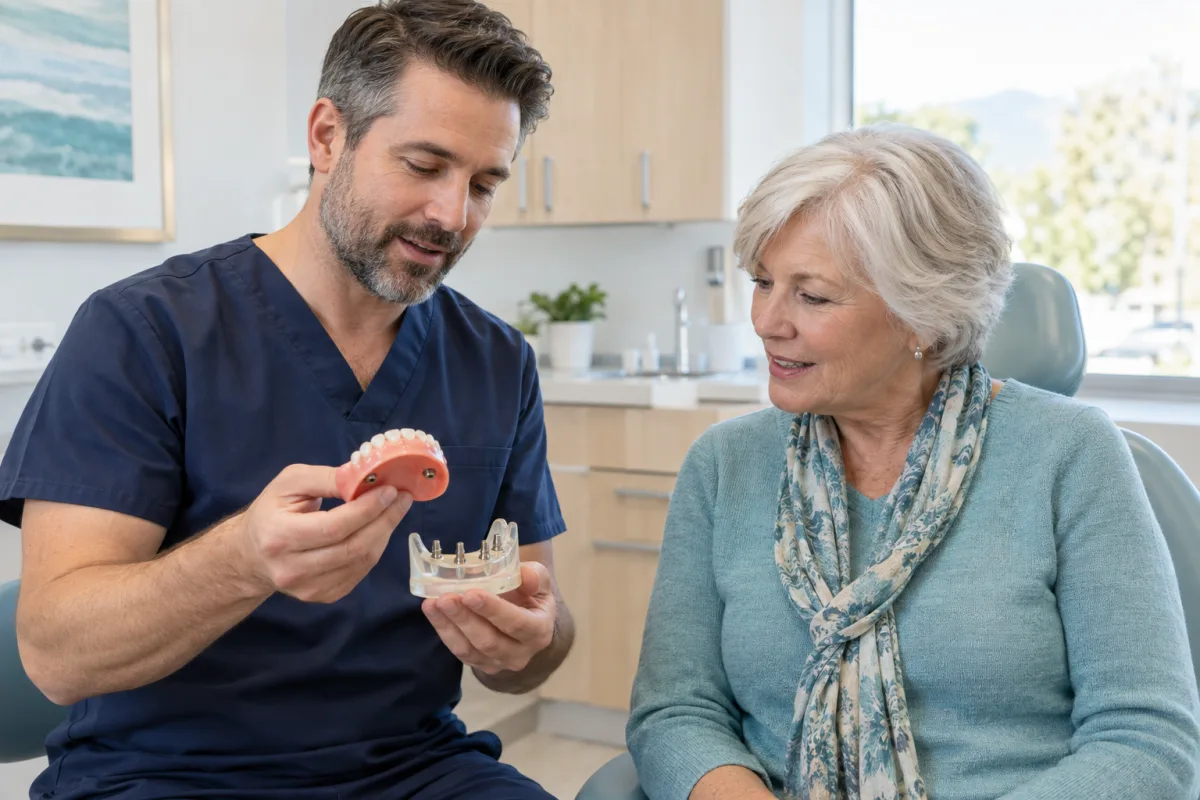
Implants can reduce movement of the denture, which many people find makes eating and speaking more comfortable. They may lessen reliance on adhesives and help preserve bone where implants are placed. Some designs allow the palate to be uncovered on upper dentures, which can improve taste and comfort.
An implant-supported denture still requires daily cleaning, regular checkups and eventual maintenance. Clips, attachments and the denture itself wear over time. Surgery and healing are needed for the implants. Weighing these factors helps you decide whether the added stability is right for you.
Candidacy
The dentist examines your gums and uses X-rays or 3D imaging to measure bone where implants would be placed. Long-term denture wearers sometimes have bone loss that requires grafting or limits implant placement. The number and position of implants depend on bone availability and the chosen design.
Medical conditions, medications and smoking affect healing and implant success. Share your complete history, including diabetes, bone medications and heart conditions. The dentist may consult your physician. Being open about these factors allows a safer, more realistic treatment plan.
Removable or fixed
Removable overdentures snap onto implants using attachments and can be taken out for cleaning. They generally require fewer implants than fixed options. Attachments wear over time and need periodic replacement. Many people find them a significant improvement over a conventional denture while keeping the convenience of removal.
Fixed designs are secured to implants and removed only by the dentist. They can feel more like natural teeth but usually require more implants and careful cleaning around and under the prosthesis. Ask how each design affects cleaning, maintenance and the overall treatment process.
Care and upkeep
Clean removable dentures daily and brush around each implant attachment carefully. For fixed designs, use the tools recommended by the hygienist, such as interdental brushes or water flossers, to clean beneath the prosthesis. Inflammation around implants can threaten their stability, so thorough cleaning is essential.
Regular checkups allow the dentist to examine the gum around implants, check attachments and assess the fit of the denture. Clips or liners may need replacing, and adjustments may be needed as tissues change. Report looseness, sore spots or bleeding between visits so problems can be addressed promptly.
Planning your appointment
Call our Port Dover office to arrange a consultation. Mention how long you have worn dentures and what difficulties you have with fit, eating or speaking.
Bring your current denture, a list of medications and any previous dental X-rays so the dentist can review them.
Before you book
Have a question about your situation? Our team can help you plan a visit.
It depends on the jaw, bone availability and the design chosen. Removable options often need fewer implants than fixed designs. The dentist will recommend a number after assessment.
Sometimes an existing denture can be modified to attach to implants, but often a new denture is recommended for the best fit. The dentist will evaluate your current denture.
Implant placement is done with local anaesthetic, and sedation may be an option. Some soreness and swelling afterward is normal. Follow aftercare instructions and call with concerns.
Implants typically need several months to integrate before the final denture is attached. Grafting or extractions can extend the timeline. The dentist will explain the stages for your case.
Yes, clips and liners on removable dentures wear over time and need periodic replacement. Regular checkups help identify when maintenance is needed to keep the denture secure.
Missing several teeth or a full arch? Lynedoch residents can compare complete and partial dentures, fittings and adjustment visits with our Port Dover team.
Dental implants replace missing teeth with a post anchored in the jaw. Lynedoch patients can learn about candidacy, staged treatment and healing at our Port Dover office.
Recognized year after year
Best Dentists in Norfolk
Proudly recognized among Norfolk’s top-rated dental practices for six consecutive years.

2021 Winner

2022 Winner

2023 Winner

2024 Winner

2025 Winner

2026 Winner
Stories from our patients
Watch a patient’s experience and browse more five-star reviews from people who have visited our Port Dover dental clinic.
Patient video
A patient shares the welcoming atmosphere and positive experience they found at our Port Dover office.
Google reviews
Swipe or use the arrows
Read all reviewsYour next visit can start today
New patients and CDCP patients are welcome. Tell us how we can help and our Port Dover dental team will follow up with you.
Evening appointments Monday and Tuesday