
Patient video
Welcoming and Wonderful Practice
A patient shares the welcoming atmosphere and positive experience they found at our Port Dover office.
★★★★★

Port Dover Family Dentistry
An implant crown is the visible tooth attached to a dental implant. Walsingham patients can learn about timing, the fitting process and how to clean around an implant crown.
Let’s get you smiling
Tell us how we can help. Our team will follow up to confirm a time.
Serving Walsingham households from our Port Dover office
See every dental service for WalsinghamThe tooth on top
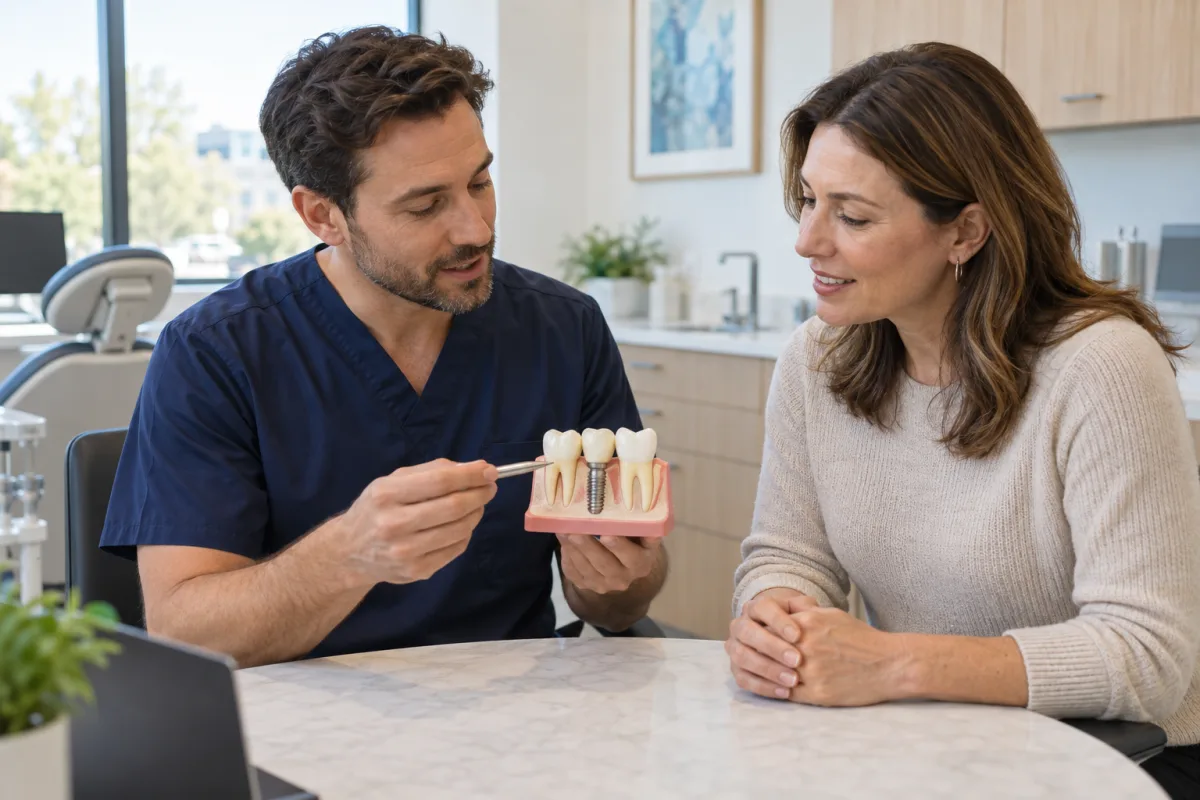
Once a dental implant has healed into the bone, it needs a crown to function as a tooth. The implant-supported crown is custom-made to match the shape and colour of your natural teeth and is connected to the implant with a component called an abutment. A well-designed crown should let you chew comfortably and blend naturally with your smile.
Walsingham patients who have an implant, or are planning one, can have the crown phase completed at our Port Dover office when appropriate. The dentist will confirm the implant has healed, take precise records and guide you through fitting, adjustments and the cleaning routine needed afterwards.
Readiness
Implants usually need a period of healing, often several months, for bone to bond with the implant surface. The dentist checks stability, examines the gum and takes X-rays to confirm the implant is ready. Placing a crown too early can put stress on an implant before it is secure, so timing is carefully planned.
If another dentist or specialist placed your implant, bring details of the implant system and any records you have. Different systems use different components, and knowing the type helps ensure the crown and abutment fit correctly. The dentist may coordinate with the surgeon to plan the restoration.
Design
Impressions or scans record the position of the implant and the surrounding teeth and gums. The dentist chooses a shade to match your neighbouring teeth, and the crown is made to fit your bite. Gum shape around the implant also influences how natural the crown appears, especially for front teeth.
Implant crowns can be attached with a small screw or cemented onto the abutment. Screw-retained crowns can be removed by the dentist for maintenance, while cemented crowns may offer different aesthetic options. The dentist will explain which approach is planned and why it suits your situation.
Fitting
At the fitting visit, the healing cap is removed and the abutment and crown are placed. The dentist checks how the crown sits against the gum, its contacts with neighbouring teeth and its colour. X-rays may be taken to confirm the components are fully seated. Freezing is not always needed for this step.
Your bite is checked with marking paper to ensure the implant crown does not take too much force. Unlike natural teeth, implants do not have a cushioning ligament, so bite balance is important. The crown is then secured. You will receive instructions on cleaning and what to watch for in the coming weeks.
Care
Brush twice daily and clean around the implant crown with floss, interdental brushes or a water flosser. Plaque around implants can lead to inflammation of the gum and bone, known as peri-implantitis, which can threaten the implant. The hygienist can show you the most effective tools for your crown.
Regular checkups allow the dentist to examine the gum, check the crown and screw, and monitor bone levels with X-rays when needed. If the crown feels loose, the gum bleeds or swells, or your bite changes, contact the office. Grinding can stress implant crowns, so a night guard may be recommended.
Planning your appointment
Walsingham patients can call our Port Dover office to discuss timing for an implant crown. Mention when and where the implant was placed so the team can request the needed details.
Bring any records, implant cards or X-rays from the surgeon, along with a list of medications and questions about cost and timing.
Before you book
Have a question about your situation? Our team can help you plan a visit.
Often several months, depending on bone quality, the implant site and healing. In some cases, a temporary crown may be placed sooner. The dentist will confirm readiness before the final crown.
Many people find it feels very similar for chewing. Implants lack the slight cushioning of natural teeth, so some notice a firmer feel. Most adapt quickly.
The crown itself cannot decay, but the gum and bone around it can become inflamed if plaque builds up. Daily cleaning and regular checkups help protect the implant.
Call the office. A loose crown or screw can usually be tightened or re-secured, but it should be checked promptly to protect the implant and surrounding tissues.
Implant crowns can last many years. Like any crown, they may wear or chip and eventually need replacement. Good hygiene and bite protection help extend their life.
Wondering if a dental implant could replace a missing tooth? Walsingham patients can learn about suitability, bone health, staged treatment and long-term implant care.
A crown covers and strengthens a tooth weakened by a large filling, crack or root canal. Walsingham patients can learn about materials, visits and long-term care.
Recognized year after year
Best Dentists in Norfolk
Proudly recognized among Norfolk’s top-rated dental practices for six consecutive years.

2021 Winner

2022 Winner

2023 Winner

2024 Winner

2025 Winner

2026 Winner
Stories from our patients
Watch a patient’s experience and browse more five-star reviews from people who have visited our Port Dover dental clinic.
Patient video
A patient shares the welcoming atmosphere and positive experience they found at our Port Dover office.
Google reviews
Swipe or use the arrows
Read all reviewsYour next visit can start today
New patients and CDCP patients are welcome. Tell us how we can help and our Port Dover dental team will follow up with you.
Evening appointments Monday and Tuesday