
Patient video
Welcoming and Wonderful Practice
A patient shares the welcoming atmosphere and positive experience they found at our Port Dover office.
★★★★★

Port Dover Family Dentistry
An implant crown is the visible tooth fixed to a healed implant. Pine Grove patients can learn about shade matching, fitting visits and daily implant care.
Let’s get you smiling
Tell us how we can help. Our team will follow up to confirm a time.
Caring for Pine Grove patients at our Port Dover office
Browse every dental service for Pine GroveThe tooth on top
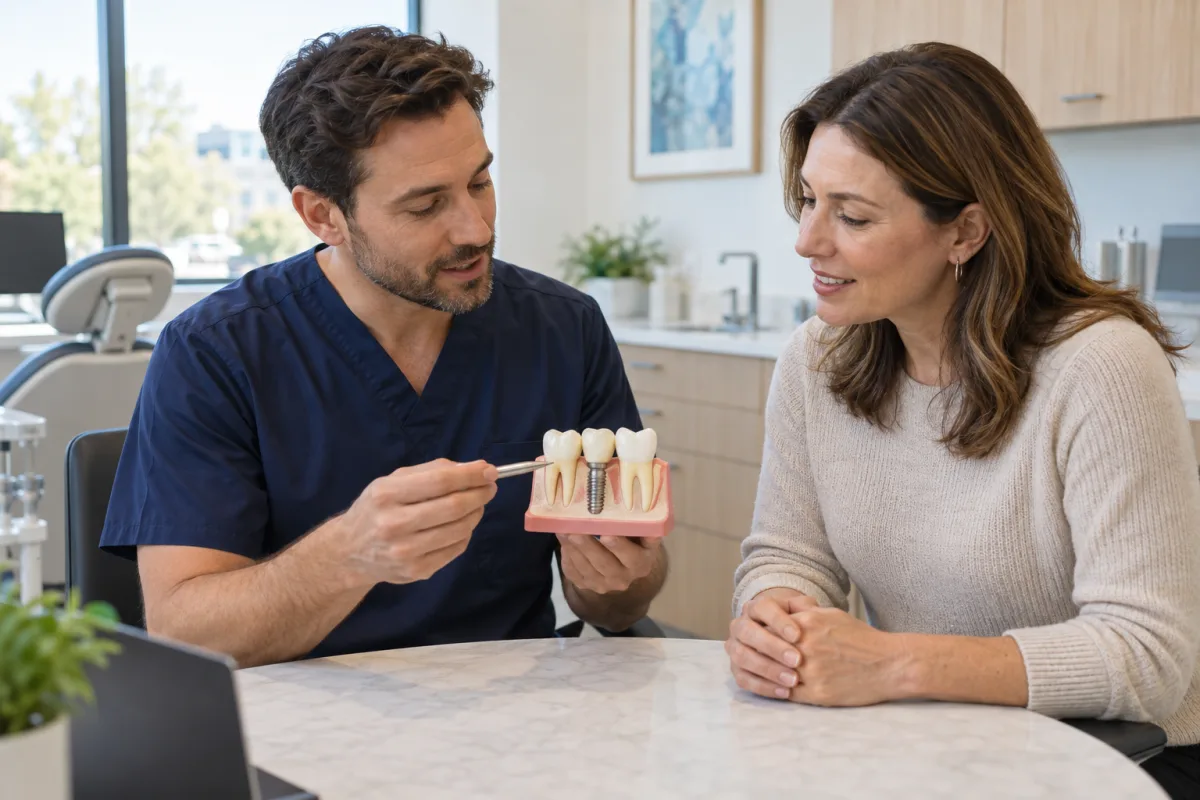
An implant-supported crown is the visible, tooth-shaped part of a single dental implant restoration. After the implant post has integrated with the jawbone, a connector called an abutment is attached and the crown is secured to it, either with cement or a small screw. The goal is a tooth that looks natural, fits your bite and can be cleaned effectively.
Pine Grove patients ready for this stage can have their crown planned and fitted at our Port Dover office. The dentist will confirm the implant has healed well before taking impressions for the final restoration.
Readiness
The dentist checks that the implant has integrated with the bone, often using X-rays and clinical tests. Healing time varies, so the crown stage is scheduled once stability is confirmed. Rushing this step can affect long-term success. Ask the dentist how they assess readiness and what signs they look for.
Healthy gum tissue around the implant helps support a natural appearance and long-term health. A healing cap or temporary crown may be used to shape the gums. If there is inflammation, it is addressed before the final crown is made. Consistent cleaning during healing makes this stage go more smoothly.
Design
The dentist selects a shade that matches your natural teeth, sometimes with input from photographs or a laboratory technician. Shape and size are designed to fit the space and your bite. If you plan whitening, do it beforehand, since the crown’s colour will not change. Ask to see shade options before the crown is made.
Crowns can be screwed onto the abutment through a small access hole, later sealed, or cemented in place. Screw-retained crowns are easier to remove for maintenance, while cemented crowns may offer certain aesthetic advantages. The dentist will explain which method suits your implant position and why.
Fitting
Impressions or digital scans capture the implant’s position and surrounding teeth. A component called an impression coping may be attached temporarily to transfer precise details. Bite records ensure the crown will meet opposing teeth correctly. These are sent to a dental laboratory where the crown is fabricated.
At the fitting appointment, the dentist attaches the abutment if not already in place, then tries in the crown to check fit, appearance and bite. Adjustments are made before final placement. You will be shown how to clean around the crown. A follow-up check may be arranged after a few weeks.
Maintenance
The crown cannot decay, but gum tissue around it can become inflamed if plaque builds up. Brush twice daily, clean around the implant with floss, interdental brushes or a water flosser and avoid abrasive products that might scratch the crown. Ask the hygienist to demonstrate the best technique for your implant.
Regular checkups allow the dentist to check the crown, screw or cement, gum health and bone levels. Report looseness, a change in bite, bleeding or swelling promptly. If you grind your teeth, wear a night guard to protect the crown and implant from excessive forces that could cause damage.
Planning your appointment
Contact our Port Dover office to schedule the crown stage once your implant has healed. The team will confirm timing and explain the appointments needed.
Bring records from the implant placement if it was done elsewhere, and mention any plans for whitening so the shade can be chosen accordingly.
Before you book
Have a question about your situation? Our team can help you plan a visit.
It depends on healing, which often takes several months. The dentist will confirm the implant is stable before starting the crown stage. Sometimes a temporary crown is placed earlier in suitable situations.
Crowns are shade-matched and shaped to blend with neighbouring teeth. Gum contour also affects appearance. The dentist will discuss expectations and may use temporary crowns to shape the gum before the final restoration.
Occasionally a screw may loosen or cement may fail. If the crown feels loose, avoid chewing on it and contact the office. It can usually be tightened or recemented after examination.
Many implant crowns last for years, though they may eventually need replacement due to wear or damage. The implant itself can often remain in place. Regular checkups help monitor both parts.
Attaching the abutment and crown is usually comfortable, as the implant has already healed. Some people feel mild pressure. Local anaesthetic can be used if gum tissue needs to be adjusted.
Implants replace a tooth root and support a crown, bridge or denture. Pine Grove patients can learn about candidacy, healing stages and long-term implant care.
A crown covers a weakened tooth to restore strength and shape. Pine Grove patients can see when crowns are advised, which materials exist and how fitting works.
Recognized year after year
Best Dentists in Norfolk
Proudly recognized among Norfolk’s top-rated dental practices for six consecutive years.

2021 Winner

2022 Winner

2023 Winner

2024 Winner

2025 Winner

2026 Winner
Stories from our patients
Watch a patient’s experience and browse more five-star reviews from people who have visited our Port Dover dental clinic.
Patient video
A patient shares the welcoming atmosphere and positive experience they found at our Port Dover office.
Google reviews
Swipe or use the arrows
Read all reviewsYour next visit can start today
New patients and CDCP patients are welcome. Tell us how we can help and our Port Dover dental team will follow up with you.
Evening appointments Monday and Tuesday