
Patient video
Welcoming and Wonderful Practice
A patient shares the welcoming atmosphere and positive experience they found at our Port Dover office.
★★★★★
Port Dover Family Dentistry
Facial swelling from a tooth can become serious. Normandale residents can learn which signs need hospital care and how our Port Dover team treats dental infections.
Let’s get you smiling
Tell us how we can help. Our team will follow up to confirm a time.
Caring for Normandale residents and seasonal visitors at our Port Dover office
See every dental service for NormandaleSwelling is a warning
Dental infections can spread from a tooth or gum into the surrounding tissues of the face and neck. Swelling may start small near the tooth and gradually extend along the jaw, under the chin or toward the eye. Other signs include pain, redness, warmth, fever and difficulty opening the mouth. Some infections progress quickly and become dangerous.
If you are in Normandale and notice facial swelling linked to a tooth, call our Port Dover office for guidance, and go to emergency immediately if warning signs are present. Prompt dental treatment addresses the source of infection once you are safe.
Danger signs
Swelling that spreads quickly, affects the eye or neck, makes it hard to swallow or breathe, prevents you from opening your mouth or comes with high fever and feeling very unwell can indicate a serious infection. Call 911 or go to the nearest emergency department. Hospital teams can manage airway and severe infection risks.
Do not apply heat to the swelling, as this may encourage spread. Do not try to drain swelling yourself. Avoid starting leftover antibiotics without guidance. Waiting to see if swelling improves overnight can be risky, so seek advice promptly even when symptoms seem moderate.
Finding the source
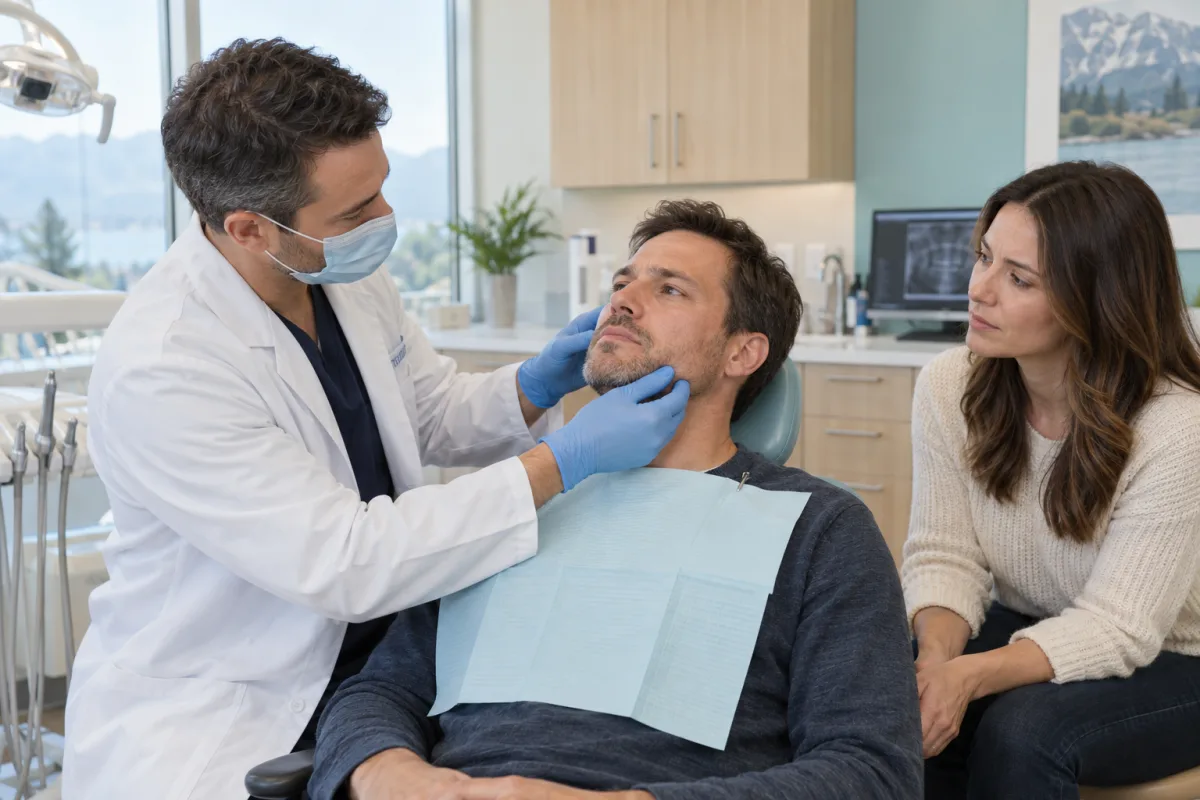
The dentist examines the swollen area, checks the teeth for tenderness and looks at the gums for pockets or drainage. Temperature and bite tests may help identify the source. The size and location of swelling, along with your other symptoms, help determine how urgently treatment is needed.
X-rays reveal decay, root infections and bone changes. Your medical history, medications and allergies are reviewed because they influence antibiotic choices and treatment safety. If the infection appears to be spreading beyond what can be managed in a dental office, you may be directed to hospital care.
Treatment
Treatment usually involves drainage of pus, root canal treatment to clean the inside of the tooth or extraction if the tooth cannot be saved. Addressing the source helps the body clear the infection. Pain relief and instructions for home care are provided, and you will know when to return.
Antibiotics may be prescribed when infection is spreading or you have certain medical conditions, but they are generally used alongside dental treatment rather than instead of it. Complex infections may require referral to an oral surgeon or hospital-based care for further management.
Recovery
Swelling should gradually reduce after treatment begins. Take any medication exactly as directed and finish the course unless told otherwise. If swelling increases, fever rises or breathing or swallowing becomes difficult, seek emergency care immediately rather than waiting for the next scheduled appointment.
Infection-related emergencies often require further visits, such as completing a root canal or placing a crown. Keeping these appointments reduces the chance of infection returning. Regular checkups help identify decay and gum problems before they progress to serious infections.
Planning your appointment
If you have facial swelling without danger signs, call our Port Dover office right away and describe where it is, how fast it is changing and whether you have fever. The team will advise on next steps.
Bring a list of medications and allergies, and mention any antibiotics you have already started.
Before you book
Have a question about your situation? Our team can help you plan a visit.
Yes. Dental infections can spread to the face, neck and beyond. Rapid swelling, breathing or swallowing difficulty and fever are warning signs that need emergency medical care.
A cool compress on the outside of the cheek may help with comfort. Heat is generally not recommended for dental swelling. Call the office for guidance specific to your situation.
Antibiotics may help control spreading infection, but the source usually needs dental treatment such as drainage, root canal or extraction to resolve it fully.
Improvement often begins within a day or two, but it varies. If swelling worsens or you develop new symptoms, contact the office or seek emergency care.
No. Facial swelling linked to a tooth should be assessed promptly. Call the office as soon as you notice it, and seek emergency care for any danger signs.
A dental abscess needs prompt attention. Normandale residents can learn the warning signs, when to seek emergency care and how our Port Dover team treats the source.
Dental emergencies rarely come at a good time. Normandale residents can learn how to judge urgency, what to do first and how to reach our Port Dover office.
Recognized year after year
Best Dentists in Norfolk
Proudly recognized among Norfolk’s top-rated dental practices for six consecutive years.

2021 Winner

2022 Winner

2023 Winner

2024 Winner

2025 Winner

2026 Winner
Stories from our patients
Watch a patient’s experience and browse more five-star reviews from people who have visited our Port Dover dental clinic.
Patient video
A patient shares the welcoming atmosphere and positive experience they found at our Port Dover office.
Google reviews
Swipe or use the arrows
Read all reviewsYour next visit can start today
New patients and CDCP patients are welcome. Tell us how we can help and our Port Dover dental team will follow up with you.
Evening appointments Monday and Tuesday