
Patient video
Welcoming and Wonderful Practice
A patient shares the welcoming atmosphere and positive experience they found at our Port Dover office.
★★★★★

Port Dover Family Dentistry
Some painful, infected or broken teeth need prompt removal. Wilsonville patients can learn how urgent extractions are assessed and planned at our Port Dover office.
Let’s get you smiling
Tell us how we can help. Our team will follow up to confirm a time.
Caring for Wilsonville patients at our Port Dover office
See every dental service for WilsonvilleWhen a tooth must come out soon
An emergency extraction may be needed when a tooth is severely broken, badly infected, extremely loose or causing intense pain that cannot be managed another way. Before removing a tooth, the dentist assesses whether it could be saved with treatment such as a root canal. If extraction is the best option, it can relieve pain and help control infection.
Wilsonville patients with severe tooth pain or swelling should call our Port Dover office to describe the problem. The team will discuss urgency and availability. If sedation or a longer appointment might be needed, ask whether you should arrange a driver for the trip home.
Assessment
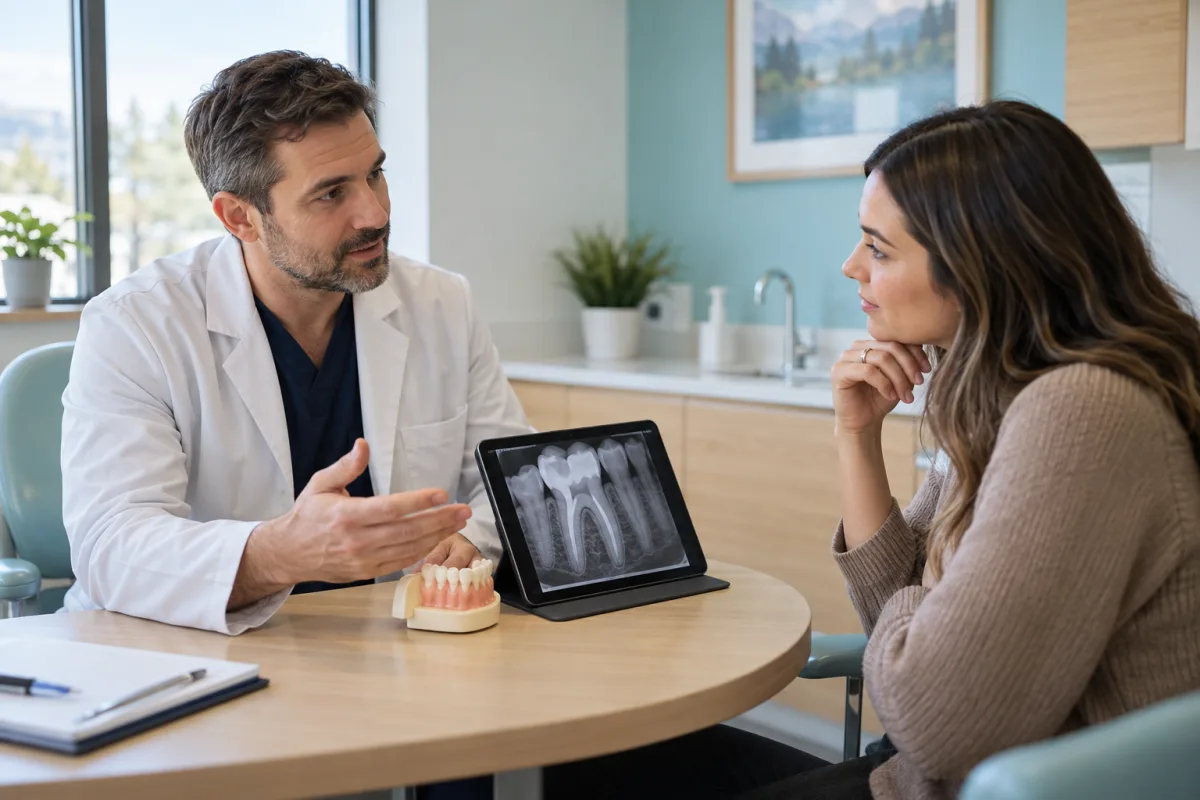
A tooth may need urgent removal if it is split below the gumline, severely decayed, causing a spreading infection or so loose from gum disease that it cannot be stabilized. Wisdom teeth causing infection or severe pain may also need prompt removal. X-rays help the dentist assess the root and surrounding bone.
Root canal treatment, a crown or other restoration may save some teeth that seem hopeless. The dentist will explain whether these are realistic and what the outlook would be. Your preferences, health and the condition of the tooth all guide the decision. Ask questions before agreeing to removal.
Preparation
Tell the dentist about all medications, especially blood thinners and medications for bone health, and conditions such as diabetes, heart problems or a weakened immune system. These can affect bleeding, healing and infection risk. The dentist may need to adjust the plan or consult your physician.
If sedation is planned, arrange for someone to drive you home. Eat lightly beforehand unless told otherwise. Have soft foods, gauze and recommended pain relief ready at home. Plan to rest for the remainder of the day after the extraction.
The procedure
Local anaesthetic is used to numb the area. Infection can sometimes make numbing more difficult, so the dentist may use additional anaesthetic or other techniques. Let the dentist know if you feel more than pressure. In some cases, antibiotics may be prescribed before or after the extraction.
The dentist loosens the tooth and removes it, sometimes in sections if it is broken or has curved roots. The socket may be cleaned and, if needed, stitched. You will receive gauze to bite on and instructions for aftercare before you leave the office.
Recovery
Bite on gauze to control bleeding, and avoid spitting, using straws, smoking and vigorous rinsing for at least the first day. Eat soft foods, chew on the other side and use cold compresses for swelling. Take medications as directed. Gentle saltwater rinses may be recommended after the first day.
Call the office if bleeding persists, pain increases after a few days, swelling worsens or you develop a fever. Once the area has healed, discuss options for replacing the tooth, such as an implant, bridge or partial denture, to maintain chewing function and prevent shifting.
Planning your appointment
Call our Port Dover office and describe your pain, swelling and any fever. The team will discuss urgency and availability and let you know what to expect so you can plan transportation.
Bring a complete medication list and let the team know about bleeding disorders, recent hospital visits or antibiotics you are already taking.
Before you book
Have a question about your situation? Our team can help you plan a visit.
Often, yes. In some cases, the dentist may prescribe antibiotics first, particularly if swelling makes numbing difficult. The approach depends on the infection and your health.
Local anaesthetic is used to numb the area. You may feel pressure. Afterward, soreness is common and usually managed with recommended pain relief.
Sometimes. Root canal treatment and restorations can save some teeth. The dentist will assess the tooth and explain whether saving it is realistic.
Many people feel better within a few days, though complete healing takes longer. Surgical extractions may require more recovery time. Follow aftercare instructions closely.
It depends on its location and your goals. Replacing missing teeth can help maintain chewing, appearance and alignment. Discuss options once healing is underway.
When a tooth cannot be saved, a careful extraction may be the best step. Wilsonville patients can learn about preparation and healing at our Port Dover office.
An emergency exam focuses on one urgent problem: pain, swelling or damage. Wilsonville patients can learn what happens at a focused visit to our Port Dover office.
Recognized year after year
Best Dentists in Norfolk
Proudly recognized among Norfolk’s top-rated dental practices for six consecutive years.

2021 Winner

2022 Winner

2023 Winner

2024 Winner

2025 Winner

2026 Winner
Stories from our patients
Watch a patient’s experience and browse more five-star reviews from people who have visited our Port Dover dental clinic.
Patient video
A patient shares the welcoming atmosphere and positive experience they found at our Port Dover office.
Google reviews
Swipe or use the arrows
Read all reviewsYour next visit can start today
New patients and CDCP patients are welcome. Tell us how we can help and our Port Dover dental team will follow up with you.
Evening appointments Monday and Tuesday