
Patient video
Welcoming and Wonderful Practice
A patient shares the welcoming atmosphere and positive experience they found at our Port Dover office.
★★★★★

Port Dover Family Dentistry
When an infected or broken tooth cannot be saved, urgent removal may be advised. Lynedoch patients can learn how emergency extractions are assessed in Port Dover.
Let’s get you smiling
Tell us how we can help. Our team will follow up to confirm a time.
Caring for Lynedoch patients at our Port Dover office
Every dental service for Lynedoch patientsWhen a tooth must come out
Sometimes a tooth is too badly broken, infected or loose to save, and leaving it in place would mean ongoing pain or a risk of spreading infection. In these situations, an urgent extraction may be recommended. Even under time pressure, the dentist will assess the tooth, explain why removal is advised and consider whether any alternative could reasonably save it.
Patients in Lynedoch facing severe pain or a broken tooth should call our Port Dover office to describe the situation. The team will discuss urgency and availability. If an extraction is likely, ask about preparation and whether you should arrange for someone to drive you home.
Why removal
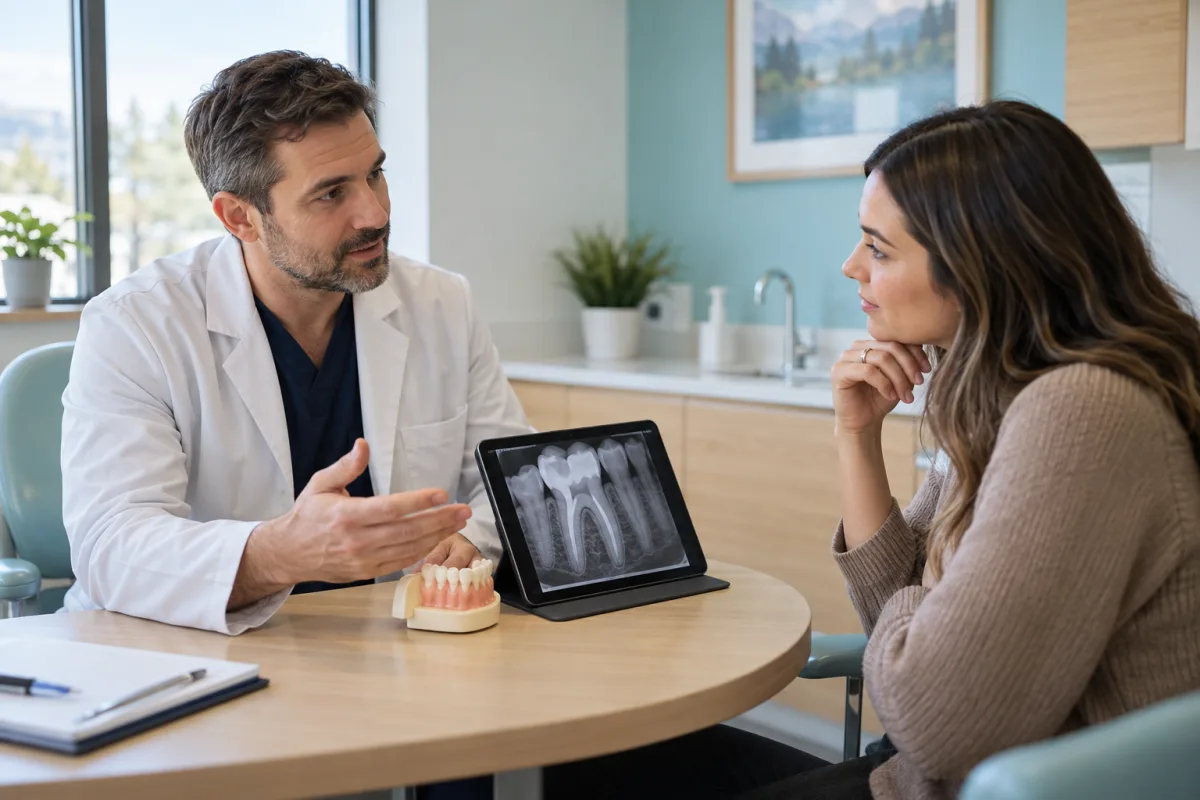
A tooth that has split down the root, is very loose from advanced gum disease or has extensive decay below the gumline may not be restorable. Severe infection that does not respond to other treatment may also make extraction necessary. The dentist will use an exam and X-ray to explain why.
Even in urgent situations, ask whether root canal treatment, a crown or another approach could save the tooth, and what the chances of success would be. Sometimes the choice is between a longer, more involved treatment and removal. Understanding both helps you decide with confidence.
Preparing safely
Share your full medical history and medication list, especially blood thinners, bone medications, diabetes and heart conditions. These may require special precautions. Never stop a prescribed medicine without advice from the doctor who prescribed it. The dentist may need to check with your physician before proceeding.
If there is significant infection or swelling, the dentist may recommend antibiotics or drainage first, and the extraction could be scheduled once the infection is controlled. In other cases, removal is part of controlling the infection. The dentist will explain the reasoning for your specific situation.
The procedure
The area is numbed with local anaesthetic so you feel pressure rather than sharp pain. The dentist loosens the tooth and removes it gently. If you feel discomfort, let the team know so more freezing can be given. Gauze is placed to control bleeding once the tooth is out.
Broken teeth, curved roots or teeth near important structures may need a surgical approach, which can involve a small incision or dividing the tooth. Stitches may be placed. Very complex cases may be referred to an oral surgeon. The dentist will explain the plan before beginning.
Recovery
Keep gauze in place as directed and rest. For the first day, avoid rinsing vigorously, spitting, using straws, smoking and strenuous activity, which can dislodge the clot. Eat soft foods, keep your head elevated and take pain relief as recommended. Gentle salt-water rinses may be advised after the first day.
Some swelling, tenderness and minor oozing are expected. Call the office if bleeding does not slow with pressure, pain worsens after a few days, a bad taste develops or fever appears. Ask about replacement options once healing is underway, since a gap can affect chewing and nearby teeth.
Planning your appointment
Call our Port Dover office before you leave home and describe the tooth, pain and any swelling. The team will discuss urgency, availability and how to prepare for a possible extraction.
Plan a ride home if sedation may be used, and bring your full list of medications and allergies.
Before you book
Have a question about your situation? Our team can help you plan a visit.
Often it can, and removal may help clear the infection. In some cases the dentist may recommend controlling infection first. The decision depends on the severity of infection and your health.
Most extractions are done with local freezing while you are awake. Sedation may be available in some situations. Discuss your comfort concerns with the team when you call.
Soreness is common for a few days and usually manageable with recommended pain relief. Increasing pain after several days may indicate a dry socket and should be checked.
Sometimes. Root canal treatment or other options may be possible depending on the damage. Ask the dentist to explain the alternatives and their likely outcomes before deciding.
It depends on healing and the replacement chosen. Implants, bridges and dentures have different timelines. The dentist can discuss options once the extraction site begins to heal.
When a tooth cannot be saved, a careful extraction may be advised. Lynedoch patients can learn about assessment, the procedure and healing at our Port Dover office.
An emergency dental exam focuses on finding the cause of pain, swelling or damage. Lynedoch patients can learn what the visit covers and how to prepare for Port Dover.
Recognized year after year
Best Dentists in Norfolk
Proudly recognized among Norfolk’s top-rated dental practices for six consecutive years.

2021 Winner

2022 Winner

2023 Winner

2024 Winner

2025 Winner

2026 Winner
Stories from our patients
Watch a patient’s experience and browse more five-star reviews from people who have visited our Port Dover dental clinic.
Patient video
A patient shares the welcoming atmosphere and positive experience they found at our Port Dover office.
Google reviews
Swipe or use the arrows
Read all reviewsYour next visit can start today
New patients and CDCP patients are welcome. Tell us how we can help and our Port Dover dental team will follow up with you.
Evening appointments Monday and Tuesday