
Non-Restorable Damage
Decay or fracture may extend so deeply that there is not enough healthy tooth structure to rebuild.

Port Dover Family Dentistry
Emergency tooth extractions in Port Dover remove teeth that cannot be predictably restored or are contributing to urgent pain or infection.
Let’s get you smiling
Tell us how we can help. Our team will follow up to confirm a time.
Severe pain or swelling?
Call for urgent assessment. An exam is needed to confirm whether extraction or a tooth-saving treatment is the safest option.
Emergency tooth extractions in Port Dover
An emergency extraction may be recommended when a tooth is severely fractured, extensively decayed, infected or otherwise cannot be restored predictably. The goal is to remove the source while protecting nearby tissues and planning for recovery.
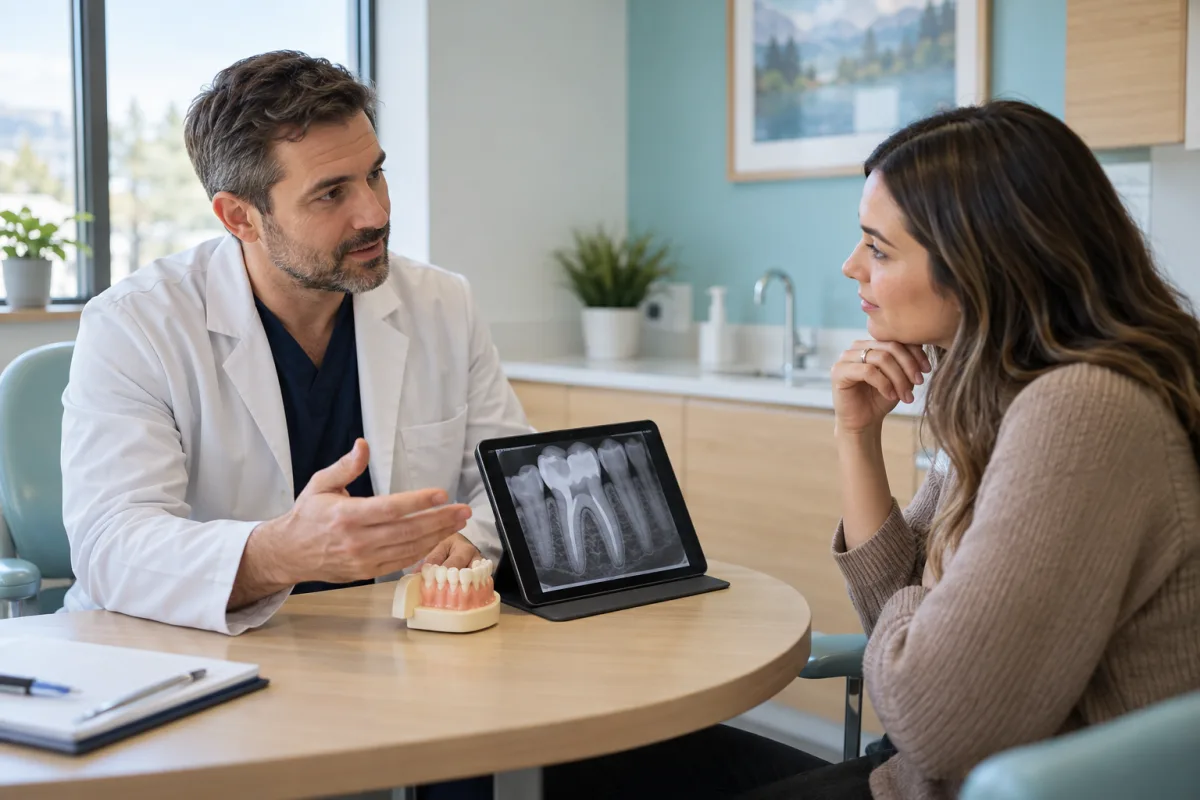
Extraction is not automatic because a tooth hurts. We first assess the tooth, symptoms, X-rays, medical history and alternatives such as restorative or root canal treatment. Complex cases may require referral.
A diagnosis comes first
The dentist will explain why removal is recommended, reasonable alternatives, expected risks and whether the procedure can be completed at the emergency visit.
Seek emergency medical care for difficulty breathing or swallowing, rapidly spreading swelling, uncontrolled bleeding, confusion, or suspected serious head or jaw injury.
Individual treatment planning
Decay or fracture may extend so deeply that there is not enough healthy tooth structure to rebuild.
An infected tooth may require removal when root canal treatment is unsuitable, declined or unlikely to succeed.
Advanced loss of supporting bone or significant trauma can make a tooth unstable and non-restorable.
Pain, swelling or interference with eating may increase urgency, although the treatment choice still depends on diagnosis.
Assessment, comfort and recovery
We review your health and medications, examine the area and use X-rays when indicated to assess roots and surrounding structures.
Local anesthetic is used to numb the area. The dentist removes the tooth using the approach suited to its shape, position and condition.
Bleeding is controlled and written aftercare is provided. We discuss follow-up, healing and replacement options when relevant.
Safe procedure planning
Before an extraction, the dentist considers root shape, tooth position, nearby anatomy, infection, mouth opening and whether the tooth is likely to require a surgical approach. These findings help determine whether the procedure can be completed safely in the office or needs referral.
Medical conditions, allergies and medications—including anticoagulants, antiresorptive drugs and some immune-modifying therapies—can also affect planning. Do not stop a prescribed medicine unless the prescribing clinician and dentist advise you to do so.
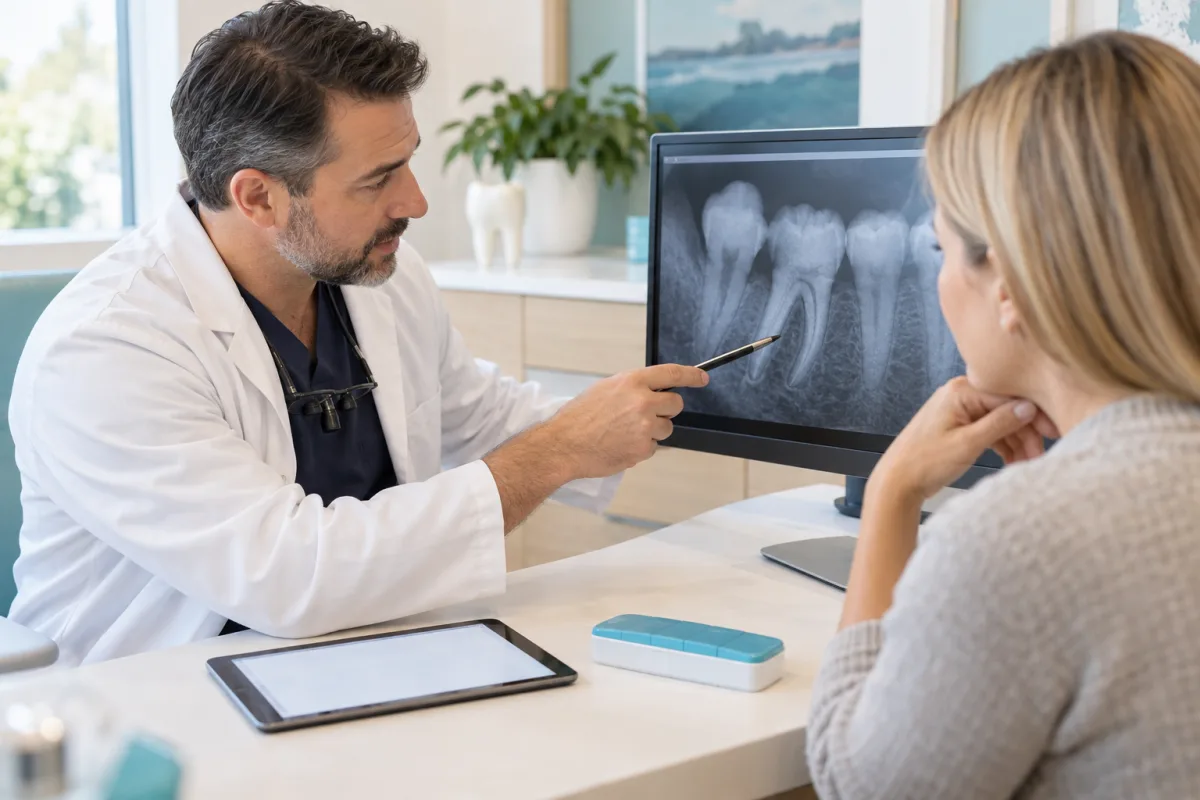
X-rays help show root shape, surrounding bone and nearby structures before removal.
Bleeding risk, healing, infection risk and medication interactions are reviewed individually.
A difficult position, limited access or proximity to important anatomy may call for specialist care.
Early healing
Written instructions for your specific procedure take priority. Contact the office when recovery moves outside the expected pattern.
Mild oozing can occur early, but bleeding that does not slow with the directed firm pressure needs prompt advice.
Some soreness is expected; pain that becomes severe or worsens after initial improvement should be assessed.
Increasing swelling, fever, pus, a persistent bad taste or feeling unwell should be reported promptly.
Avoid vigorous rinsing, spitting, straws, smoking, vaping and disturbing the socket during early healing.
Seek emergency medical care for uncontrolled bleeding, breathing or swallowing difficulty, or rapidly spreading facial or neck swelling.
After an extraction
Bite on gauze as directed and avoid vigorous rinsing, spitting, straws, smoking or vaping during the initial healing period. Choose soft foods and do not disturb the socket.
Follow medication and cleaning instructions. Contact the office for bleeding that does not slow with firm pressure, worsening swelling or pain, fever, bad taste, or other concerns listed in your aftercare.
Urgent extraction assessment
We will assess the tooth, review tooth-saving options where reasonable and explain whether emergency extraction is appropriate.
Emergency extraction questions
No. Depending on the cause and remaining tooth structure, a filling, crown, root canal treatment or gum care may be possible. The dentist will review reasonable options.
Sometimes, but it is not guaranteed. Medical factors, infection, tooth position, complexity and available clinical time may require stabilization or referral first.
Local anesthetic is used to numb the area. You may feel pressure or movement, but tell the dentist if you feel sharp pain so comfort can be reassessed.
Not routinely. Antibiotics are prescribed when clinical findings and health factors indicate a benefit; removing the source is often the key treatment.
Early soft-tissue healing occurs over days to weeks, while bone remodelling continues longer. Complexity, health, smoking and aftercare all affect recovery.
Recognized year after year
Best Dentists in Norfolk
Proudly recognized among Norfolk’s top-rated dental practices for six consecutive years.

2021 Winner

2022 Winner

2023 Winner

2024 Winner

2025 Winner

2026 Winner
Stories from our patients
Watch a patient’s experience and browse more five-star reviews from people who have visited our Port Dover dental clinic.
Patient video
A patient shares the welcoming atmosphere and positive experience they found at our Port Dover office.
Google reviews
Swipe or use the arrows
Read all reviewsOur community
Your next visit can start today
New patients and CDCP patients are welcome. Tell us how we can help and our Port Dover dental team will follow up with you.
Evening appointments Monday and Tuesday