Severe Toothache
Constant, worsening or sleep-disrupting pain should be assessed rather than masked for days.

Port Dover Family Dentistry
Emergency dentistry in Port Dover provides prompt assessment for dental pain, swelling, broken teeth, infection and oral injuries. Call for triage.
Let’s get you smiling
Tell us how we can help. Our team will follow up to confirm a time.
Need urgent dental help?
Call our office so we can understand the symptoms, give immediate guidance and arrange the most appropriate available appointment.
Emergency dentistry in Port Dover
Severe pain, swelling, infection and dental trauma can worsen without assessment. Emergency dentistry focuses on identifying the source, relieving urgent symptoms where possible and protecting your oral and overall health.
The appropriate next step depends on the diagnosis. Some visits can include definitive treatment, while others first stabilize the problem and plan follow-up care. Calling ahead helps the team triage your needs and prepare for your arrival.

Assessment guides treatment
The same symptom can have several causes. An emergency exam—and sometimes an X-ray—is needed before the dentist can recommend safe, appropriate care.
Call 911 or go to the nearest emergency department for trouble breathing or swallowing, rapidly spreading swelling, uncontrolled bleeding, loss of consciousness, or a suspected serious head or jaw injury.
Reasons to call
Constant, worsening or sleep-disrupting pain should be assessed rather than masked for days.
A dental abscess, facial swelling, fever or bad taste can indicate an infection that needs prompt care.
Chips, fractures and knocked-out teeth are time-sensitive, especially when a permanent tooth is displaced.
A lost filling or crown can expose sensitive tooth structure and leave the tooth vulnerable to further damage.
Urgent care pathway
We ask about symptoms, timing, swelling, trauma and medical concerns, then advise on immediate steps and appointment urgency.
The dentist examines the problem area and may use diagnostic tests or X-rays to determine the likely cause and treatment options.
Care may address the cause immediately or stabilize symptoms first. We explain aftercare, warning signs and any required definitive treatment.
The right level of care
Severe tooth pain, a broken restoration or a localized dental problem usually needs prompt dental assessment. Certain symptoms, however, can signal an airway risk, spreading infection or serious trauma that belongs in emergency medical care rather than a dental waiting room.
Phone triage helps identify the safest destination, but symptoms can change. If breathing, swallowing or alertness becomes affected—or swelling spreads rapidly toward the eye or neck—call 911 or go to the nearest emergency department.
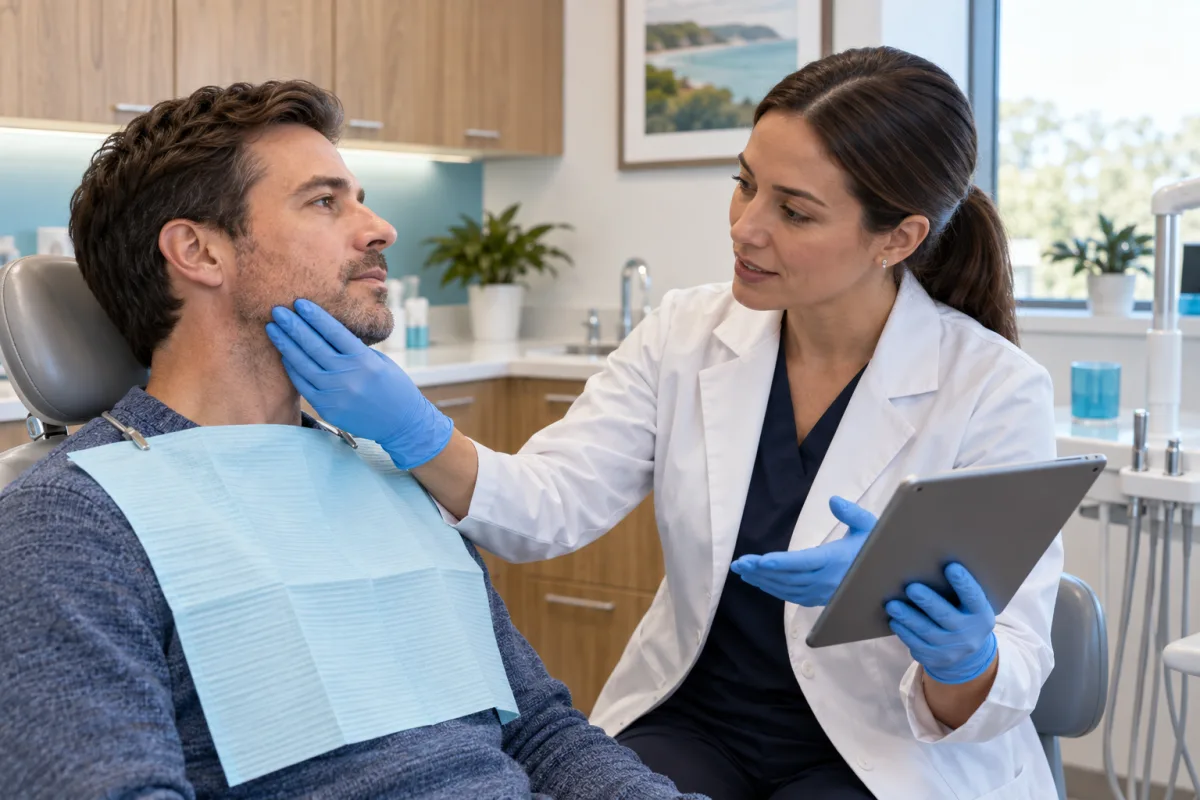
Severe pain, a broken tooth, a lost restoration or localized swelling generally calls for prompt dental assessment.
A knocked-out permanent tooth, displaced tooth or uncontrolled oral bleeding needs immediate instructions and care.
Airway difficulty, serious facial trauma, loss of consciousness or rapidly spreading swelling requires medical escalation.
Care may happen in stages
Emergency care is shaped by the diagnosis, your health, the complexity of treatment and the clinical time available that day.
A focused examination and any necessary tests identify the likely source and immediate risks.
When appropriate, care may reduce pain or pressure while the underlying treatment plan is organized.
A damaged tooth or restoration may be protected temporarily when definitive repair cannot be completed safely that day.
A filling, crown, root canal treatment, extraction, periodontal care or specialist visit may follow once the diagnosis is clear.
An antibiotic is not a substitute for dental treatment and is not appropriate for every toothache. Its use depends on the diagnosis and signs of spreading or systemic infection.
While arranging care
Rinse gently with warm water, use a cold compress for swelling after an injury and avoid chewing on the affected side. Take over-the-counter pain medication only as directed on the label and if safe for you.
Do not place aspirin on the gums, use household glue on a tooth, pop a swelling or delay care because pain temporarily improves. Keep any tooth fragment or restoration and bring it with you.
Urgent dental care
Our team will ask a few focused questions and help determine the safest, most appropriate next step.
Emergency dentistry questions
Severe or worsening pain, swelling, signs of infection, uncontrolled bleeding, a knocked-out permanent tooth, significant fracture or trauma generally needs prompt assessment.
Yes. Calling first lets us triage symptoms, provide immediate instructions and tell you the most appropriate available time or level of care.
Sometimes. It depends on the diagnosis, complexity, time and your health. The priority may be to relieve pain or stabilize the problem before definitive care.
Seek emergency medical care for breathing or swallowing difficulty, rapidly spreading swelling, uncontrolled bleeding, loss of consciousness or a suspected serious head, neck or jaw injury.
Antibiotics are useful for selected spreading or systemic infections, but they do not repair a damaged tooth or remove the source by themselves. Dental treatment is often still required.
Recognized year after year
Best Dentists in Norfolk
Proudly recognized among Norfolk’s top-rated dental practices for six consecutive years.

2021 Winner

2022 Winner

2023 Winner

2024 Winner

2025 Winner

2026 Winner
Stories from our patients
Watch a patient’s experience and browse more five-star reviews from people who have visited our Port Dover dental clinic.
Patient video
A patient shares the welcoming atmosphere and positive experience they found at our Port Dover office.
Google reviews
Swipe or use the arrows
Read all reviewsOur community
Your next visit can start today
New patients and CDCP patients are welcome. Tell us how we can help and our Port Dover dental team will follow up with you.
Evening appointments Monday and Tuesday