
Patient video
Welcoming and Wonderful Practice
A patient shares the welcoming atmosphere and positive experience they found at our Port Dover office.
★★★★★

Port Dover Family Dentistry
An early look at a child’s bite can flag issues while the jaw is still growing. Port Ryerse families can arrange an orthodontic assessment in Port Dover.
Let’s get you smiling
Tell us how we can help. Our team will follow up to confirm a time.
Caring for Port Ryerse patients at our Port Dover office
Every dental service for Port RyerseWatching the bite develop
Children’s jaws and teeth change rapidly as baby teeth are replaced. An early orthodontic assessment looks at how teeth are coming in and how the jaws are growing. Most children will not need treatment right away, but identifying certain problems early can make later care simpler or help decide the best moment to act.
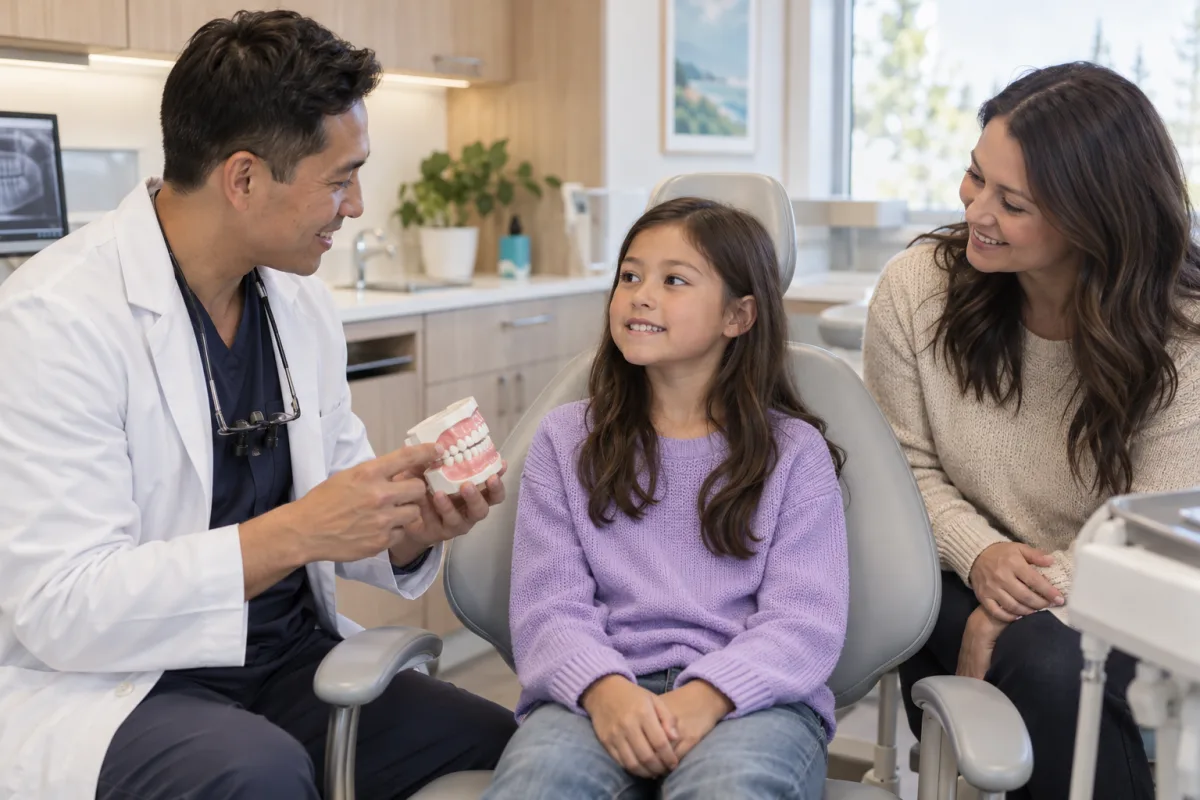
For families in Port Ryerse, this assessment can be arranged at our Port Dover office, often alongside a routine checkup. The dentist will explain what they see, whether monitoring is enough and if a referral to an orthodontist would be helpful at this stage.
Why look early
Crossbites, severe crowding, very protruding front teeth, underbites and teeth that are erupting in the wrong place may be easier to address while the jaw is still developing. Early action may reduce the risk of injury to prominent teeth or prevent certain problems from worsening as permanent teeth arrive.
In many cases, the outcome of an early assessment is simply to keep watching. Teeth often shift naturally as more permanent teeth come in. The dentist will explain what to monitor and when a re-check would be useful, so you are not left guessing about timing.
Signs to mention
Mention teeth that look very crowded or widely spaced, upper teeth that sit behind lower ones, front teeth that do not meet, a jaw that shifts to one side when closing or baby teeth lost very early or very late. Photos of your child’s smile over time can help show changes.
Thumb or finger sucking beyond early childhood, mouth breathing, snoring, difficulty chewing or speech concerns can relate to how teeth and jaws develop. Your child may also complain about biting their cheek. These observations add useful context to what the dentist sees during the examination.
The assessment
The dentist looks at how upper and lower teeth meet, checks spacing, observes jaw movement and notes habits. X-rays may be recommended to see developing teeth beneath the gums, check for missing or extra teeth and assess eruption paths. Photos or models may be taken in some cases.
Afterward, the dentist explains findings and whether treatment, monitoring or referral is suggested. If an orthodontist referral is recommended, ask what questions to bring and what information will be shared. Discuss your child’s comfort and readiness as well as clinical factors.
Planning ahead
Early treatment may involve appliances to widen the upper jaw, guide erupting teeth or correct a crossbite. It is often a first phase, with further treatment possible later. Ask about expected duration, care routines and how treatment fits with school and activities.
Monitoring usually means re-checking at routine visits as more permanent teeth arrive. Continue good brushing habits and keep up with checkups. If you notice sudden changes, injury to teeth or new concerns, contact the office rather than waiting for the next scheduled appointment.
Planning your appointment
Mention when booking at our Port Dover office that you would like the bite assessed. It can often be included with a regular exam for your child.
Photos showing how your child’s teeth have changed over time may help the dentist understand development patterns.
Before you book
Have a question about your situation? Our team can help you plan a visit.
Many dental professionals suggest an assessment in early school years, often around age seven, when permanent molars and front teeth are arriving. Your dentist may recommend earlier review if a specific concern is noticed.
No. Most children simply need monitoring. The assessment identifies whether any problems would benefit from early treatment or whether waiting until more permanent teeth arrive is better.
Some treatment may be provided by general dentists, while more complex cases are often referred to an orthodontist. The dentist will explain whether referral is advisable for your child.
Prolonged thumb or finger sucking can affect how front teeth and the palate develop. The dentist can discuss strategies to help your child stop and monitor any effects.
For certain problems, early treatment can be beneficial. For others, waiting is more efficient. The decision depends on the specific issue and your child’s growth, which the dentist will explain.
When a baby tooth is lost early, a space maintainer can hold room for the adult tooth. Port Ryerse families can find out if one is needed at our Port Dover office.
Thumb sucking, pacifiers and other habits can shape a growing bite. Port Ryerse parents can learn when to act and how to help gently at our Port Dover office.
Recognized year after year
Best Dentists in Norfolk
Proudly recognized among Norfolk’s top-rated dental practices for six consecutive years.

2021 Winner

2022 Winner

2023 Winner

2024 Winner

2025 Winner

2026 Winner
Stories from our patients
Watch a patient’s experience and browse more five-star reviews from people who have visited our Port Dover dental clinic.
Patient video
A patient shares the welcoming atmosphere and positive experience they found at our Port Dover office.
Google reviews
Swipe or use the arrows
Read all reviewsYour next visit can start today
New patients and CDCP patients are welcome. Tell us how we can help and our Port Dover dental team will follow up with you.
Evening appointments Monday and Tuesday