
Patient video
Welcoming and Wonderful Practice
A patient shares the welcoming atmosphere and positive experience they found at our Port Dover office.
★★★★★
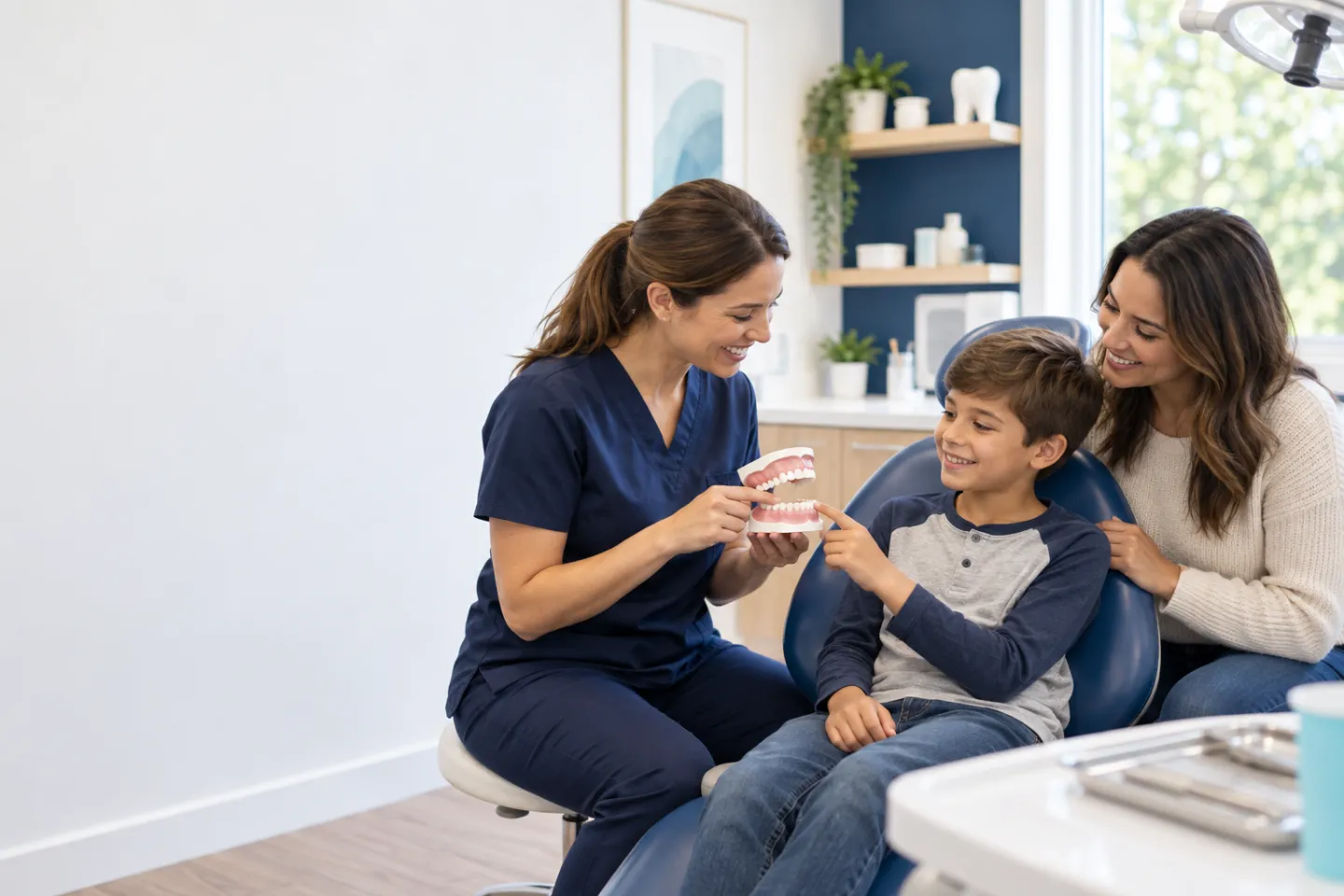
Port Dover Family Dentistry
An early bite check can flag crowding, crossbites or habits while a child grows. Pine Grove parents can learn what is assessed and when referral helps.
Let’s get you smiling
Tell us how we can help. Our team will follow up to confirm a time.
Caring for Pine Grove patients at our Port Dover office
Browse every dental service for Pine GroveWatching growth
As children lose baby teeth and adult teeth arrive, the jaws are still growing. An early orthodontic assessment checks how teeth and jaws are developing and whether any problems might benefit from attention during growth. Many children need no early treatment, but identifying issues such as crossbites or crowding can help plan the right timing.
Families in Pine Grove can have their child’s bite reviewed at our Port Dover office during routine visits or a dedicated assessment. If specialist care seems appropriate, the dentist will explain the referral and what it involves.
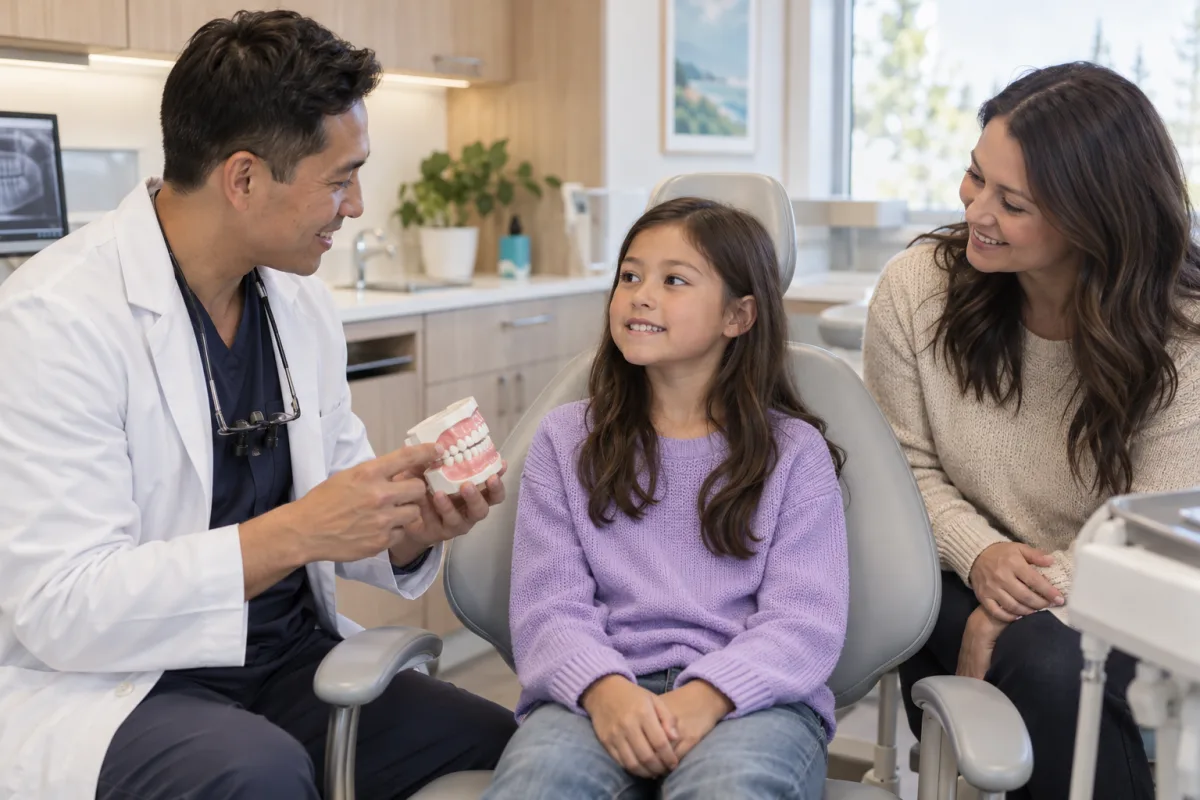
When to check
By about seven, most children have their first permanent molars and some adult front teeth. This lets the dentist assess front-to-back and side-to-side relationships of the jaws. An early check does not mean braces will start, but it allows any developing concerns to be monitored or addressed when growth can be guided.
Mention early or late loss of baby teeth, difficulty chewing or biting, mouth breathing, thumb sucking beyond early childhood, jaw shifting when closing, protruding teeth or teeth that do not meet. These may indicate a need for closer monitoring. A child who seems to grind or has speech concerns may also benefit from assessment.
The assessment
The dentist checks the number and position of teeth, crowding or spacing, and whether baby teeth are being lost in a typical order. X-rays may be recommended to see developing adult teeth and confirm that all are present. Photos may be taken to compare changes over time.
How the upper and lower jaws meet is examined, including crossbites, overbites, underbites and open bites. The dentist may ask about breathing, sleep, speech and oral habits. Each finding is explained, along with whether it is something to watch, treat early or leave until more adult teeth arrive.
Possible next steps
For many children, the best plan is to keep monitoring at regular checkups. Growth may improve some issues naturally, while others become clearer over time. The dentist will explain what to watch for and when another assessment would be useful. Watchful waiting is a valid choice, not a missed opportunity.
Some concerns, such as certain crossbites or severe crowding, may benefit from early intervention. Space maintainers, habit appliances or referral to an orthodontist may be discussed. Ask what the treatment aims to achieve, how long it may take and whether a second phase of treatment might still be needed later.
Supporting development
Encourage nose breathing where possible and mention persistent mouth breathing or snoring to your doctor. Help children gradually move away from thumb or pacifier habits. Keep baby teeth healthy with good brushing and limited sugary snacks, because early tooth loss from decay can affect spacing for adult teeth.
Regular dental checkups let the dentist follow growth and compare records over time. If your child has a dental injury, loses a tooth early or develops a new habit, call the office. Changes between visits can affect the plan, and timely advice helps make the most of growth.
Planning your appointment
Ask about an early orthodontic assessment when booking your child’s checkup at our Port Dover office. Mention any concerns about teeth, breathing or habits so time can be allowed.
Bring notes on when baby teeth were lost, any family history of orthodontic treatment and questions about habits like thumb sucking.
Before you book
Have a question about your situation? Our team can help you plan a visit.
No. Many children who are assessed early need no treatment for years, or at all. The assessment helps identify concerns and plan the timing of any care, which may simply mean monitoring growth at regular checkups.
Many dental organizations suggest around age seven, when the first adult molars and front teeth have usually arrived. The dentist may recommend an earlier look if there are specific concerns about the bite or habits.
Sometimes early treatment reduces the complexity of later care, but it does not always eliminate the need for braces. The dentist or orthodontist will explain what early treatment can realistically achieve for your child.
X-rays may be recommended to see developing teeth beneath the gums and confirm all are present. The dentist will explain why images are useful and how often they may be needed for monitoring.
Some early measures may be provided by a general dentist, while more involved treatment is usually referred to an orthodontist. The dentist will explain the reason for any referral and what to expect.
If a baby tooth is lost early, a space maintainer can hold room for the adult tooth. Pine Grove parents can learn when one is advised and how it is cared for.
Thumb sucking and pacifier use are normal early on but can affect teeth if they last. Pine Grove parents can learn when to act and gentle ways to help.
Recognized year after year
Best Dentists in Norfolk
Proudly recognized among Norfolk’s top-rated dental practices for six consecutive years.

2021 Winner

2022 Winner

2023 Winner

2024 Winner

2025 Winner

2026 Winner
Stories from our patients
Watch a patient’s experience and browse more five-star reviews from people who have visited our Port Dover dental clinic.
Patient video
A patient shares the welcoming atmosphere and positive experience they found at our Port Dover office.
Google reviews
Swipe or use the arrows
Read all reviewsYour next visit can start today
New patients and CDCP patients are welcome. Tell us how we can help and our Port Dover dental team will follow up with you.
Evening appointments Monday and Tuesday