
Patient video
Welcoming and Wonderful Practice
A patient shares the welcoming atmosphere and positive experience they found at our Port Dover office.
★★★★★
Port Dover Family Dentistry
X-rays show decay between teeth, bone levels and roots that an exam cannot. Wilsonville patients can learn why and how often images are taken at our Port Dover office.
Let’s get you smiling
Tell us how we can help. Our team will follow up to confirm a time.
Caring for Wilsonville patients at our Port Dover office
See every dental service for WilsonvilleSeeing below the surface
Dental X-rays help the dentist see between teeth, under existing fillings, around roots and into the jawbone. Many problems, such as early decay between teeth, infection at the root tip or bone loss from gum disease, are not visible in the mouth. X-rays are used alongside the examination to give a more complete picture of your oral health.
Wilsonville patients who visit our Port Dover office for checkups or a specific concern may be recommended X-rays based on their history and needs. You are always welcome to ask why a particular image is suggested, what it will show and how often it is likely to be repeated.
Why X-rays
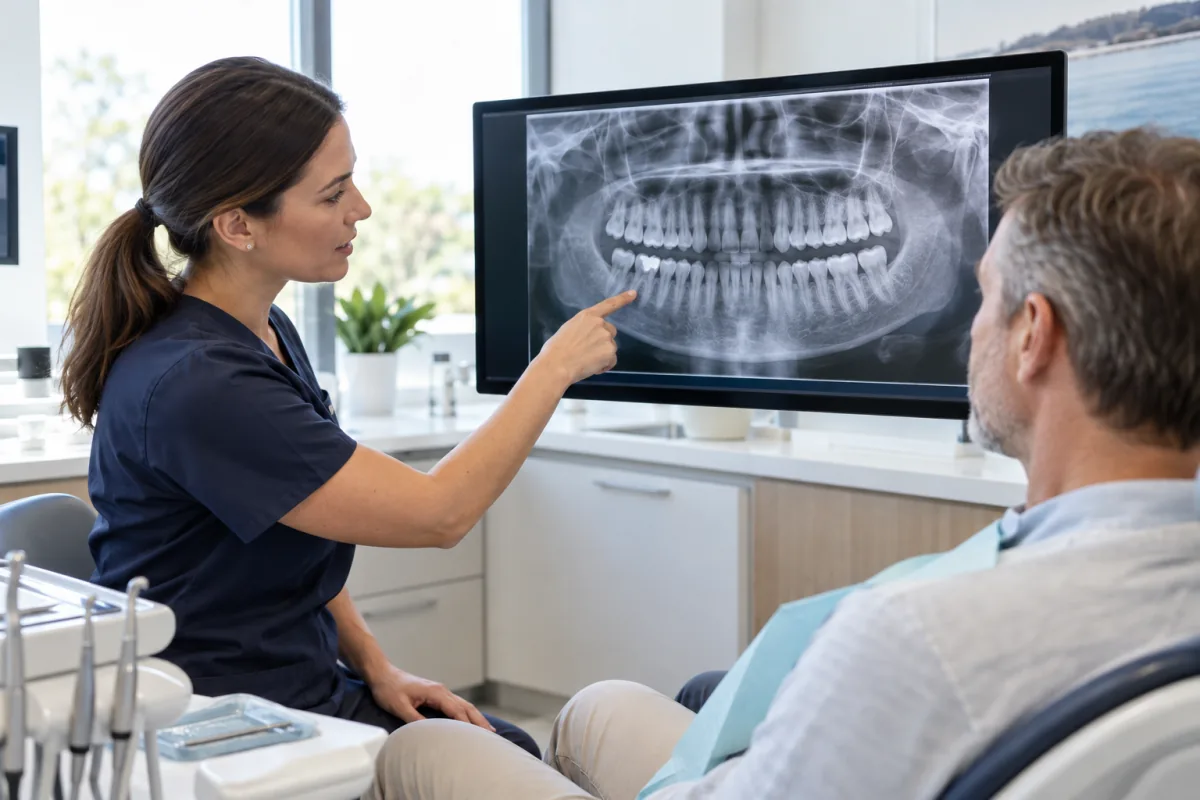
Bitewing X-rays show the back teeth and can reveal cavities between teeth and under fillings. Periapical X-rays show entire teeth, including roots and surrounding bone, which helps detect abscesses and other root problems. Panoramic images give a broader view of the jaws, useful for wisdom teeth and developing teeth in children.
Before treatments such as root canals, extractions or implants, X-rays help the dentist plan safely. They are also used to monitor changes over time, such as bone levels in gum disease or healing after treatment. Comparing images across visits can show whether a problem is stable or progressing.
How often
There is no single schedule that fits everyone. People with a history of frequent cavities, gum disease or many restorations may need X-rays more often. Those with low risk may need them less frequently. The dentist considers your history and current findings before recommending images.
New patients may have a set of X-rays taken to establish a baseline, unless recent images can be obtained from a previous dentist. Children may need X-rays to check developing teeth and between baby molars. Ask whether recent X-rays from another office could be transferred to avoid repeating them.
Safety
Digital dental X-rays generally involve a small amount of radiation. Dentists follow the principle of taking only the images needed for diagnosis. Protective measures may be used, and images can be viewed immediately on screen. If you have concerns about radiation, discuss them with the dentist before images are taken.
Tell the team if you are pregnant or might be. Routine X-rays may be postponed, while images needed for urgent diagnosis can be discussed with appropriate precautions. Also mention whether you have had X-rays recently elsewhere, which may help avoid unnecessary repeats.
During the visit
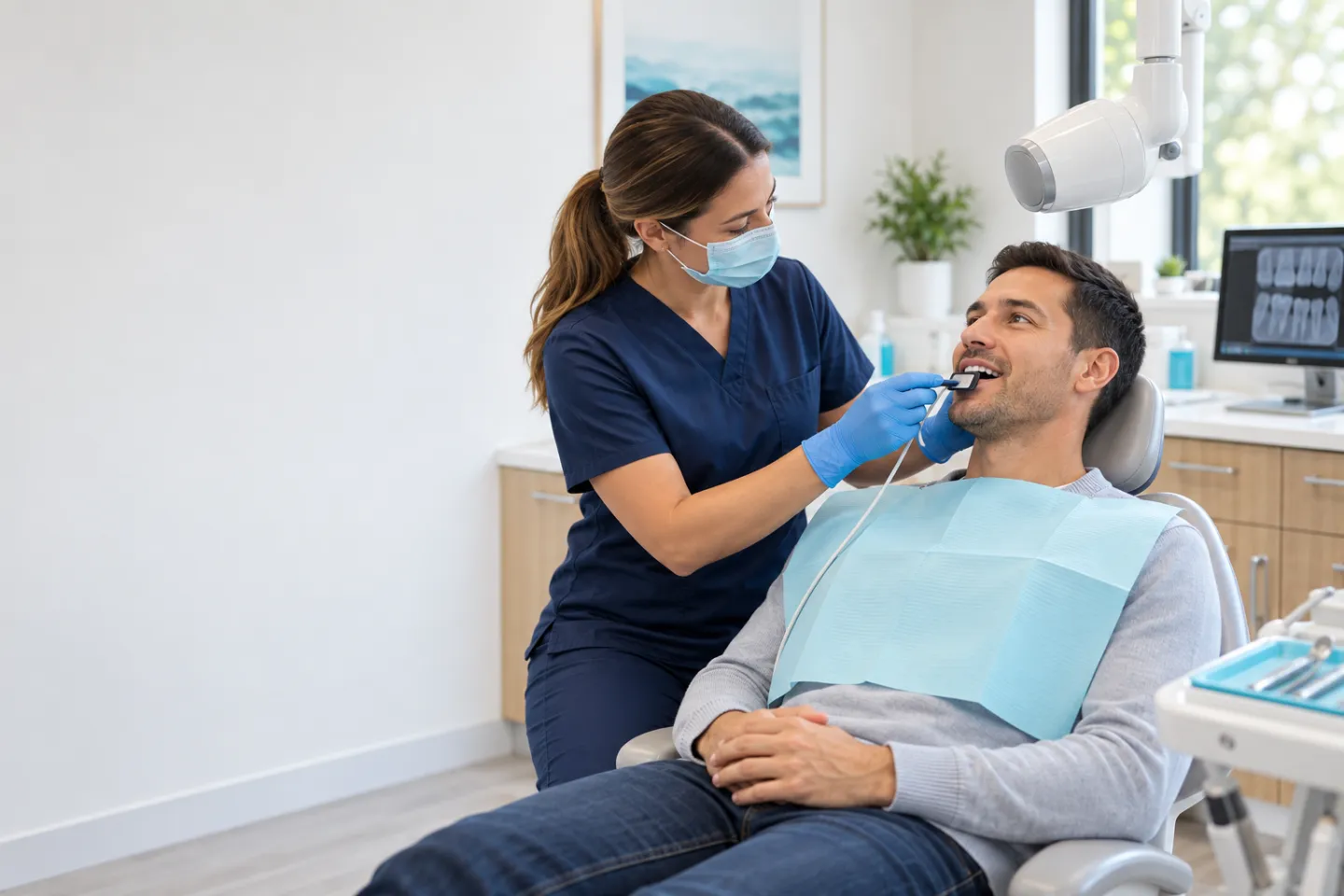
A small sensor is placed in your mouth and you bite gently to hold it in position. The X-ray machine is positioned near your cheek and the image is taken in seconds. If you have a strong gag reflex or a small mouth, let the team know so they can adjust the technique for comfort.
Digital images appear on a screen shortly after they are taken. The dentist can enlarge areas and point out findings. Ask to see your X-rays and have the dentist explain what they show. Understanding the images can make treatment discussions clearer and help you make informed decisions.
Planning your appointment
When you book at our Port Dover office, mention whether you have had dental X-rays taken elsewhere recently. The team can request records from a previous office where appropriate to avoid duplicating images.
Let the team know if you are pregnant, have a strong gag reflex or have concerns about radiation before the images are taken.
Before you book
Have a question about your situation? Our team can help you plan a visit.
Dental X-rays use a low dose of radiation, and dentists take only those images needed for diagnosis. If you have concerns, discuss them with the dentist so the benefits and precautions can be explained.
Many problems, such as early decay between teeth or bone loss, develop without pain. X-rays help find them early when treatment is usually simpler.
You can discuss your preferences with the dentist. Without X-rays, some problems may not be detected, and certain treatments cannot be planned safely. The dentist will explain the implications.
Often, yes. Ask your previous dental office to send recent images. This can help the new dentist compare changes and may reduce the need to repeat X-rays.
Let the team know. Techniques such as different sensor positions, breathing strategies or alternative types of images may help make the process more comfortable.
Regular dental exams catch decay, gum changes and other problems early. Wilsonville patients can book checkups and plan return visits at our Port Dover office.
A first visit sets a baseline for your oral health and future care. Wilsonville residents new to our Port Dover practice can learn what the first exam includes.
Recognized year after year
Best Dentists in Norfolk
Proudly recognized among Norfolk’s top-rated dental practices for six consecutive years.

2021 Winner

2022 Winner

2023 Winner

2024 Winner

2025 Winner

2026 Winner
Stories from our patients
Watch a patient’s experience and browse more five-star reviews from people who have visited our Port Dover dental clinic.
Patient video
A patient shares the welcoming atmosphere and positive experience they found at our Port Dover office.
Google reviews
Swipe or use the arrows
Read all reviewsYour next visit can start today
New patients and CDCP patients are welcome. Tell us how we can help and our Port Dover dental team will follow up with you.
Evening appointments Monday and Tuesday