
Patient video
Welcoming and Wonderful Practice
A patient shares the welcoming atmosphere and positive experience they found at our Port Dover office.
★★★★★
Port Dover Family Dentistry
X-rays show decay, bone and roots that cannot be seen in the mirror. Peacock Point patients can learn when images are recommended and how records are shared in Port Dover.
Let’s get you smiling
Tell us how we can help. Our team will follow up to confirm a time.
Caring for Peacock Point residents and cottagers at our Port Dover office
Browse every dental service for Peacock PointSeeing below the surface
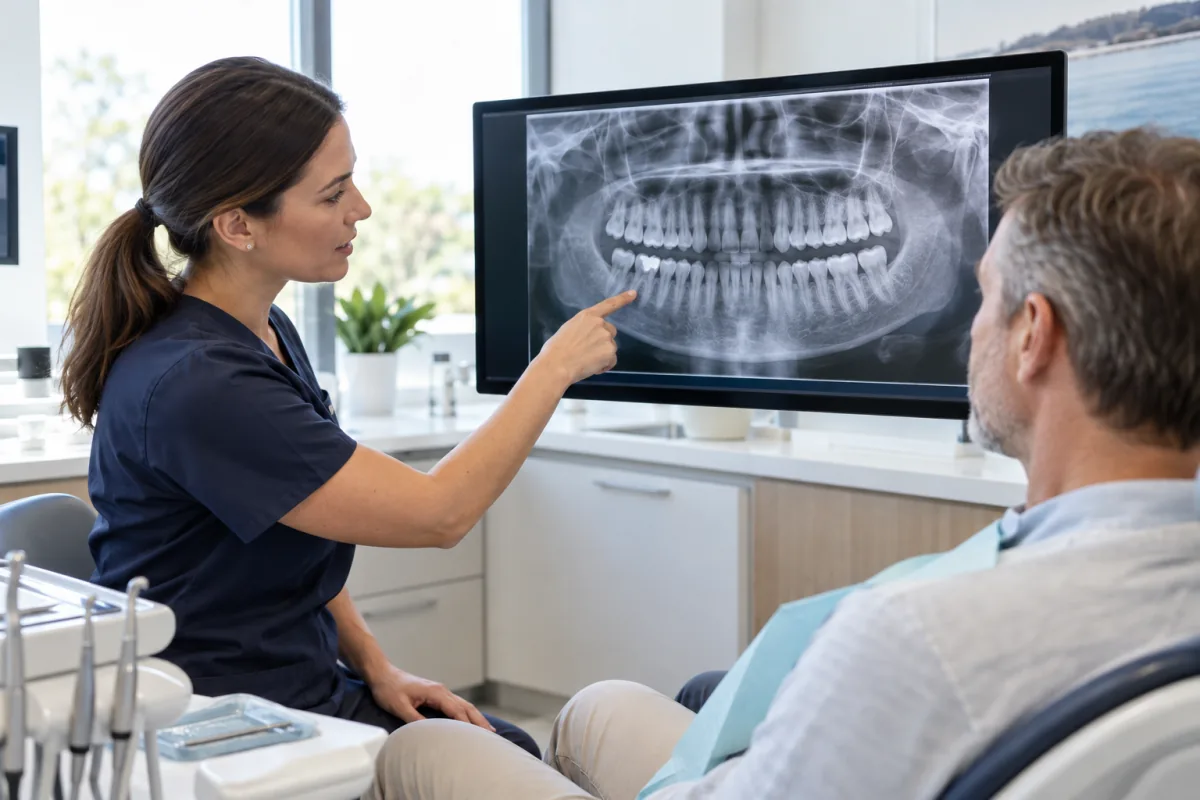
Dental X-rays show areas hidden from view, such as between teeth, under existing fillings, inside the roots and in the surrounding bone. They help the dentist detect decay, infection, bone loss, impacted teeth and other conditions. Digital images can be viewed on a screen during your appointment, making it easier to explain what was found and why.
Peacock Point patients, including those who also see a dentist in another town, can have X-rays taken when needed at our Port Dover office. If recent images exist elsewhere, mention them, since sharing records may help avoid unnecessary repeat X-rays.
Why they are used
X-rays can reveal cavities between teeth, decay under fillings, abscesses at root tips, bone loss from gum disease, cracks, cysts and teeth that have not erupted. They also help plan treatments such as root canals, extractions and implants. Without them, some problems remain hidden until they cause pain or become more difficult to treat.
The frequency of X-rays is based on your individual history, risk of decay and gum disease and any symptoms. Someone with frequent cavities may need them more often than someone with a long history of healthy teeth. The dentist should explain the reason for each set of images and how they will help with your care.
Types
Bitewing X-rays show the crowns of upper and lower back teeth together and are useful for detecting decay between teeth and checking bone levels. Periapical X-rays show the entire tooth from crown to root tip and are used to examine a specific tooth for infection, root problems or before procedures like root canal treatment.
A panoramic X-ray captures the whole mouth, including the jaws, sinuses and developing teeth, in one image. It is often used to evaluate wisdom teeth or plan more complex treatment. In some cases, three-dimensional imaging may be recommended through referral. The dentist will choose the view that best answers the clinical question.
During imaging
Let the team know if you are pregnant or might be, so the timing and need for X-rays can be discussed. Remove glasses, earrings or other metal objects near the head if asked. A protective apron or collar may be offered. If you have a strong gag reflex, mention it so the team can help make the sensor placement more comfortable.
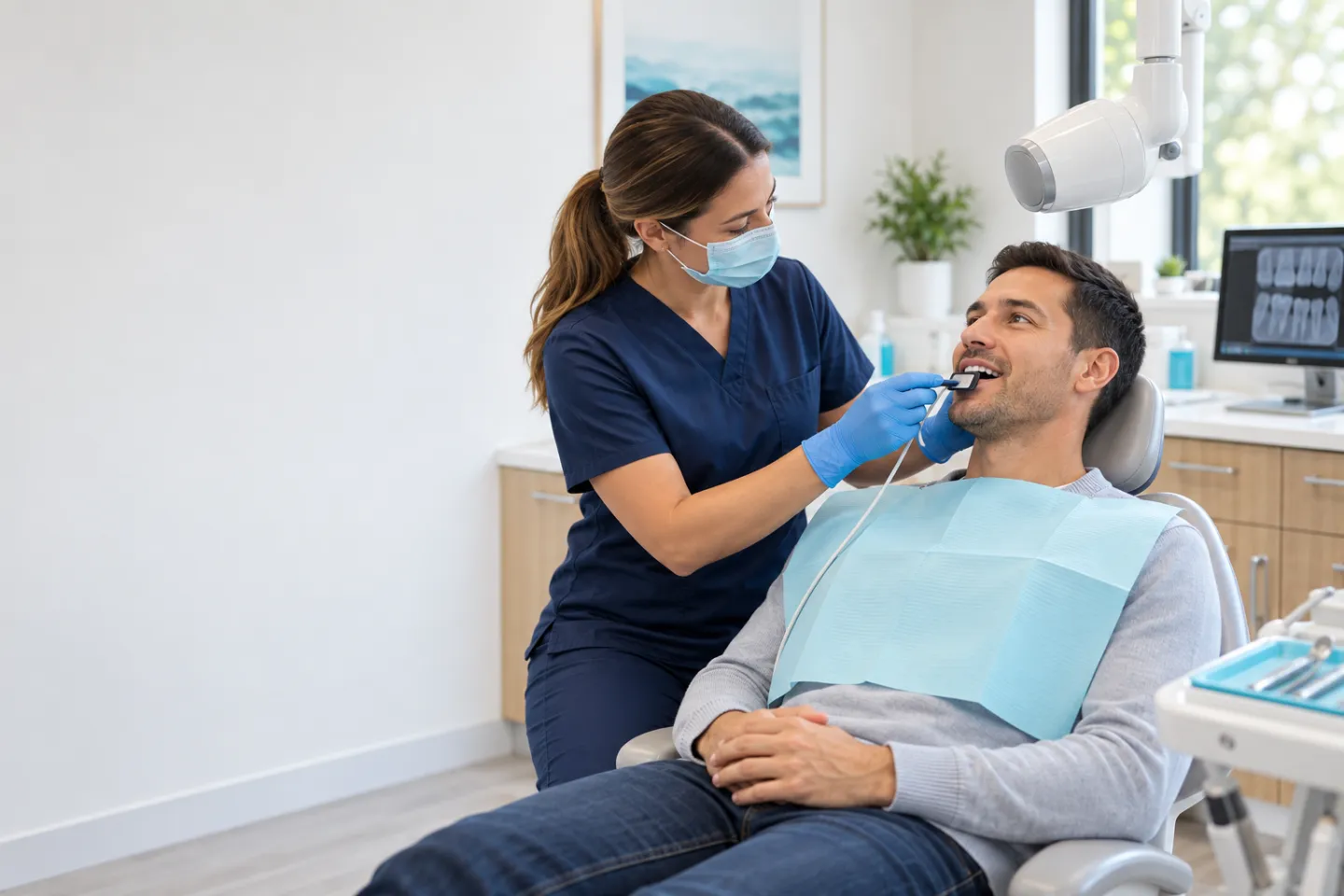
A small sensor is placed in your mouth, and you will be asked to bite gently or hold still while the image is taken. Each exposure lasts only a moment. For panoramic images, you stand or sit while a machine rotates around your head. The images appear on a screen quickly, so the dentist can review them with you.
Records
Ask the dentist to show you the images and point out anything of concern. Seeing a shadow of decay or bone loss can make treatment recommendations easier to understand. If a finding needs monitoring rather than treatment, ask how it will be followed and when the next images might be taken.
If you see dentists in different places during the year, request that your X-rays be shared with your consent. This can help each dentist compare images over time and reduce repeat exposures. Bring the contact information of your other dental office, and ask how records can be requested and sent securely.
Planning your appointment
Call our Port Dover office to book an examination, which may include X-rays if they are recommended. Mention any recent images taken elsewhere so the team can consider requesting them first.
Let the team know if you are pregnant, and bring contact details for any other dental office you visit.
Before you book
Have a question about your situation? Our team can help you plan a visit.
Dental X-rays involve low levels of radiation, and digital systems typically use less than older film methods. The dentist recommends images only when the benefit to your care outweighs the small exposure. Ask about any concerns you may have.
Many problems, such as early decay between teeth or bone loss, cause no pain until they are advanced. X-rays help detect these issues early, when treatment is often simpler and less extensive.
Let the dentist know if you are pregnant. Routine X-rays may be postponed, but images may still be recommended if needed to diagnose a problem. The dentist will discuss the timing and precautions with you.
With your consent, X-rays can usually be shared with another dental office. This helps coordinate care and may reduce the need for repeat images. Ask the office about how records are transferred.
It depends on your oral health, risk of decay and history. Some people need them more often, while others less frequently. The dentist will recommend a schedule based on your individual needs.
Routine exams catch small problems before they grow. Peacock Point residents and cottagers can book a checkup at our Port Dover office and keep records in one place.
New to our practice from Peacock Point? A first exam builds a full picture of your oral health. Learn what to bring and expect at our Port Dover dental office.
Recognized year after year
Best Dentists in Norfolk
Proudly recognized among Norfolk’s top-rated dental practices for six consecutive years.

2021 Winner

2022 Winner

2023 Winner

2024 Winner

2025 Winner

2026 Winner
Stories from our patients
Watch a patient’s experience and browse more five-star reviews from people who have visited our Port Dover dental clinic.
Patient video
A patient shares the welcoming atmosphere and positive experience they found at our Port Dover office.
Google reviews
Swipe or use the arrows
Read all reviewsYour next visit can start today
New patients and CDCP patients are welcome. Tell us how we can help and our Port Dover dental team will follow up with you.
Evening appointments Monday and Tuesday