
Patient video
Welcoming and Wonderful Practice
A patient shares the welcoming atmosphere and positive experience they found at our Port Dover office.
★★★★★
Port Dover Family Dentistry
X-rays show what a visual exam cannot, from decay between teeth to bone levels. Find out why images are recommended and what Jarvis patients can ask before having them.
Let’s get you smiling
Tell us how we can help. Our team will follow up to confirm a time.
Seeing Jarvis patients at our Port Dover office
Every dental service for Jarvis patientsSeeing beneath the surface
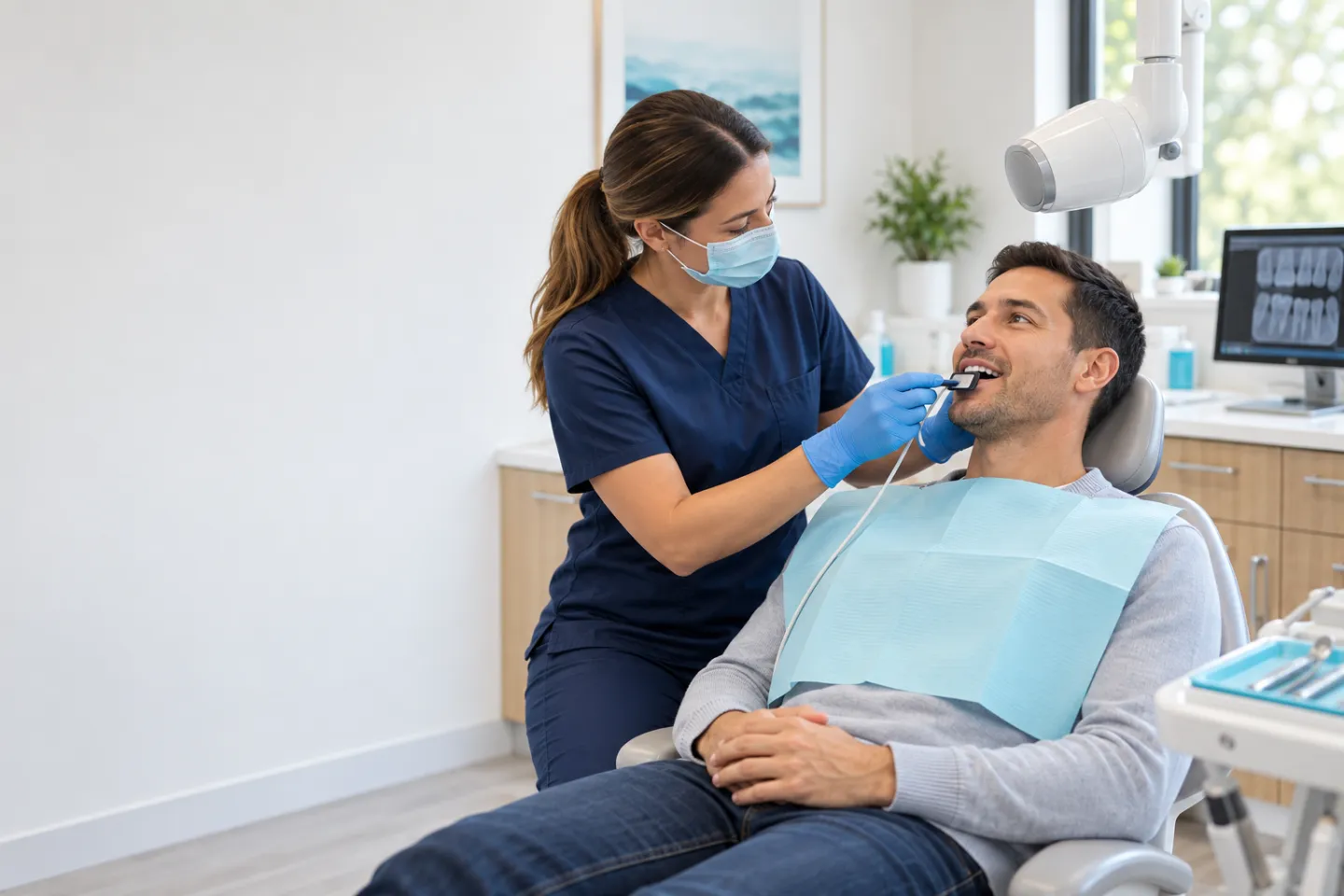
Many dental problems develop where they cannot be seen during a regular exam: between teeth, under fillings, at root tips and in the bone. Digital X-rays capture images that help the dentist identify decay, infection, bone loss and developing teeth. They are a diagnostic tool, recommended based on your needs rather than on a fixed schedule.
When imaging is suggested during a visit to our Port Dover office, Jarvis patients are welcome to ask what the image is for. Understanding the purpose makes it easier to feel comfortable with the recommendation.
Why they matter
X-rays can reveal cavities between teeth, decay under existing fillings, abscesses at root tips, bone loss from gum disease, impacted teeth and cysts. In children, they show developing adult teeth and spacing. They also help plan treatments such as root canals, extractions and implants with greater accuracy.
A tooth may look healthy on the surface while decay spreads inside or between teeth. Early bone loss from gum disease is often not visible without imaging. By catching these problems earlier, X-rays can lead to simpler treatment. The dentist uses them alongside the clinical exam, not as a replacement.
Types of images
Bitewing X-rays show the crowns of upper and lower back teeth together and are useful for detecting decay between teeth and checking bone levels. Periapical X-rays show the whole tooth from crown to root tip, helping to identify abscesses or root problems in a particular area.
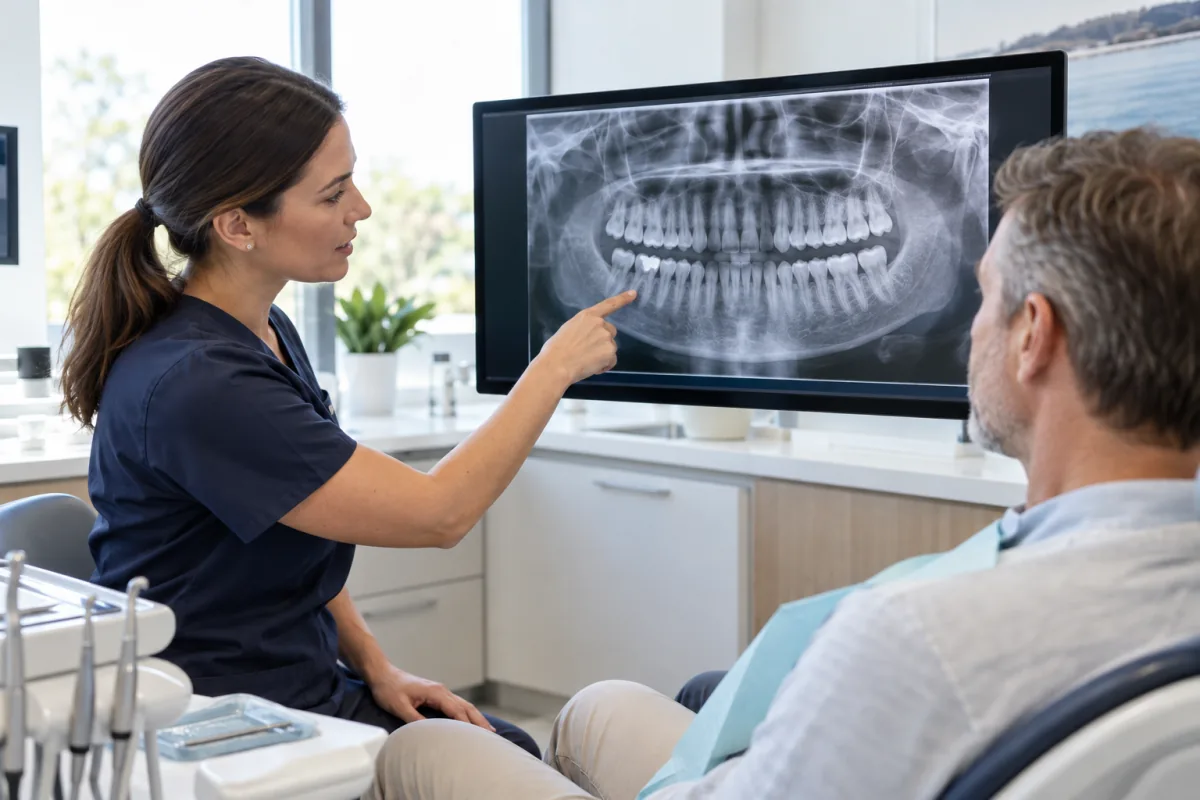
A panoramic X-ray captures the entire mouth, including the jaws and developing or impacted teeth, in a single image. Three-dimensional imaging may be recommended for complex planning such as implants, and may be done at a specialized facility. The dentist will explain which type is needed and why.
Safety
Digital dental X-rays use low doses of radiation, and digital sensors typically require less exposure than older film methods. Protective measures may be used. The dentist recommends X-rays based on your history and risk, balancing the benefit of the information against the small exposure involved.
If you are pregnant or might be, tell the team before any X-rays. Non-urgent images may be postponed, while necessary images can be taken with precautions. Mention any recent X-rays taken elsewhere, as they may be shared so you do not need to repeat them.
Your images
Digital images appear on screen almost immediately, which makes it easy for the dentist to show you what they see. Ask them to point out any areas of concern and explain what they mean. Seeing the image can help you understand why a treatment is being recommended or why something is being monitored.
If you are seeing a specialist or changing dentists, X-rays can usually be shared electronically with your consent. Ask the office how to request copies. Keeping records together helps future dentists compare changes over time and may reduce the need for repeat images.
Planning your appointment
If you have had X-rays elsewhere recently, mention it when booking at our Port Dover office. The team can explain how to request copies so they can be reviewed.
Let the team know if you are pregnant or might be, and share any concerns about imaging before the appointment.
Before you book
Have a question about your situation? Our team can help you plan a visit.
It depends on your risk of decay, gum health and history. Some people need them more often than others. The dentist will recommend a schedule based on your individual needs.
They involve low doses of radiation, and digital methods often require less than older film. The dentist recommends them when the diagnostic benefit outweighs the small exposure.
You can discuss any concerns. The dentist will explain the reasons for the recommendation and what might be missed without the images, so you can make an informed choice.
Tell the team if you are pregnant. Routine X-rays may be postponed, while necessary images can be taken with appropriate precautions. The dentist will discuss what is advisable.
Often, yes. With your consent, previous X-rays can usually be requested from another office. This can help avoid repeat images and allows comparison over time.
Regular dental exams help find decay, gum changes and other concerns before they cause pain. See what a checkup covers and how Jarvis patients can prepare for one.
New to our practice? A first comprehensive exam gives a full baseline of teeth, gums and bite. Here is what Jarvis residents can expect and what to bring along.
Recognized year after year
Best Dentists in Norfolk
Proudly recognized among Norfolk’s top-rated dental practices for six consecutive years.

2021 Winner

2022 Winner

2023 Winner

2024 Winner

2025 Winner

2026 Winner
Stories from our patients
Watch a patient’s experience and browse more five-star reviews from people who have visited our Port Dover dental clinic.
Patient video
A patient shares the welcoming atmosphere and positive experience they found at our Port Dover office.
Google reviews
Swipe or use the arrows
Read all reviewsYour next visit can start today
New patients and CDCP patients are welcome. Tell us how we can help and our Port Dover dental team will follow up with you.
Evening appointments Monday and Tuesday