
Patient video
Welcoming and Wonderful Practice
A patient shares the welcoming atmosphere and positive experience they found at our Port Dover office.
★★★★★
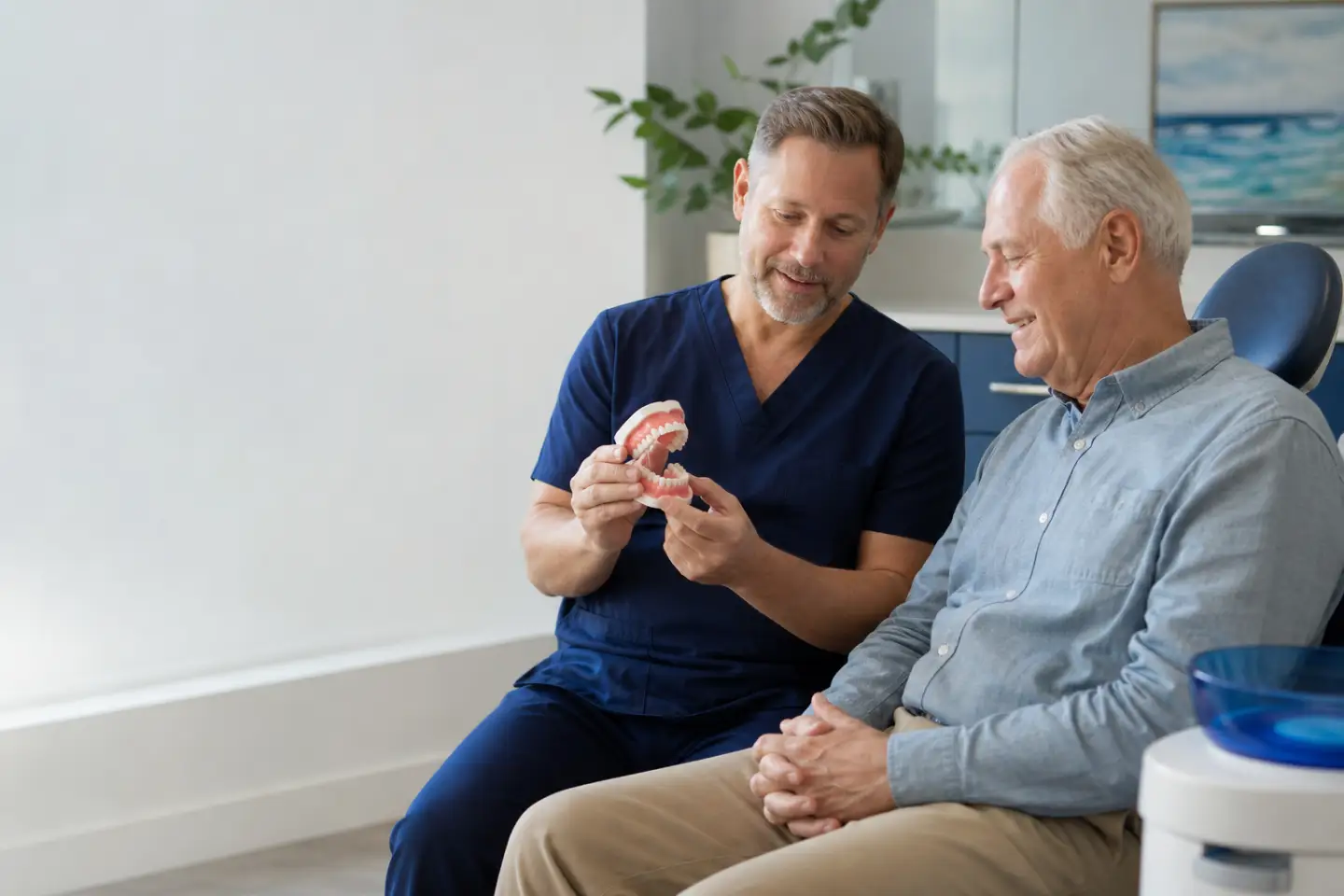
Port Dover Family Dentistry
Thinking about dentures for the first time? Lynedoch patients can learn how dentures are planned, made and adjusted with the dentist at our Port Dover office.
Let’s get you smiling
Tell us how we can help. Our team will follow up to confirm a time.
Caring for Lynedoch patients at our Port Dover office
Every dental service for Lynedoch patientsReplacing lost teeth
Dentures are removable replacements for missing teeth and the gum tissue around them. They can restore chewing, support the lips and cheeks, and help with speech after tooth loss. For many people, moving to dentures is a significant change, and it is natural to have questions about comfort, appearance and how daily life will feel.
If you are in Lynedoch and considering dentures, an assessment at our Port Dover office can help clarify whether a complete or partial denture, or an implant-supported option, suits you. The dentist will explain what the process involves and the adjustments that are a normal part of adapting.
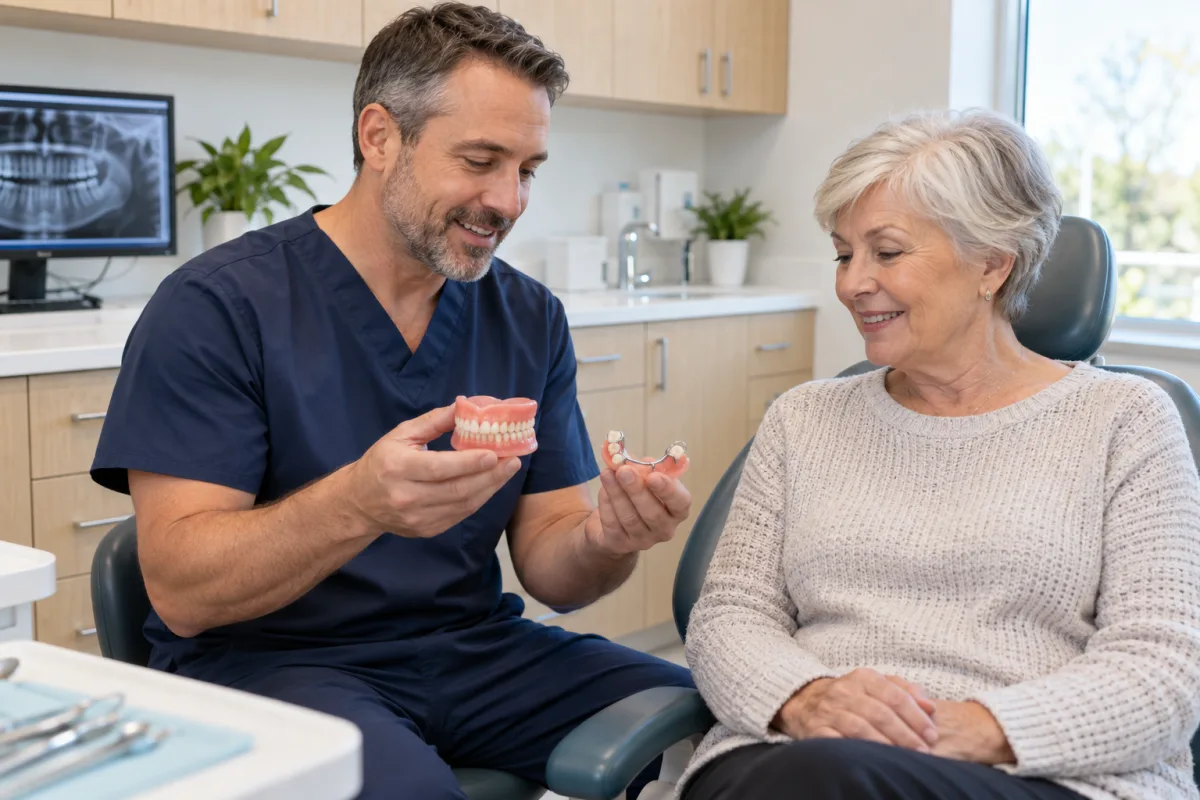
First conversations
Explain which teeth are missing or causing trouble, how you are managing with eating and speaking and what you hope dentures will change. If you are expecting extractions, ask how and when dentures fit into that plan. Your priorities help shape which approach the dentist recommends.
Complete dentures replace a full arch, while partial dentures fill gaps among remaining teeth. Implant-supported dentures attach to implants for added stability. Each option has different requirements and maintenance. Ask the dentist to explain the advantages and limitations of each for your mouth.
Immediate or delayed
An immediate denture is made in advance and placed right after teeth are removed, so you are not without teeth while healing. Because the gums shrink as they heal, immediate dentures usually need relines or adjustments in the following months. Ask how many adjustment visits to expect.
A conventional denture is made after the gums have healed, which can mean a more stable initial fit. The trade-off is a period without teeth. The dentist can discuss which approach suits your circumstances, including work, social commitments and how you feel about the healing period.
Fitting and adapting
Start with soft foods cut into small pieces and chew slowly using both sides of the mouth. Avoid very sticky or hard foods at first. Sore spots are common in the early weeks. Call the office for adjustments rather than wearing a denture that is causing pain or ulcers.
Speech may feel different at first. Reading aloud and practising difficult words can help. Extra saliva is also common early on and usually settles. If a denture slips when you laugh or cough, mention it at your follow-up. The dentist can check whether fit or bite needs refining.
Long-term care
Brush dentures daily with a soft brush and a cleaner recommended by the team, rinsing after meals when possible. Clean your gums, tongue and any natural teeth too. Remove dentures overnight unless advised otherwise and keep them moist. Handle them over a towel or water to prevent breakage.
Gums and bone change gradually, so dentures may loosen over time. Regular checkups allow the dentist to examine the soft tissues and check the fit. Relines, repairs or a new denture may eventually be recommended. Never try to adjust a denture yourself, as this can cause damage.
Planning your appointment
Contact our Port Dover office to arrange an assessment. Mention whether teeth may need to be removed and what difficulties you are having with eating, comfort or appearance.
Ask how many visits are usually needed from impressions to final fitting so travel and time away can be planned.
Before you book
Have a question about your situation? Our team can help you plan a visit.
The process usually involves several appointments for impressions, bite records, try-ins and fitting. The timeline depends on whether extractions and healing are involved. The dentist will outline the steps for you.
Modern dentures can be designed to suit your face and smile. Try-in appointments allow you to see the teeth before the denture is finished, so you can request changes to shape or shade.
Most people learn to eat a wide range of foods with practice, though very hard or sticky foods may remain difficult. Starting with soft foods and building up helps the adjustment.
Adhesive may help some people feel more secure, but a well-fitting denture should not depend on large amounts. If you need more adhesive over time, the fit may need to be checked.
Dentures wear and the mouth changes over the years, so relines or replacement are eventually needed. Regular checkups help determine when your denture should be updated.
Missing several teeth or a full arch? Lynedoch residents can compare complete and partial dentures, fittings and adjustment visits with our Port Dover team.
Loose, cracked or uncomfortable denture? Lynedoch wearers can call our Port Dover office to describe the problem and ask about repair, reline or adjustment options.
Recognized year after year
Best Dentists in Norfolk
Proudly recognized among Norfolk’s top-rated dental practices for six consecutive years.

2021 Winner

2022 Winner

2023 Winner

2024 Winner

2025 Winner

2026 Winner
Stories from our patients
Watch a patient’s experience and browse more five-star reviews from people who have visited our Port Dover dental clinic.
Patient video
A patient shares the welcoming atmosphere and positive experience they found at our Port Dover office.
Google reviews
Swipe or use the arrows
Read all reviewsYour next visit can start today
New patients and CDCP patients are welcome. Tell us how we can help and our Port Dover dental team will follow up with you.
Evening appointments Monday and Tuesday