
Patient video
Welcoming and Wonderful Practice
A patient shares the welcoming atmosphere and positive experience they found at our Port Dover office.
★★★★★
Port Dover Family Dentistry
A fall, collision or sports injury can damage teeth and gums. Learn what to do first, when to call our Port Dover office and what follow-up usually involves.
Let’s get you smiling
Tell us how we can help. Our team will follow up to confirm a time.
Caring for Townsend patients at our Port Dover office
Every dental service for TownsendAfter an injury to the mouth
Dental trauma covers a range of injuries: chipped or fractured teeth, teeth pushed out of position, loosened teeth, knocked-out teeth and cuts to the lips, gums or tongue. These often happen during sports, falls, cycling or car accidents. Some injuries look minor yet affect the nerve or root, so a proper assessment is important.
After a mouth injury in Townsend, call our Port Dover office to describe what happened and arrange to be seen. The team will ask about the type of injury and symptoms to judge urgency. Serious head or facial injuries need emergency medical care first, before any dental treatment.
Immediate response
First, check that the injured person is alert, breathing normally and showing no signs of a head or neck injury, such as confusion, drowsiness, vomiting, a severe headache or neck pain. Any of these needs emergency medical attention right away. Once overall safety is confirmed, look in the mouth to see which teeth are affected and whether any are missing, broken or out of place.
Press gently on bleeding areas with clean gauze or a folded cloth for several minutes, and hold a cold compress against swollen lips or cheeks. Collect any tooth fragments and store them in milk or saline. If a permanent tooth has been knocked out completely, handle it only by the crown, keep it moist and contact a dentist immediately for guidance.
Types of injury
A chipped or fractured tooth may be sensitive to air and temperature or have a sharp edge. A tooth that feels loose or tender but has not visibly moved may still have damaged the ligament that holds it or the nerve inside. Avoid biting on the injured area, eat soft foods and note any change in colour or sensitivity over the following days to report to the dentist.
Teeth that have been pushed up into the gum, partly out of the socket or sideways need prompt professional repositioning and stabilization. Do not try to force them back yourself. A knocked-out permanent tooth is the most time-sensitive dental injury of all. Baby teeth should not be put back in, but the child still needs to be checked for injury to the adult tooth beneath.
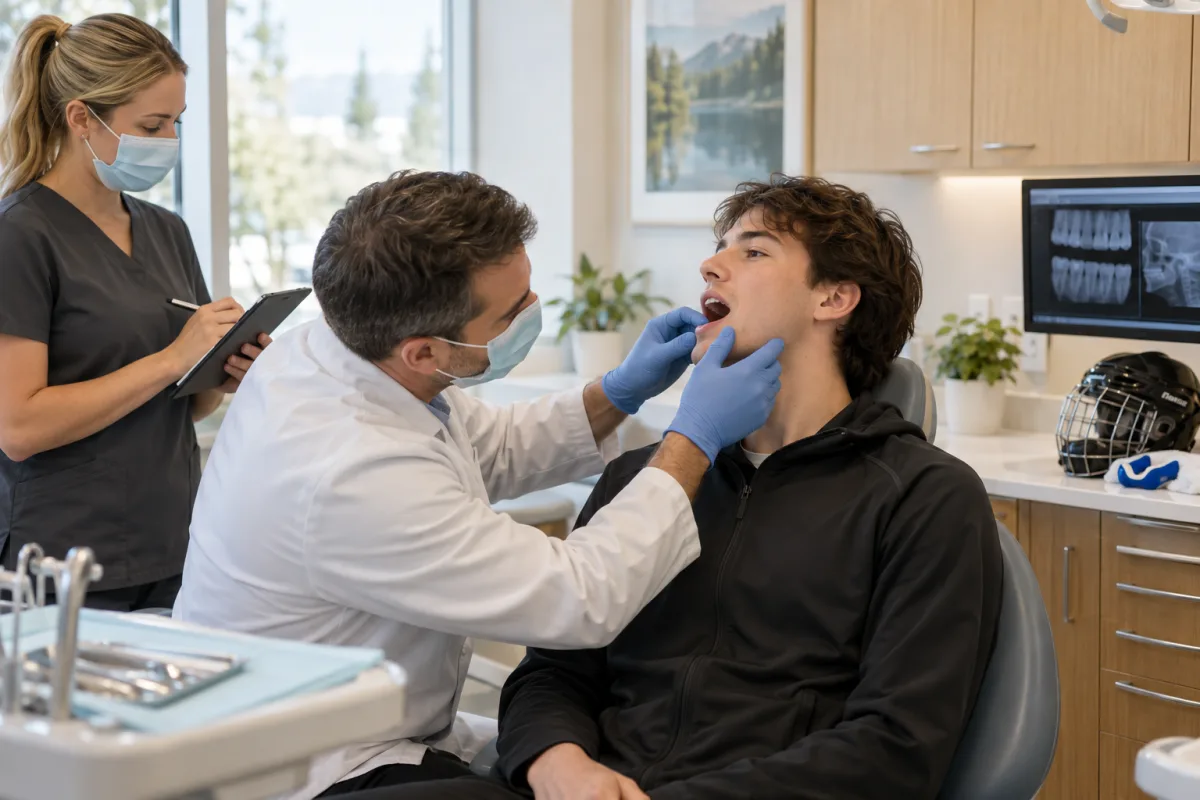
Dental assessment
The dentist will examine the teeth, gums, lips and bite, and usually take X-rays to check the roots and surrounding bone for fractures. Tests of nerve response may be carried out, though results can be unreliable for a while after an injury, so they are often repeated later. Photographs are sometimes taken to record the injury for comparison at future appointments.
Treatment depends on the injury. A fractured tooth may be bonded or covered to protect it, a displaced tooth eased back into position and splinted to its neighbours, and cuts to the gums or lips cleaned. If the nerve has been damaged, root canal treatment may be needed later. The dentist will explain the plan and which signs to watch for at home.
Follow-up care
Some effects of an injury, such as a nerve slowly dying, changes to the root or gradual darkening of the tooth, can appear weeks or even months later. Follow-up appointments allow the dentist to monitor healing with exams and X-rays. Keep these visits even if the tooth feels completely fine, and contact the office sooner if pain, swelling, discolouration or a bump on the gum appears.
A properly fitted mouthguard for contact sports and activities with a high risk of falls greatly reduces the chance of dental injury. Seatbelts and correctly installed car seats protect against facial injuries in vehicles. If you or your child have already had a dental injury, ask the dentist about protective steps, since previously injured teeth can be more vulnerable.
Planning your appointment
Call our Port Dover office at 519-583-2929 and describe the injury, which teeth are affected and whether a tooth is missing. The team will advise you on immediate care and how soon you should come in.
Bring any recovered teeth or fragments in milk or saline, and mention whether a head injury, dizziness or loss of consciousness occurred.
Before you book
Have a question about your situation? Our team can help you plan a visit.
Check for signs of a head injury, breathing trouble or heavy bleeding, all of which need emergency medical care. Then apply gentle pressure to bleeding, use a cold compress on swelling and collect any tooth pieces before contacting a dentist.
Some slightly loosened teeth settle on their own with time, while others need a splint to hold them steady while they heal. The dentist will assess how loose the tooth is and whether the root or bone has been affected before advising you.
Discolouration can mean there has been bleeding inside the tooth or damage to the nerve. It does not always mean the tooth will be lost, but it should be assessed. The dentist may monitor it over time or recommend treatment, depending on the findings.
Yes. Even when a baby tooth is not replanted, the injury may affect the adult tooth developing beneath it. The dentist will check the area and explain what to watch for as your child grows and the adult tooth comes in.
It depends on the type of injury. Some teeth are checked several times during the first year to watch for nerve or root changes, and occasionally beyond. The dentist will let you know the recommended schedule for monitoring your particular injury.
A knocked-out adult tooth needs quick action. Learn how to handle and store the tooth, who to call from Townsend and what treatment may follow afterwards.
Chipped a tooth in Townsend? Learn what to save, how to protect the area and when to call our Port Dover office so the damage can be assessed and repaired.
Recognized year after year
Best Dentists in Norfolk
Proudly recognized among Norfolk’s top-rated dental practices for six consecutive years.

2021 Winner

2022 Winner

2023 Winner

2024 Winner

2025 Winner

2026 Winner
Stories from our patients
Watch a patient’s experience and browse more five-star reviews from people who have visited our Port Dover dental clinic.
Patient video
A patient shares the welcoming atmosphere and positive experience they found at our Port Dover office.
Google reviews
Swipe or use the arrows
Read all reviewsYour next visit can start today
New patients and CDCP patients are welcome. Tell us how we can help and our Port Dover dental team will follow up with you.
Evening appointments Monday and Tuesday