
Patient video
Welcoming and Wonderful Practice
A patient shares the welcoming atmosphere and positive experience they found at our Port Dover office.
★★★★★
Port Dover Family Dentistry
Fall, collision or a blow to the mouth? Lynedoch patients can learn first steps for injured teeth and call our Port Dover office to arrange a prompt assessment.
Let’s get you smiling
Tell us how we can help. Our team will follow up to confirm a time.
Caring for Lynedoch patients at our Port Dover office
Every dental service for Lynedoch patientsAfter an injury
Dental trauma covers a range of injuries, from a chipped edge to a tooth pushed out of position, loosened or knocked out entirely. Accidents happen at home, on farm property, during sports or on the road. Some damage is obvious, while other injuries affect the nerve or root in ways that only show up days or weeks later.
If someone in Lynedoch has injured their mouth, call our Port Dover office once any medical emergency has been ruled out. Describe the injury and how it happened. The team will discuss urgency and availability, and explain what to do with the tooth while you arrange to travel.
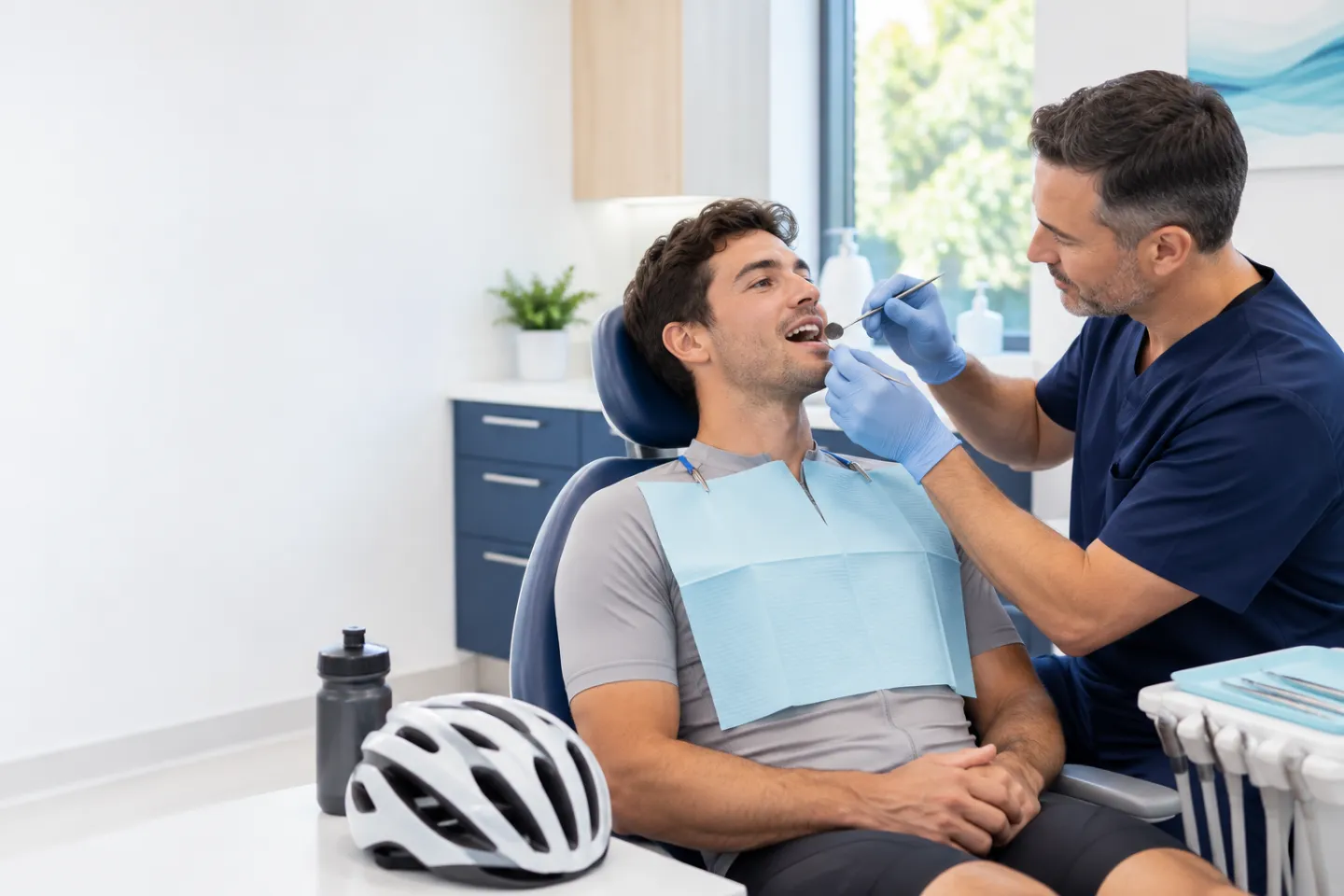
Immediate steps
Look for signs of head injury, such as confusion, vomiting or loss of consciousness, and check for jaw pain that prevents closing the mouth. Heavy bleeding or difficulty breathing needs emergency medical care right away. Once these are addressed, attention can shift to the teeth and soft tissues.
Rinse the mouth gently and apply pressure with clean gauze to bleeding gums or lips. A cold compress can reduce swelling. Save any tooth or fragment. A knocked-out permanent tooth should be handled by the crown, rinsed briefly if dirty and placed back in the socket or kept in milk.
Describing the injury
Explain how the injury occurred, how long ago it happened and whether the person was knocked down or hit the face directly. Mention any cuts inside the mouth, numbness or difficulty biting together. For children, say whether the injured tooth is a baby tooth or a permanent one.
Describe whether a tooth is missing, broken, loose, pushed in or out, or shifted sideways. Note any bleeding from the gum around the tooth and whether the tooth is sensitive to air or touch. This information helps the team prepare and decide how urgently the injury should be assessed.
Assessment and care
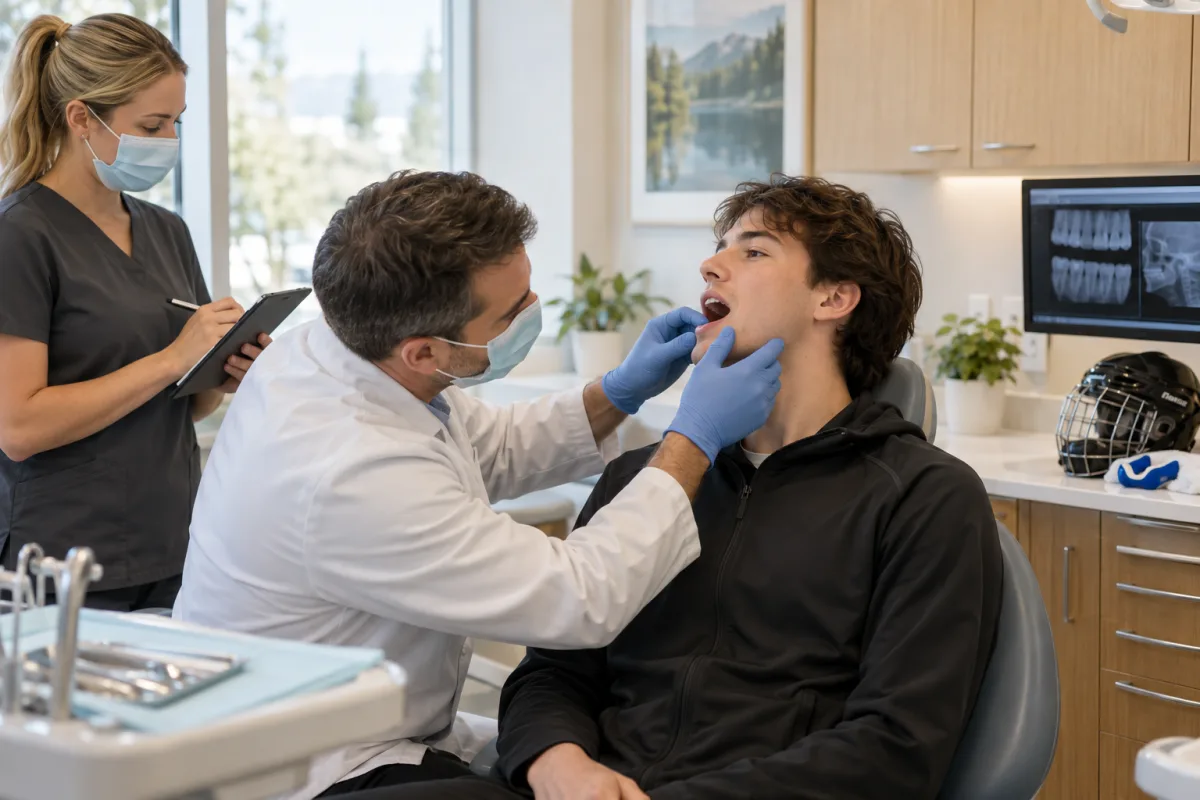
The dentist examines the injured teeth, surrounding bone and soft tissues, and usually takes X-rays to check for root fractures or displacement. Tests of the tooth’s response may be done, though results can be unreliable right after an injury. Photographs may be taken to record the starting point.
Loose or repositioned teeth may be gently moved back and splinted to neighbouring teeth for a period. Chips may be repaired with bonding, while larger fractures may need further treatment. If the nerve is affected, root canal therapy may be recommended. The dentist will explain each step and why it is advised.
Follow-up
Some effects of trauma develop slowly. A tooth may darken, become sensitive or develop an infection weeks or months later. Follow-up visits and X-rays help track healing. Contact the office if you notice discolouration, swelling, a gum pimple or increasing pain at any point after the injury.
Wearing a properly fitted mouthguard during contact sports and recreational activities can reduce the risk of dental injury. Seat belts and appropriate helmets also help protect the face. If an injury was work-related, ask about protective equipment that may reduce the chance of it happening again.
Planning your appointment
Phone our Port Dover office once medical emergencies have been ruled out. Describe what happened and the condition of the teeth so the team can discuss timing and next steps.
Bring any recovered tooth or fragments, ideally kept in milk, and note the time the injury happened.
Before you book
Have a question about your situation? Our team can help you plan a visit.
It depends on the injury. A knocked-out permanent tooth needs attention as quickly as possible. Loose, displaced or broken teeth should also be assessed promptly. Call to describe the injury and urgency.
Yes. Damage to the nerve or root may not be visible right away. An examination and X-rays can help identify hidden injuries and establish a baseline for later comparison.
Discolouration after trauma may indicate bleeding inside the tooth or changes in the nerve. It should be assessed by a dentist, who may monitor it or recommend treatment depending on the findings.
Baby teeth are usually not reimplanted, because doing so can damage the developing adult tooth. Call the dental office for guidance and keep the child comfortable.
Some do, particularly if the nerve is damaged or becomes infected. Others heal without it. Follow-up visits help the dentist decide whether treatment is needed over time.
Protect the root surface and keep the tooth moist in the first moments. Lynedoch patients can see what to do next and when to phone our Port Dover office.
Chipped a tooth on a hard bite or in a fall? Lynedoch patients can call our Port Dover office to describe the damage, protect the tooth and arrange an assessment.
Recognized year after year
Best Dentists in Norfolk
Proudly recognized among Norfolk’s top-rated dental practices for six consecutive years.

2021 Winner

2022 Winner

2023 Winner

2024 Winner

2025 Winner

2026 Winner
Stories from our patients
Watch a patient’s experience and browse more five-star reviews from people who have visited our Port Dover dental clinic.
Patient video
A patient shares the welcoming atmosphere and positive experience they found at our Port Dover office.
Google reviews
Swipe or use the arrows
Read all reviewsYour next visit can start today
New patients and CDCP patients are welcome. Tell us how we can help and our Port Dover dental team will follow up with you.
Evening appointments Monday and Tuesday