Teeth & Restorations
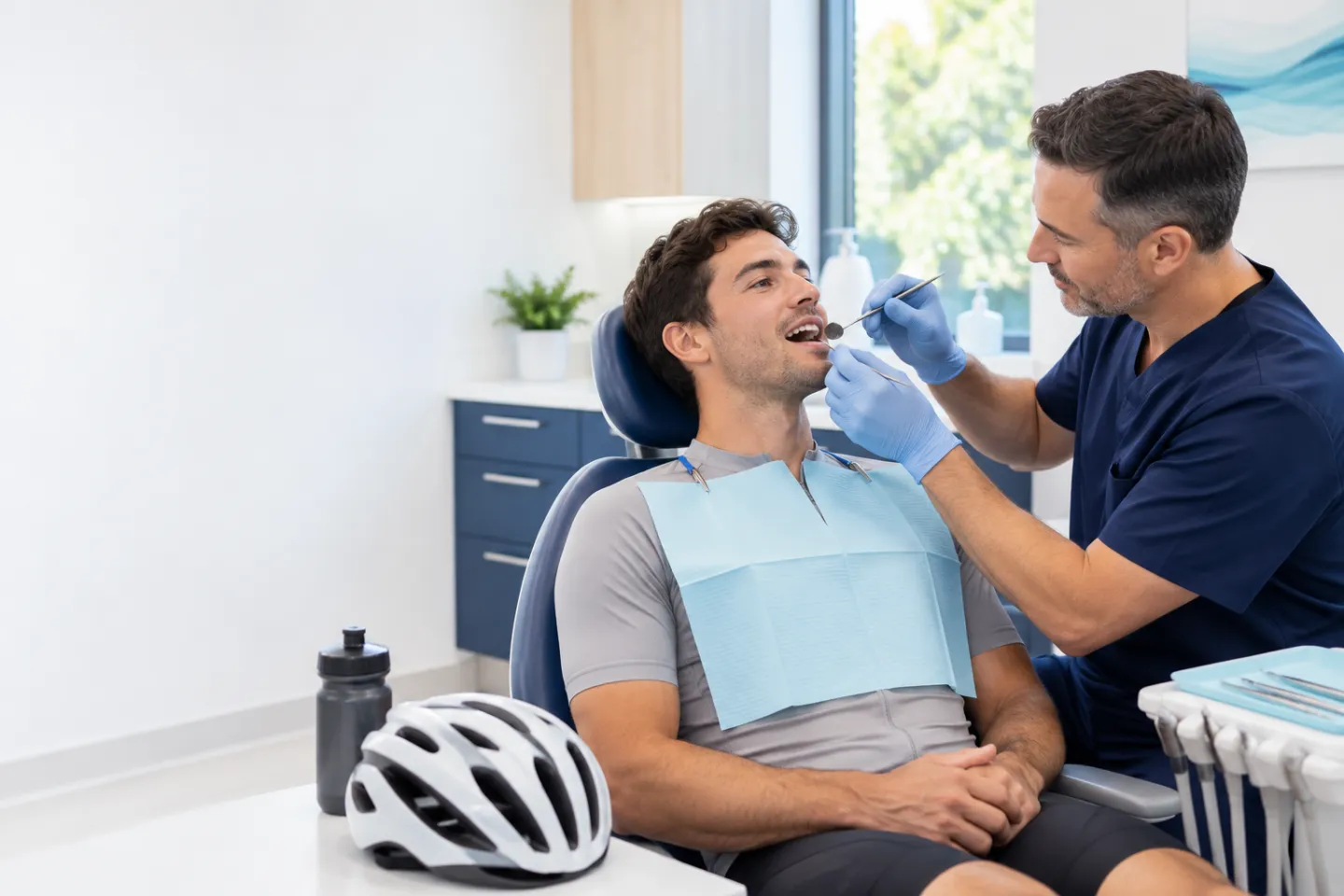
We check for chips, cracks, mobility, displacement, missing teeth and damaged fillings or crowns.
Port Dover Family Dentistry
Dental trauma treatment in Port Dover assesses injured teeth, gums, lips, supporting bone and bite after falls, sports impacts or accidents.
Let’s get you smiling
Tell us how we can help. Our team will follow up to confirm a time.
Dental injury?
Call promptly. Describe how and when the injury occurred, whether a tooth moved or broke, and any bleeding, swelling or head-injury symptoms.
Dental trauma treatment in Port Dover
Falls, collisions and accidents can injure more than the visible tooth surface. The tooth’s nerve, root, supporting ligament, nearby bone, gums, lips and bite may also be affected even when damage initially seems minor.
Treatment depends on whether the tooth is primary or permanent and whether it is chipped, fractured, displaced, loose or completely knocked out. Prompt assessment and structured follow-up help manage immediate damage and detect later complications.
Follow-up is part of treatment
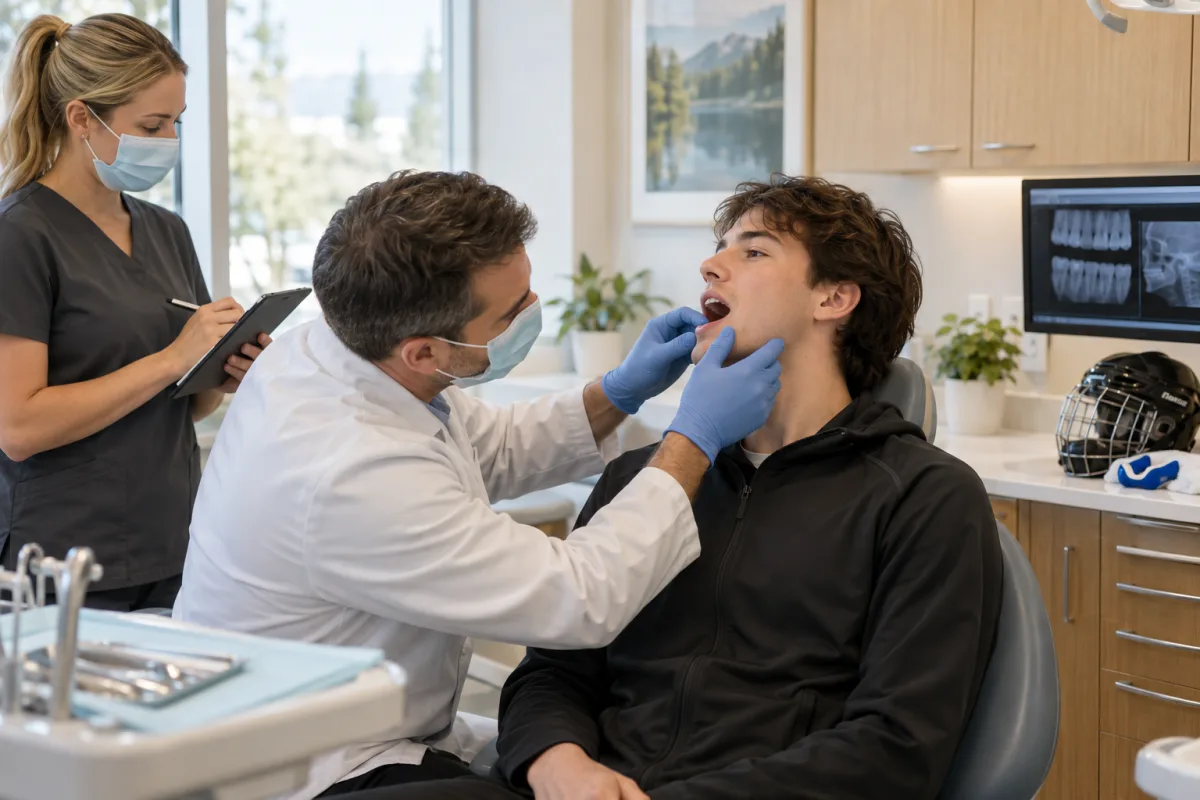
Traumatized teeth can change weeks, months or years later. Recommended reviews help detect pulp damage, infection, root changes or problems with developing teeth.
Call 911 or go to an emergency department for loss of consciousness, repeated vomiting, confusion, severe headache, breathing difficulty, uncontrolled bleeding, or suspected serious head, neck or jaw injury.
A complete injury assessment
We check for chips, cracks, mobility, displacement, missing teeth and damaged fillings or crowns.
The gums, ligament, bone and bite are assessed for tenderness, bleeding, displacement or fracture.
Lips, cheeks and tongue are examined for wounds and possible embedded tooth fragments or debris.
The injury history is screened for symptoms that require emergency medical evaluation before dental care.
Immediate care and monitoring
We examine the injury, record tooth position and symptoms, and use photographs or X-rays when clinically indicated.
Treatment may smooth or restore a fracture, reposition and splint a tooth, manage soft tissue or arrange specialist care.
A tailored follow-up schedule monitors symptoms, pulp response, root and bone healing, tooth colour and development.
Look beyond the tooth surface
A crown fracture may occur together with displacement or injury to the periodontal ligament. Soft-tissue wounds can contain tooth fragments or debris, and a tooth that looks intact may still have pulp, root or supporting-bone damage.
The dentist documents the starting position, mobility, bite, colour and response to testing, then selects photographs or X-rays when they add useful information. This baseline makes later changes easier to recognize.
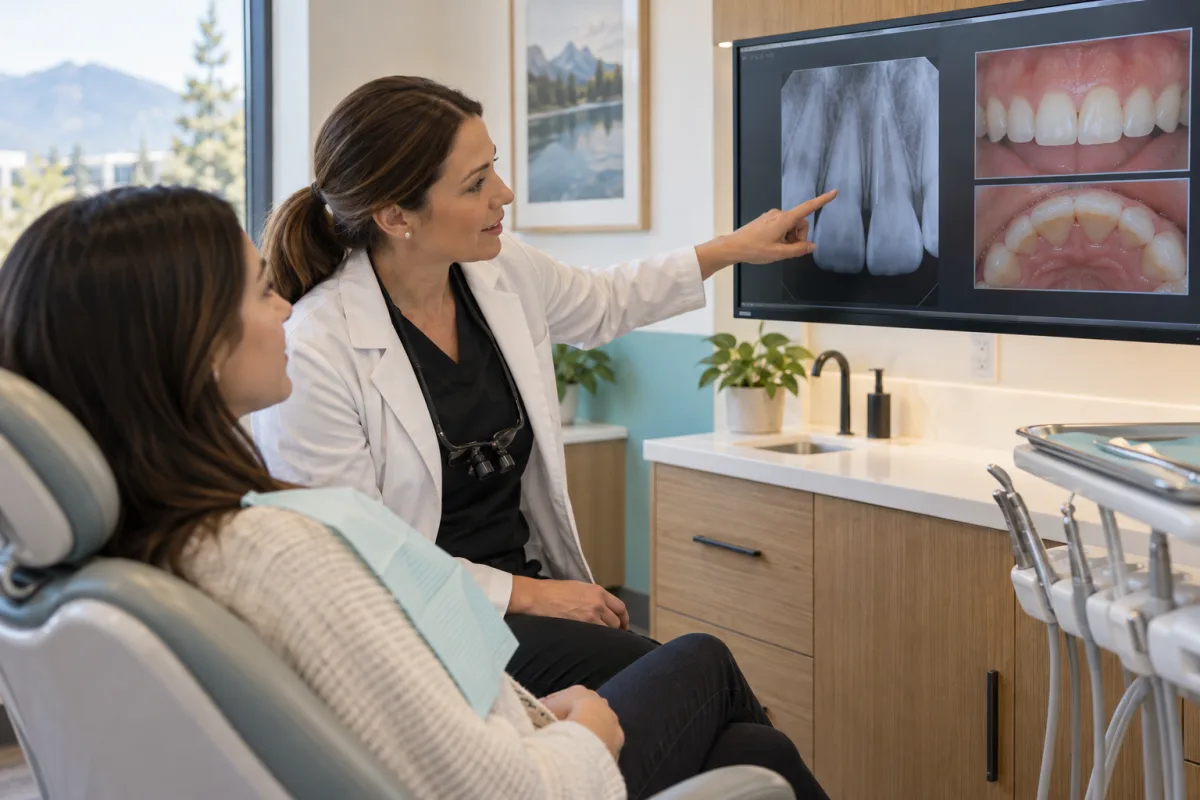
Fracture depth, sensitivity, colour and pulp response are assessed initially and again during healing.
Mobility, displacement, tenderness and bite changes can reveal injury around the root or socket.
Lips, cheeks, gums and tongue are checked for wounds, embedded fragments and other trauma.
Follow-up is individualized
The type of injury, tooth development and early findings determine how often the tooth should be reassessed.
Initial reviews assess stabilization, soft-tissue healing, comfort, bite and changes in mobility.
Repeated clinical testing and symptoms help identify inflammation, loss of vitality or infection over time.
Targeted X-rays may monitor root development, resorption, ankylosis and supporting-bone healing.
Injuries to primary or immature permanent teeth may need monitoring for effects on eruption and development.
Return sooner for increasing pain, swelling, a darkening tooth, renewed looseness, a bad taste, fever or a new change in the bite.
First aid after trauma
Rinse gently, use clean gauze for bleeding and apply a cold compress outside the face. Save tooth fragments in milk or saline, avoid chewing on injured teeth and contact a dentist promptly.
For a knocked-out permanent tooth, handle only the crown and keep it moist; never reinsert a baby tooth. Seek medical care first when head, neck or jaw injury is suspected.
Urgent dental injury care
We will provide first-aid guidance, assess urgency and arrange the appropriate dental or medical care pathway.
Dental trauma questions
Yes, after a significant impact. The pulp, root and supporting tissues can be injured without an obvious chip, and symptoms may develop later.
Handle it gently, keep it moist in milk or saline and bring it to the appointment. Do not scrub it or attach it with glue.
Trauma complications can appear later. Follow-up checks tooth vitality, colour, mobility, root and bone healing and any effect on developing permanent teeth.
Yes. Care considers the primary tooth, child’s age and the developing permanent tooth beneath it. A knocked-out baby tooth should never be replanted.
Call 911 for loss of consciousness, repeated vomiting, confusion, breathing difficulty, uncontrolled bleeding or suspected serious head, neck or jaw injury.
Recognized year after year
Best Dentists in Norfolk
Proudly recognized among Norfolk’s top-rated dental practices for six consecutive years.

2021 Winner

2022 Winner

2023 Winner

2024 Winner

2025 Winner

2026 Winner
Stories from our patients
Watch a patient’s experience and browse more five-star reviews from people who have visited our Port Dover dental clinic.
Patient video
A patient shares the welcoming atmosphere and positive experience they found at our Port Dover office.
Google reviews
Swipe or use the arrows
Read all reviewsOur community
Your next visit can start today
New patients and CDCP patients are welcome. Tell us how we can help and our Port Dover dental team will follow up with you.
Evening appointments Monday and Tuesday