
Patient video
Welcoming and Wonderful Practice
A patient shares the welcoming atmosphere and positive experience they found at our Port Dover office.
★★★★★
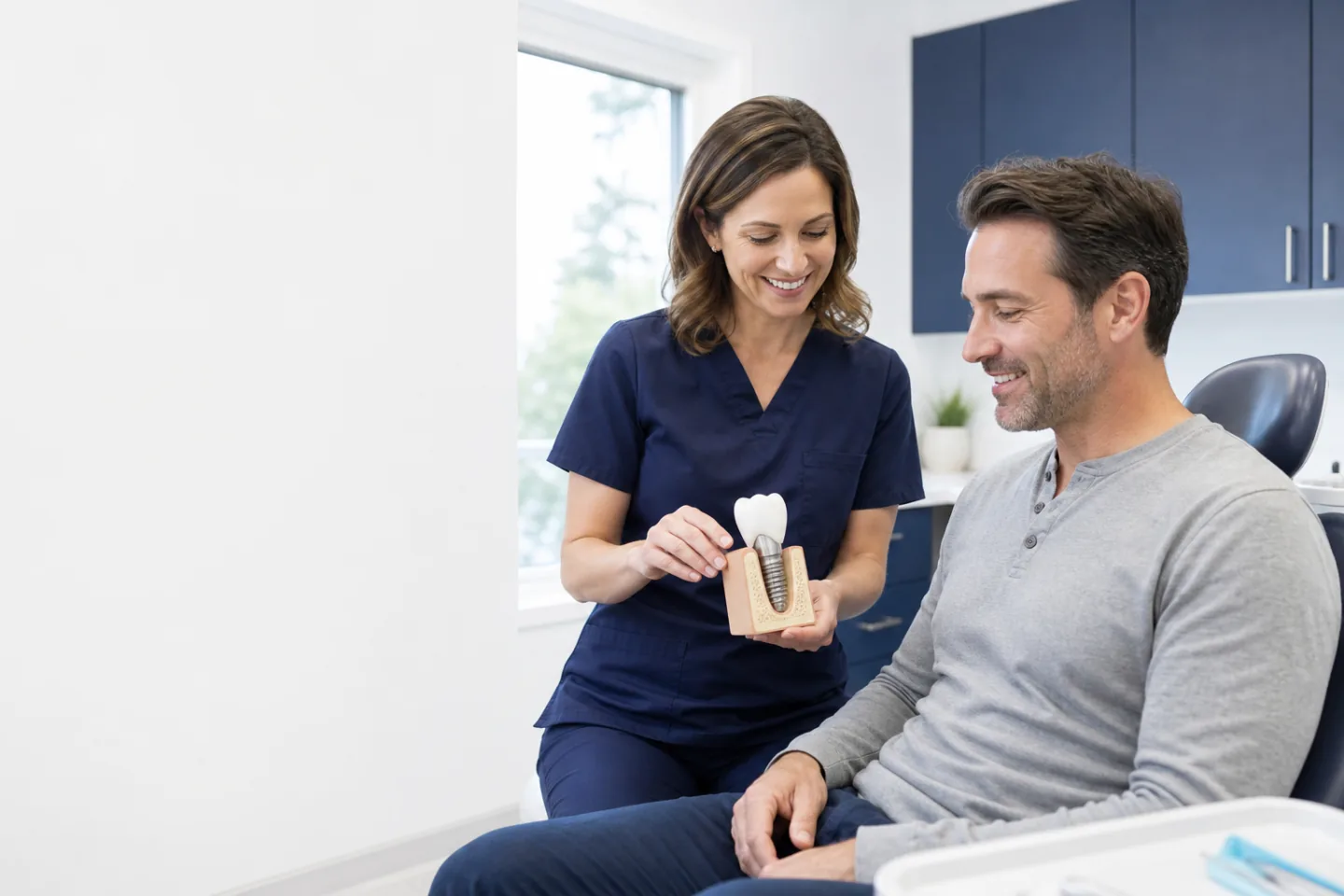
Port Dover Family Dentistry
Implants replace missing roots and teeth but take careful planning and healing. Port Ryerse patients can explore suitability and timelines at our Port Dover office.
Let’s get you smiling
Tell us how we can help. Our team will follow up to confirm a time.
Caring for Port Ryerse patients at our Port Dover office
Every dental service for Port RyerseReplacing the root, not just the tooth
A dental implant is a small post, typically titanium, placed into the jawbone where a tooth is missing. Once it bonds with the bone, it can support a crown, bridge or denture. Implants can feel and function much like natural teeth, but success depends on bone quality, general health, careful planning and patience during healing.
People from Port Ryerse who are considering implants can start with an assessment at our Port Dover office. The dentist will review your health history, examine the area and take images to judge bone support, then discuss whether implants suit you and how treatment might be staged.
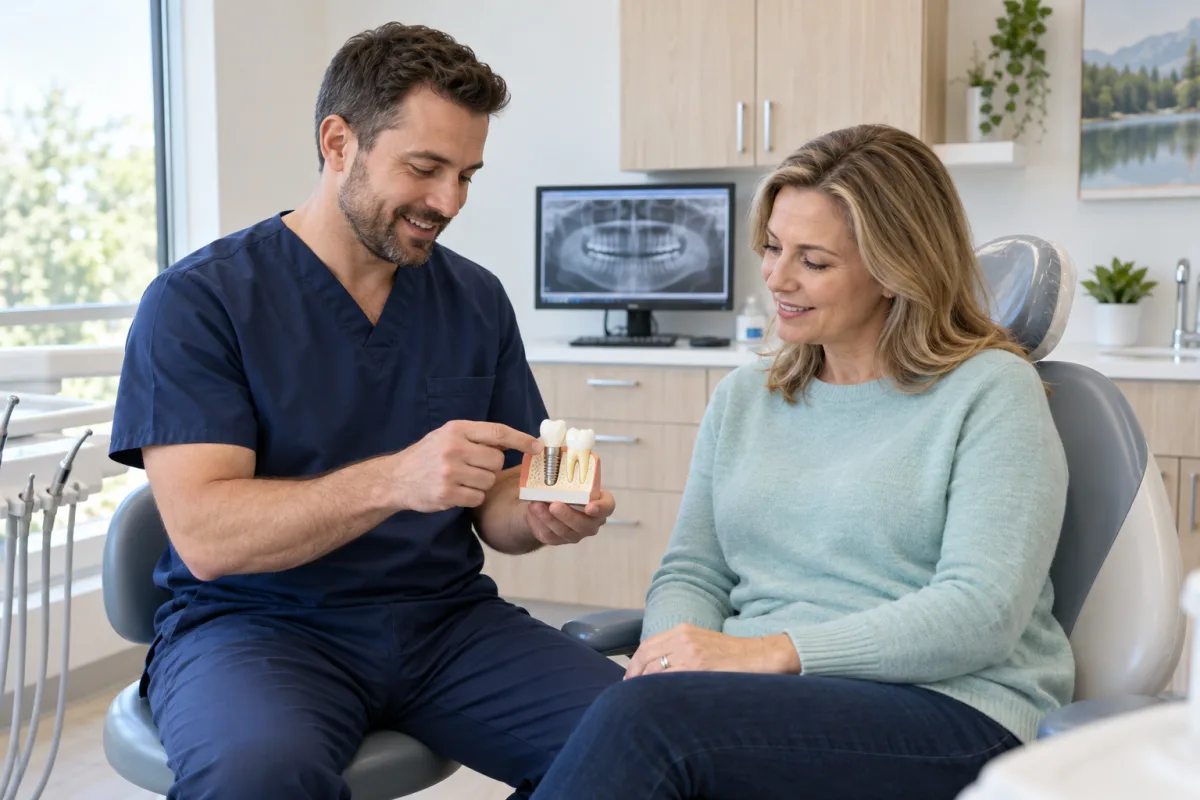
Are implants suitable
There must be enough bone to hold the implant securely. Bone shrinks after a tooth is lost, so long-standing gaps may need bone grafting first. Healthy gums are also important, as gum disease can threaten implants just as it does natural teeth. Imaging helps the dentist evaluate these factors before recommending treatment.
Smoking, uncontrolled diabetes, certain medications and some medical conditions can affect healing and long-term success. This does not always rule implants out, but it may change the plan or the risks. Be open about your health and habits so the dentist can give realistic advice.
Planning treatment
Planning may involve X-rays, three-dimensional imaging, impressions or scans and photographs. These help determine implant size, position and angle in relation to nerves, sinuses and neighbouring teeth. Ask the dentist to explain the plan, including whether grafting or other preliminary steps are needed.
Implant treatment sometimes involves more than one clinician, with one placing the implant and another restoring it with a crown. If referral is part of the plan, ask how communication between providers works and where each appointment will take place, so you can plan travel and time off accordingly.
Treatment stages
The implant is placed under local anaesthetic, sometimes with sedation. A healing period follows while the bone bonds to the implant, which can take a few months. During this time you may wear a temporary replacement. Follow post-surgery instructions closely, and report unusual pain, swelling or looseness.
Once healed, a connector called an abutment is attached and impressions or scans are taken for the final crown or prosthesis. The restoration is then fitted and the bite adjusted. Expect follow-up checks to make sure everything is functioning well and the tissues around the implant are healthy.
Caring for implants
Brush twice a day and clean around the implant with floss, interdental brushes or a water flosser as recommended. Plaque can inflame the tissues around implants and lead to bone loss, a condition called peri-implantitis. The hygienist can show you the best tools for cleaning around your restoration.
Regular checkups allow the dentist to examine the implant, gums and bite and take X-rays when needed. Tell the office about bleeding, swelling, looseness or changes in your bite. If you grind your teeth, a night guard may help protect the implant crown from excess force.
Planning your appointment
Book a consultation at our Port Dover office and mention how long the tooth has been missing. Bring any previous X-rays or scans that might help with planning.
Allow time to discuss medical history, staging and costs, and bring questions about each phase of treatment.
Before you book
Have a question about your situation? Our team can help you plan a visit.
From placement to the final crown, treatment often spans several months because the bone needs time to heal around the implant. Grafting or extractions can extend this. The dentist will outline a timeline after assessment.
Placement is done with local anaesthetic, so you should feel pressure rather than pain. Afterward, soreness and swelling are common for a few days and are usually managed with recommended pain relief.
Not everyone is a suitable candidate. Bone quantity, gum health, medical conditions, medications and smoking all influence suitability. An assessment is needed to determine whether implants are appropriate for you.
Many implants function for a long time with good care, but success is not guaranteed. The crown on top may need replacing over the years. Regular maintenance and checkups help protect your investment.
Yes. Bridges and partial or complete dentures are common alternatives. Each has different benefits, costs and maintenance needs. The dentist will compare options so you can decide what suits you best.
An implant crown is the visible tooth fixed to a healed implant. Port Ryerse patients can learn about design, fitting and long-term care at our Port Dover office.
Tired of a denture that slips? Implants can anchor it more firmly. Port Ryerse patients can find out about suitability, staging and care at our Port Dover office.
Recognized year after year
Best Dentists in Norfolk
Proudly recognized among Norfolk’s top-rated dental practices for six consecutive years.

2021 Winner

2022 Winner

2023 Winner

2024 Winner

2025 Winner

2026 Winner
Stories from our patients
Watch a patient’s experience and browse more five-star reviews from people who have visited our Port Dover dental clinic.
Patient video
A patient shares the welcoming atmosphere and positive experience they found at our Port Dover office.
Google reviews
Swipe or use the arrows
Read all reviewsYour next visit can start today
New patients and CDCP patients are welcome. Tell us how we can help and our Port Dover dental team will follow up with you.
Evening appointments Monday and Tuesday