
Patient video
Welcoming and Wonderful Practice
A patient shares the welcoming atmosphere and positive experience they found at our Port Dover office.
★★★★★
Port Dover Family Dentistry
Dental implants replace missing teeth with a post anchored in the jaw. Lynedoch patients can learn about candidacy, staged treatment and healing at our Port Dover office.
Let’s get you smiling
Tell us how we can help. Our team will follow up to confirm a time.
Caring for Lynedoch patients at our Port Dover office
Every dental service for Lynedoch patientsA root-level replacement
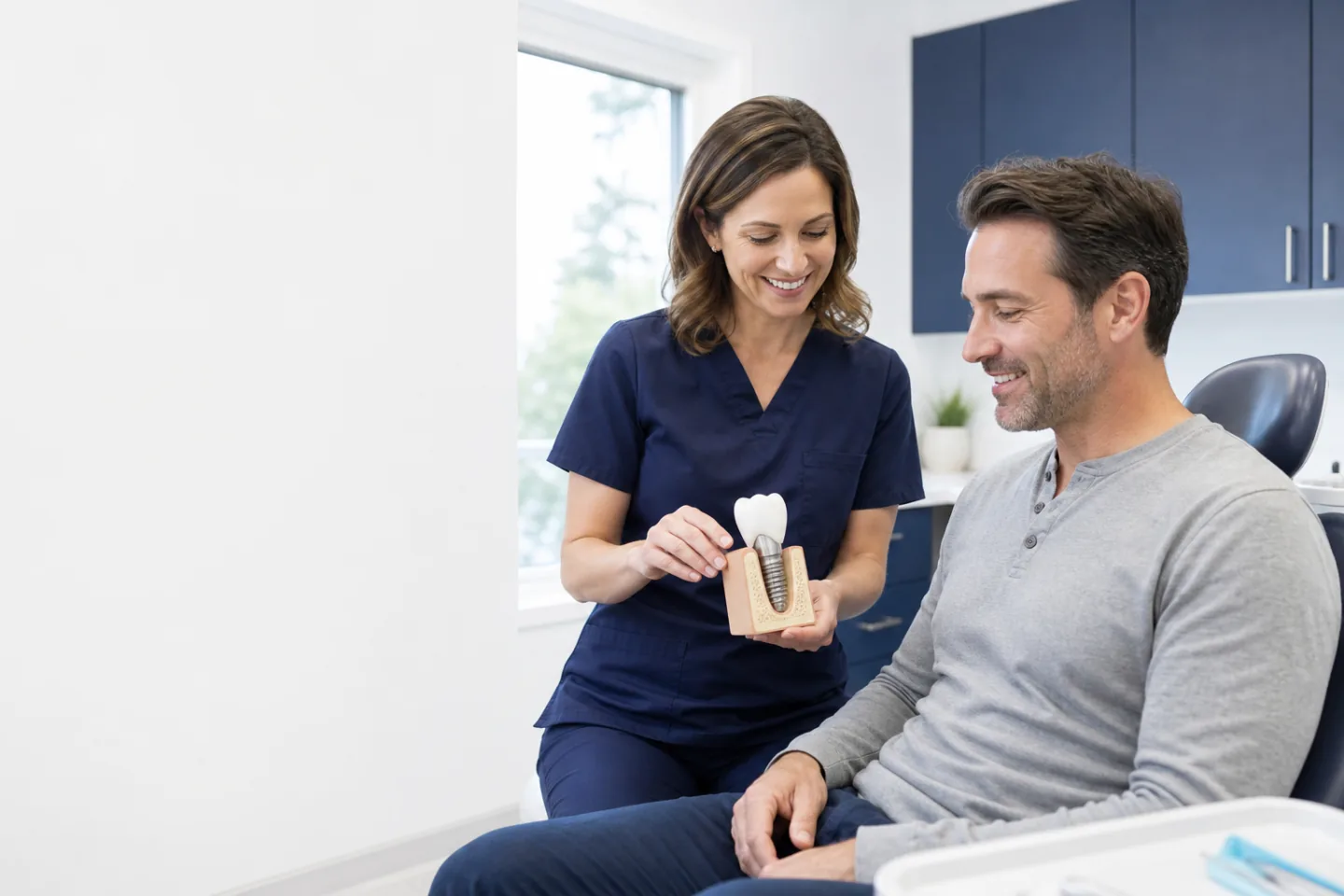
A dental implant is a small post, usually titanium or a similar material, placed in the jawbone where a tooth is missing. Once it bonds with the bone, it can support a crown, bridge or denture. Implants do not rely on neighbouring teeth for support, and many people find them stable and natural to chew with once treatment is complete.
Lynedoch patients exploring implants can begin with a consultation at our Port Dover office. Because implant care usually unfolds over several months and multiple visits, the dentist will outline the stages, discuss whether any part may involve a referral and help you plan around the travel involved.
Candidacy
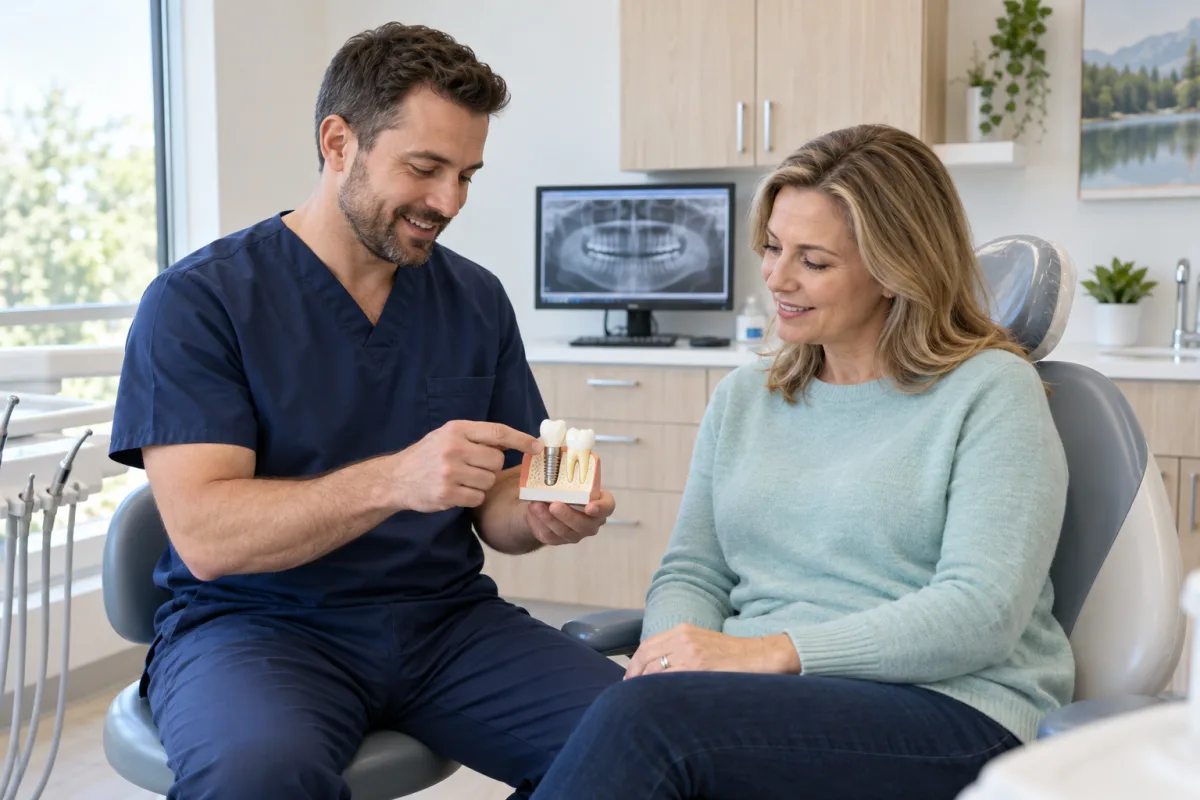
Adequate bone is needed to hold an implant securely. X-rays or 3D imaging may be used to measure bone height and width and locate nerves and sinuses. Healthy gums are also important. Conditions such as uncontrolled diabetes or certain medications may affect healing, so a complete medical history is essential.
Smoking can significantly reduce the success of implants and slow healing. Heavy grinding may place extra stress on implant restorations. Be open about these factors so the dentist can discuss the risks and any steps that might improve the outlook, such as reducing tobacco use before treatment.
Planning
Implant treatment often includes placing the post, a healing period, then attaching an abutment and the final crown or prosthesis. Ask the dentist to explain how many appointments are expected, which steps happen where and how long each healing phase usually lasts. Knowing this helps you plan ahead.
If bone has been lost, grafting may be recommended before or at the time of implant placement. Extractions, gum treatment or temporary replacements may also be part of the plan. Ask how these steps affect the overall timeline and what alternatives exist if grafting is not suitable for you.
Placement and healing
The implant is placed under local anaesthetic, sometimes with sedation for comfort. The gum is opened, a precise space prepared in the bone and the implant inserted. Stitches may be used. You will receive aftercare instructions covering pain relief, diet and cleaning around the site during the early days.
Over the following weeks to months, bone grows around the implant in a process called osseointegration. A temporary tooth may be provided in some situations. Avoid chewing directly on the site and follow instructions closely. Let the office know about increasing pain, swelling or a loose implant.
Long-term care
Although implants cannot decay, the surrounding gum and bone can become inflamed, a condition known as peri-implantitis. Brush twice daily and clean around the implant with floss, interdental brushes or a water flosser as advised. The hygienist can show you techniques suited to your specific restoration.
Regular checkups allow the dentist to examine the gum around the implant, check the bite and take X-rays periodically. Report bleeding, swelling, looseness or changes in how the crown feels. Catching problems early helps protect the implant and the investment of time you have made in treatment.
Planning your appointment
Book a consultation at our Port Dover office and describe which teeth are missing and how long they have been gone. Ask the team for an outline of the visits involved.
Bring your medical history, medication list and any previous X-rays or records related to the missing teeth.
Before you book
Have a question about your situation? Our team can help you plan a visit.
It varies with bone quality, healing and whether grafting is needed. Many cases take several months from placement to the final crown. The dentist will give you an estimated timeline after assessment.
Local anaesthetic is used during placement, and sedation may be an option. Soreness and swelling afterward are common and usually manageable. Follow aftercare instructions and call if symptoms worsen.
Not everyone. Bone volume, gum health, medical conditions and smoking all affect suitability. An assessment helps determine whether implants are appropriate and what preparation might be needed.
With good care many implants last for a long time, though the crown on top may need replacement eventually. Regular checkups and good home care help protect the implant over the years.
They need thorough daily cleaning, much like natural teeth, with extra attention around the gumline. The hygienist can recommend tools and techniques suited to your implant restoration.
An implant-supported crown replaces one missing tooth without involving its neighbours. Lynedoch patients can learn the stages, timing and care at our Port Dover office.
Tired of a denture that slips? Lynedoch patients can learn how implants may anchor a denture, what treatment involves and how to care for it at our Port Dover office.
Recognized year after year
Best Dentists in Norfolk
Proudly recognized among Norfolk’s top-rated dental practices for six consecutive years.

2021 Winner

2022 Winner

2023 Winner

2024 Winner

2025 Winner

2026 Winner
Stories from our patients
Watch a patient’s experience and browse more five-star reviews from people who have visited our Port Dover dental clinic.
Patient video
A patient shares the welcoming atmosphere and positive experience they found at our Port Dover office.
Google reviews
Swipe or use the arrows
Read all reviewsYour next visit can start today
New patients and CDCP patients are welcome. Tell us how we can help and our Port Dover dental team will follow up with you.
Evening appointments Monday and Tuesday