
Patient video
Welcoming and Wonderful Practice
A patient shares the welcoming atmosphere and positive experience they found at our Port Dover office.
★★★★★
Port Dover Family Dentistry
An implant replaces a missing tooth root and supports a crown or denture. Glen Meyer patients can learn about eligibility, healing time and long-term care.
Let’s get you smiling
Tell us how we can help. Our team will follow up to confirm a time.
Seeing patients from Glen Meyer and the surrounding countryside at our Port Dover office
Browse all dental services for Glen MeyerReplacing the root, not just the tooth
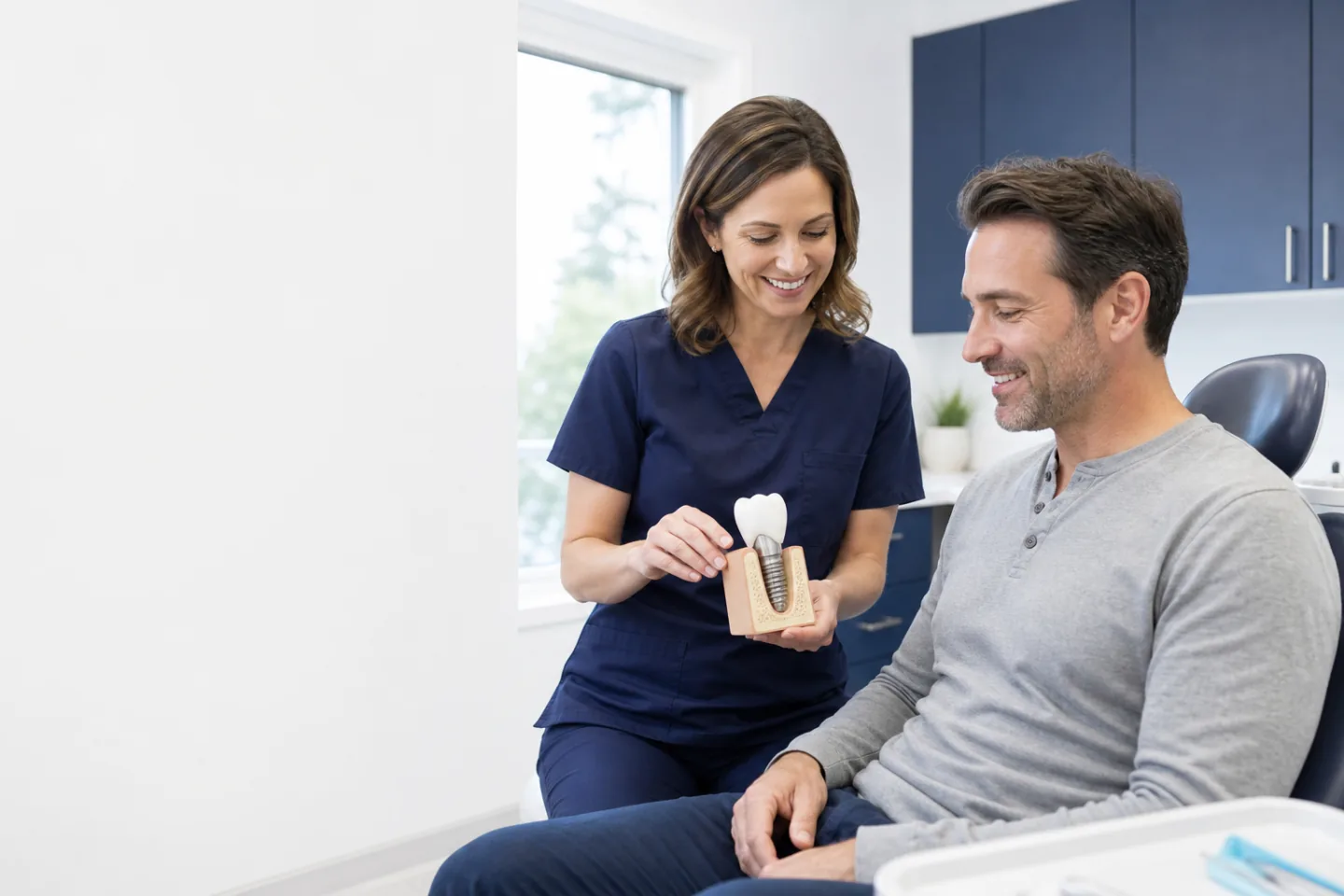
A dental implant is a small post, usually made of titanium or a similar material, placed in the jawbone where a tooth root once was. Once it bonds with the bone, it can support a crown, a bridge or a denture. Implants can restore chewing and appearance without relying on neighbouring teeth for support.
For Glen Meyer patients considering implants, the first step is a thorough assessment at our Port Dover office. The dentist will review your health, bone and gums, explain each stage and discuss whether parts of the treatment may involve referral to a specialist such as an oral surgeon or periodontist.
Are you a candidate
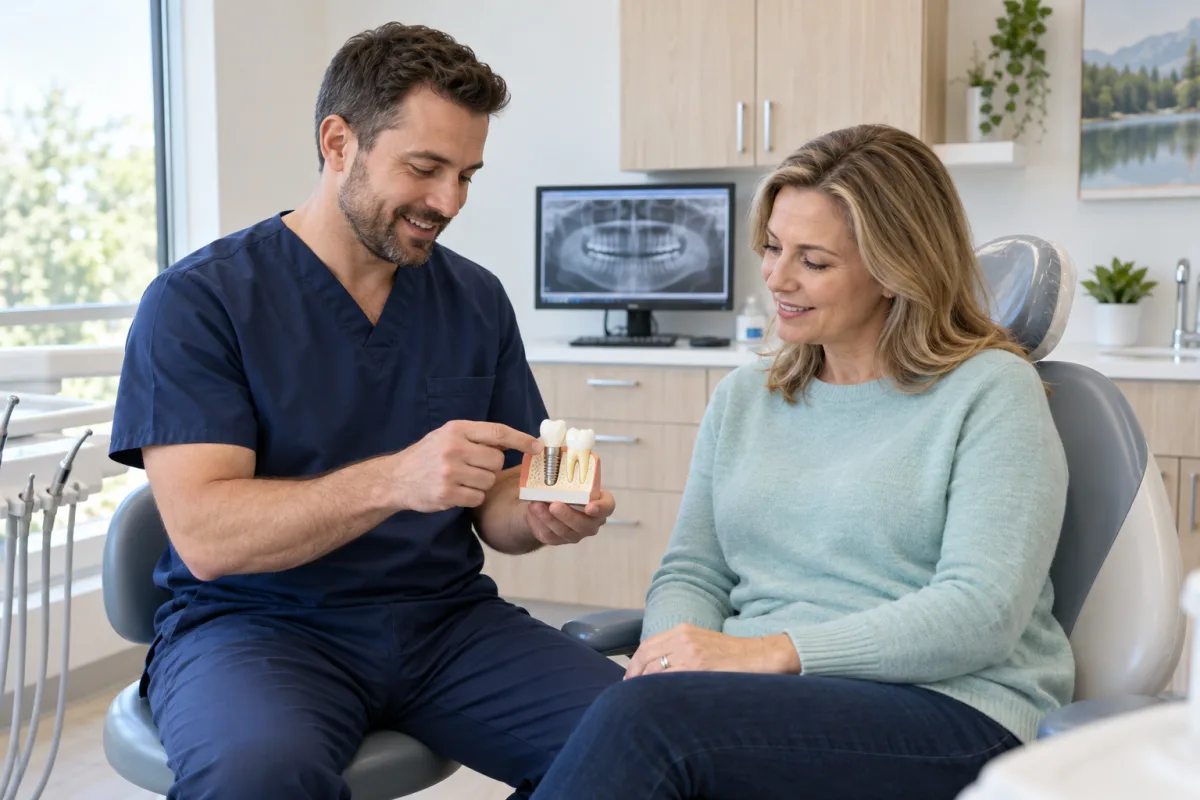
Enough healthy bone is needed to hold the implant securely, and the gums must be free of active disease. X-rays and sometimes three-dimensional imaging help the dentist measure bone height and width and locate nerves and sinuses. If bone is lacking, grafting may be discussed, which can add time and steps to the overall treatment plan before an implant can be placed.
Conditions such as uncontrolled diabetes, certain medications affecting bone and some medical treatments can influence healing. Smoking significantly increases the risk of implant problems. Be open about your full medical history and habits, because they matter for the decision. The dentist may coordinate with your physician or suggest steps to improve your chances of a good result before treatment begins.
Planning the treatment
Bridges and partial dentures are alternatives that may suit some situations better. An implant avoids reshaping neighbouring teeth but involves surgery and a longer timeline. Discuss the advantages and limitations of each option for your specific gap. Knowing the trade-offs helps you choose a path that fits your health, expectations and lifestyle over the long term, not just the next few months.
Implant treatment typically unfolds over several months, with time allowed for healing between stages. Ask how many appointments are expected, who will perform each stage, and what costs are involved, including any grafting or temporary teeth. Written estimates help you plan, and it is reasonable to take time or seek a second opinion before agreeing to proceed.
Placement and healing
The implant is placed in the jaw under local anaesthetic, sometimes with sedation for comfort. The gum may be stitched over or around it. Some swelling and tenderness afterward is normal. You will receive instructions about diet, cleaning and medications to follow while the area heals, and it is important to keep any follow-up appointments that are scheduled for you.
Over the following weeks to months, the bone bonds with the implant surface. Once healing is confirmed, a connector piece is attached and impressions or scans are taken for the final crown or other restoration. The dentist will check the fit, bite and appearance before attaching it. A temporary tooth may be worn in the meantime in some cases.
Long-term care
Implants cannot decay, but the surrounding gum and bone can become inflamed if plaque builds up, a condition known as peri-implantitis. Brush gently around the implant twice daily and clean between teeth with floss, interdental brushes or a water flosser. Ask the hygienist to demonstrate the best tools for your particular implant and restoration so the area stays healthy.
Regular dental visits allow the implant, surrounding gums and bite to be checked and professionally cleaned. Report bleeding, swelling, looseness or discomfort around the implant promptly rather than waiting for your next visit. If you grind your teeth, a night guard may help protect the restoration. Early attention to problems gives the best chance of managing them successfully.
Planning your appointment
Call our Port Dover office to arrange an implant consultation. Mention which tooth or teeth are missing, how long ago they were lost, and any major health conditions or medications.
Bring any previous X-rays or treatment plans, and ask how many trips into Port Dover the full course of treatment is likely to involve.
Before you book
Have a question about your situation? Our team can help you plan a visit.
It varies, but treatment often spans several months because the bone needs time to bond with the implant. Grafting or extractions can add time. The dentist will outline an estimated timeline after assessing your mouth and explaining each stage of treatment.
The procedure is done with local anaesthetic, and some patients choose sedation. Soreness and swelling afterward are common and usually manageable with the medication and aftercare advice provided. Contact the office if pain worsens or swelling increases after the first few days.
Not everyone is a suitable candidate. Bone volume, gum health, medical conditions, medications and smoking all affect eligibility and success. A thorough assessment is needed to determine whether implants are appropriate or whether another option would be safer for you.
Implants can last many years with good care, though the crown or restoration on top may need replacement over time due to wear. Daily cleaning, regular checkups and not smoking all contribute to long-term success. The dentist can discuss expectations for your case.
Occasionally an implant does not bond with the bone or develops problems later. The dentist will assess the cause and discuss options, which may include removal, healing and possibly trying again. Reporting early warning signs promptly helps improve the chances of managing problems.
An implant crown replaces a single tooth on top of an implant post. Glen Meyer patients can learn how the crown is designed, attached and kept healthy.
Implant-supported dentures snap onto or attach to implants for added stability. Glen Meyer denture wearers can learn who may benefit and what it involves.
Recognized year after year
Best Dentists in Norfolk
Proudly recognized among Norfolk’s top-rated dental practices for six consecutive years.

2021 Winner

2022 Winner

2023 Winner

2024 Winner

2025 Winner

2026 Winner
Stories from our patients
Watch a patient’s experience and browse more five-star reviews from people who have visited our Port Dover dental clinic.
Patient video
A patient shares the welcoming atmosphere and positive experience they found at our Port Dover office.
Google reviews
Swipe or use the arrows
Read all reviewsYour next visit can start today
New patients and CDCP patients are welcome. Tell us how we can help and our Port Dover dental team will follow up with you.
Evening appointments Monday and Tuesday