
Patient video
Welcoming and Wonderful Practice
A patient shares the welcoming atmosphere and positive experience they found at our Port Dover office.
★★★★★

Port Dover Family Dentistry
Prevention means professional cleanings plus daily habits that fit your life. St. Williams patients can build a practical plan with our Port Dover hygiene team.
Let’s get you smiling
Tell us how we can help. Our team will follow up to confirm a time.
Caring for St. Williams patients at our office in Port Dover
Every dental service for St. WilliamsSmall habits, big payoff
Preventive dental care combines what happens at the office, such as cleanings, exams and fluoride, with what you do at home every day. Together they help reduce decay, gum disease and the need for more involved treatment later. A good plan is tailored to your risk level, your health and the habits you can realistically maintain.
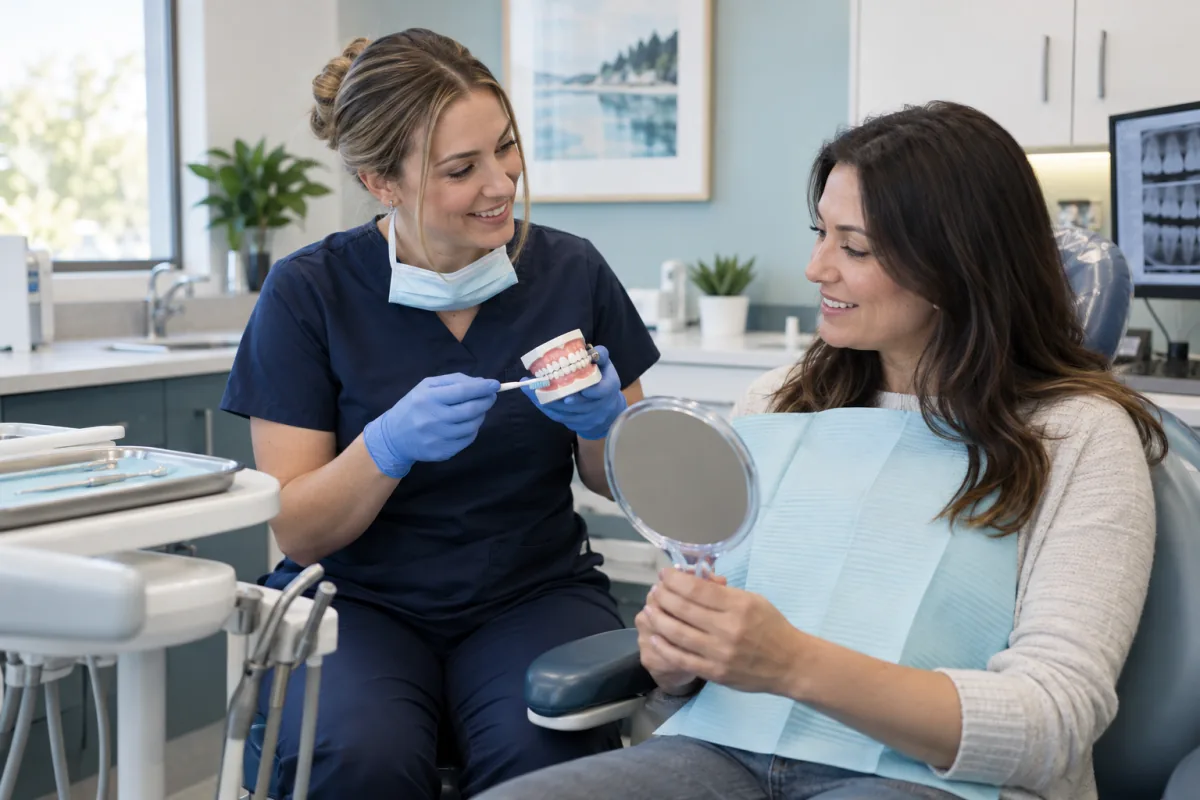
For St. Williams residents, a preventive plan built with our Port Dover hygiene team can make each visit count. We will look at where plaque tends to build up, talk about your routine and suggest practical adjustments rather than a one-size-fits-all checklist.
Know your risk
Frequent snacking or sipping on sweet drinks, dry mouth, past cavities, exposed roots and orthodontic appliances can all increase the chance of decay. Some medications reduce saliva. The hygienist and dentist will look at your history and current habits to estimate where extra protection is most needed.
Smoking, diabetes, pregnancy, stress and some medications can affect gum health. Family history may also play a part. Bleeding when brushing is often an early sign of inflammation. Discussing these factors openly helps the team recommend appropriate cleaning frequency and home care techniques.
In the office
During a hygiene visit, plaque and hardened tartar are removed from above and below the gum line. Gums are measured for pocket depth and checked for bleeding. Teeth are polished, and any areas of concern are noted for the dentist. Regular visits allow early detection of changes.
Fluoride treatments may be recommended to strengthen enamel, especially for people at higher risk of decay. Sealants can protect grooves in back teeth. The hygienist can also review your technique and suggest tools, such as interdental brushes, that suit the spaces between your teeth.
At home
Brush twice daily for about two minutes with fluoride toothpaste, angling the brush toward the gum line. Clean between teeth once a day with floss, picks or small brushes. If you have bridges, implants or braces, ask for specific instructions, as these areas often need special tools to clean properly.
Limit how often you have sugary or acidic foods and drinks, since frequency matters as much as amount. Drink water through the day. Avoid tobacco, and if you play sports, wear a mouthguard. These small choices support the professional care you receive at the office.
Staying on track
Some people do well with cleanings at standard intervals, while others with gum disease or high decay risk benefit from more frequent visits. The team will recommend a schedule based on what they see. Ask why a certain interval is suggested so you understand the reasoning.
Pregnancy, new medications, a diagnosis such as diabetes or changes in your ability to brush can all affect your oral health. Let the office know about these changes. The team can adjust advice, cleaning frequency and products to match your current situation.
Planning your appointment
Book a hygiene appointment at our Port Dover office and let us know if you have bleeding gums, sensitivity or a history of frequent cavities, so we can plan the visit.
If you are due for an exam as well, ask whether both can be scheduled together to reduce the number of trips.
Before you book
Have a question about your situation? Our team can help you plan a visit.
Fluoride in toothpaste and professional treatments helps strengthen enamel and reduce decay. The dentist or hygienist can explain whether additional fluoride would benefit you based on your decay risk.
Some people find them easier to use effectively, especially those with limited dexterity. A manual brush can also work well with good technique. The best brush is one you use correctly twice a day.
Bleeding often indicates inflammation from plaque buildup. Gentle, regular cleaning usually improves it within a couple of weeks. If bleeding continues, mention it to the team, as it may signal gum disease.
It depends on your gum health and how quickly tartar builds up. Some people need cleanings more often than others. The team will recommend a schedule suited to your situation.
Prevention greatly reduces risk but cannot guarantee you will never get a cavity. Combining good daily habits, a sensible diet and regular professional care gives your teeth the best protection.
A professional cleaning removes tartar that brushing leaves behind and checks gum health. St. Williams residents can learn what to expect at a Port Dover hygiene visit.
Regular checkups catch decay, gum changes and worn fillings before they become painful. St. Williams residents can learn what an exam at our Port Dover office covers.
Recognized year after year
Best Dentists in Norfolk
Proudly recognized among Norfolk’s top-rated dental practices for six consecutive years.

2021 Winner

2022 Winner

2023 Winner

2024 Winner

2025 Winner

2026 Winner
Stories from our patients
Watch a patient’s experience and browse more five-star reviews from people who have visited our Port Dover dental clinic.
Patient video
A patient shares the welcoming atmosphere and positive experience they found at our Port Dover office.
Google reviews
Swipe or use the arrows
Read all reviewsYour next visit can start today
New patients and CDCP patients are welcome. Tell us how we can help and our Port Dover dental team will follow up with you.
Evening appointments Monday and Tuesday