
Patient video
Welcoming and Wonderful Practice
A patient shares the welcoming atmosphere and positive experience they found at our Port Dover office.
★★★★★
Port Dover Family Dentistry
When a tooth cannot be saved, removal may be the next step. La Salette patients can learn how extractions are planned and what healing usually looks like.
Let’s get you smiling
Tell us how we can help. Our team will follow up to confirm a time.
Caring for La Salette patients at our Port Dover office
See every dental service for La SaletteWhen removal is the right call
Dentists generally try to keep natural teeth, but sometimes removal is the healthiest choice. Severe decay, a fractured root, advanced gum disease, crowding or a tooth that keeps causing infection are common reasons. Before agreeing, it helps to know why extraction is recommended and what will happen to the space afterward.
For those living in La Salette, extractions are carried out at our Port Dover office when appropriate. The dentist will review your health, explain the procedure and aftercare and discuss whether a referral to an oral surgeon would be more suitable for a complex case.
Why it is advised
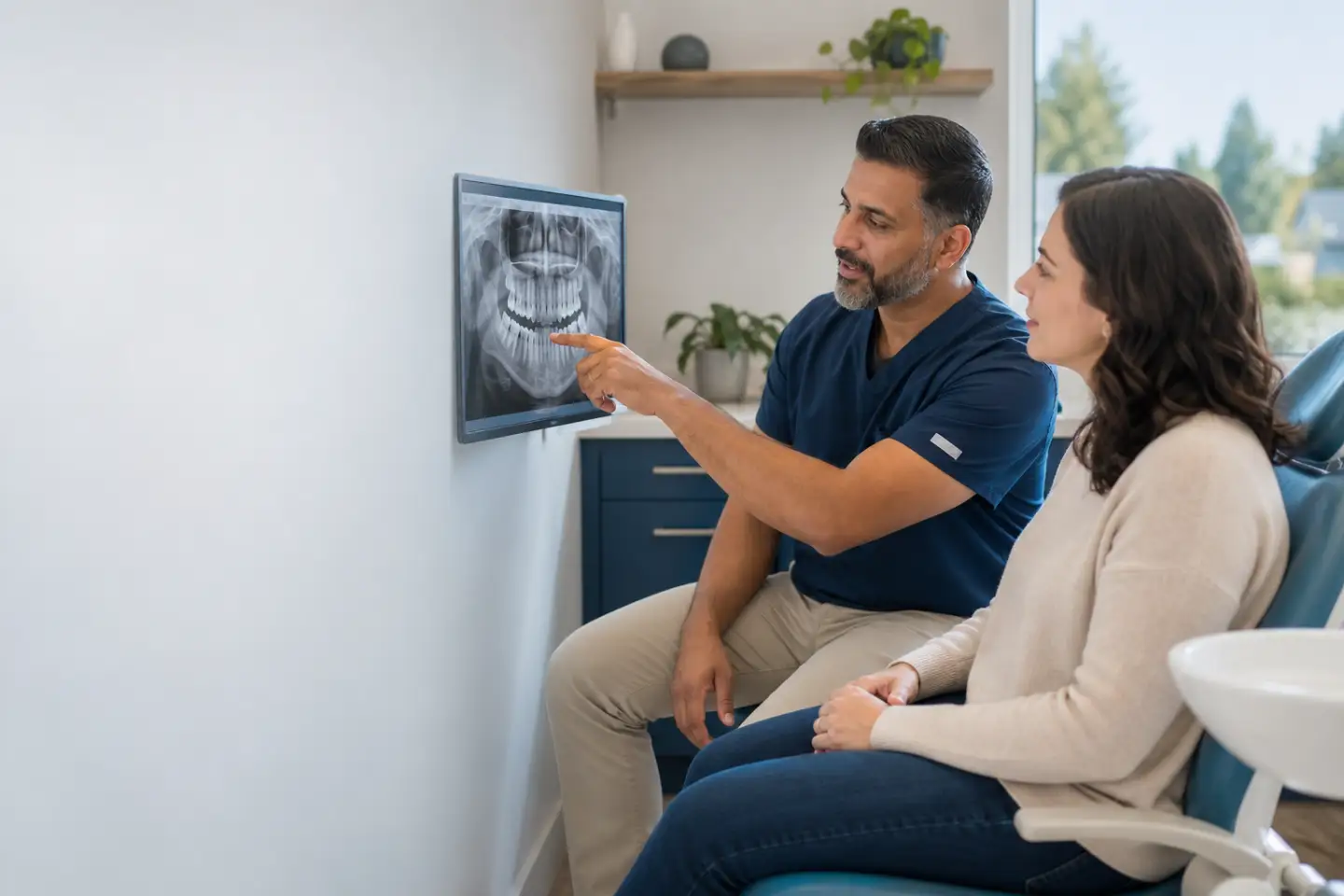
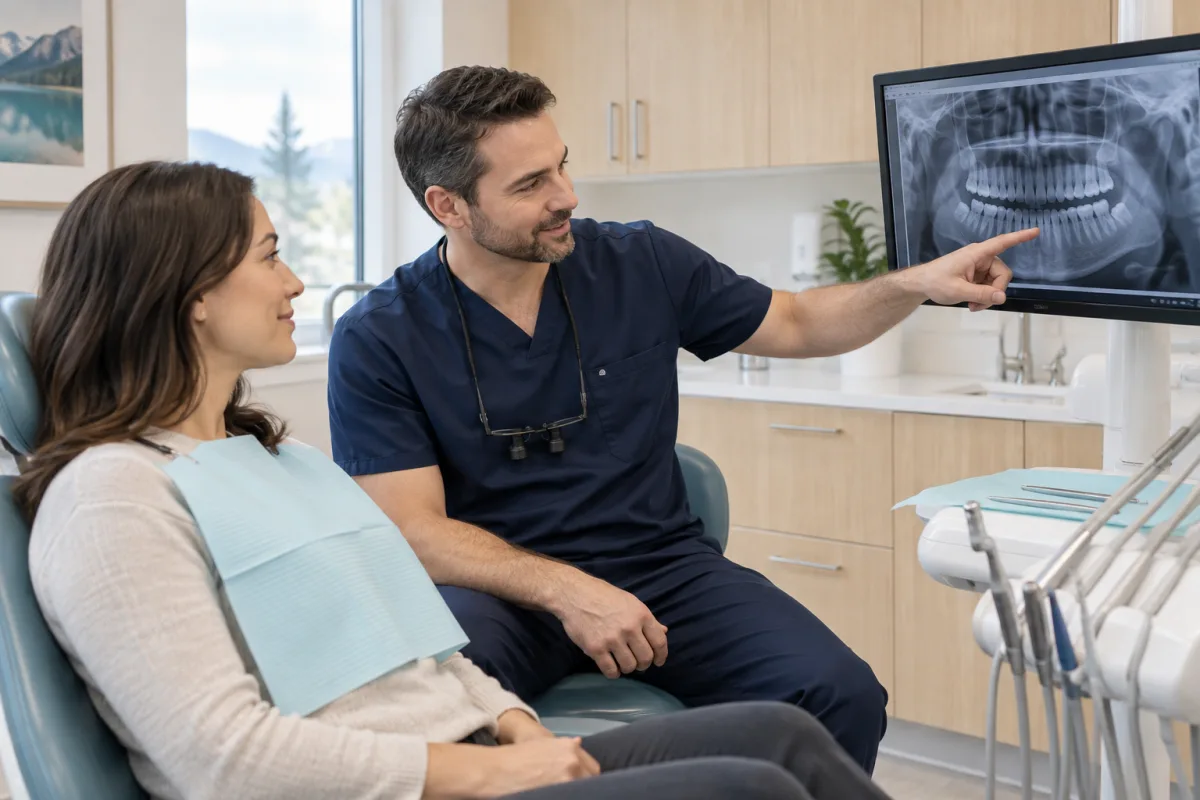
A tooth may be recommended for removal when it is broken below the gumline, too decayed to restore, loose from bone loss or repeatedly infected. Orthodontic plans sometimes call for removal to create space. X-rays and examination findings should support the recommendation, and the dentist can show you what they see.
Ask whether the tooth could be saved with root canal treatment, a crown or gum therapy, and what the likely outcome of each would be. Sometimes saving the tooth is possible but uncertain. Knowing the realistic options allows you to make a choice you feel comfortable with.
Preparing
Tell the dentist about blood thinners, bone medicines, heart conditions, diabetes, recent surgeries and any allergies. Some conditions may require coordination with your physician before an extraction. Do not stop prescribed medicines on your own; ask the dentist and your doctor for guidance.
Eat beforehand if you have been told it is fine to do so, and arrange to rest for the remainder of the day. If sedation is planned, you will need someone to drive you home. Stock up on soft foods and follow any specific pre-appointment instructions you receive.
The procedure
The area is numbed with local anaesthetic. The dentist then gently loosens the tooth from the surrounding ligament and bone before removing it. You may feel pressure, but sharp pain should be reported straight away. Some teeth come out in pieces or need a small incision, especially if roots are curved.
Once the tooth is out, gauze is placed to control bleeding and help a clot form. Stitches may be used in some cases. You will receive instructions on biting on gauze, pain management, eating and what to avoid in the first days. Ask questions before you leave if anything is unclear.
Healing well
Avoid rinsing vigorously, spitting, smoking and drinking through a straw for the period advised, since these can dislodge the clot. Eat soft foods and chew on the other side. Some swelling and tenderness is normal. Increasing pain after several days, a bad taste or fever should be reported to the office.
Depending on the tooth, the dentist may discuss replacing it with a bridge, implant or partial denture, or leaving the space. Gaps can allow neighbouring teeth to shift over time. Talk about replacement options before or after the extraction so you understand the long-term implications.
Planning your appointment
Contact our Port Dover office to book an assessment. If sedation or a longer appointment is likely, plan a ride and a quiet rest of the day before you set out.
Bring a complete list of medicines, including supplements, and any recent medical information relevant to bleeding or healing.
Before you book
Have a question about your situation? Our team can help you plan a visit.
The area is numbed, so most people feel pressure rather than pain during removal. Some tenderness afterward is normal and usually manageable with recommended pain relief. Report severe or worsening pain.
Initial healing of the gum often takes a week or two, while bone continues remodelling for longer. Healing time varies with the tooth, your health and how closely aftercare instructions are followed.
A dry socket occurs when the blood clot is lost or does not form properly, exposing bone. It can cause increasing pain a few days after extraction. Contact the office if pain worsens instead of improving.
It depends on the tooth’s position and your goals. Replacing it can help with chewing and prevent shifting. The dentist can discuss bridges, implants, partial dentures or leaving the space.
Many people can return to light activities the next day, though strenuous exercise may need to wait. Recovery varies, so ask the dentist what is reasonable after your specific extraction.
Not every wisdom tooth needs removal. La Salette patients can learn how impacted or problem wisdom teeth are assessed, when referral is used and how to recover.
A dental bridge can fill the space left by a missing tooth. La Salette patients can compare bridges with other options and learn how to clean under one.
Recognized year after year
Best Dentists in Norfolk
Proudly recognized among Norfolk’s top-rated dental practices for six consecutive years.

2021 Winner

2022 Winner

2023 Winner

2024 Winner

2025 Winner

2026 Winner
Stories from our patients
Watch a patient’s experience and browse more five-star reviews from people who have visited our Port Dover dental clinic.
Patient video
A patient shares the welcoming atmosphere and positive experience they found at our Port Dover office.
Google reviews
Swipe or use the arrows
Read all reviewsYour next visit can start today
New patients and CDCP patients are welcome. Tell us how we can help and our Port Dover dental team will follow up with you.
Evening appointments Monday and Tuesday