
Patient video
Welcoming and Wonderful Practice
A patient shares the welcoming atmosphere and positive experience they found at our Port Dover office.
★★★★★
Port Dover Family Dentistry
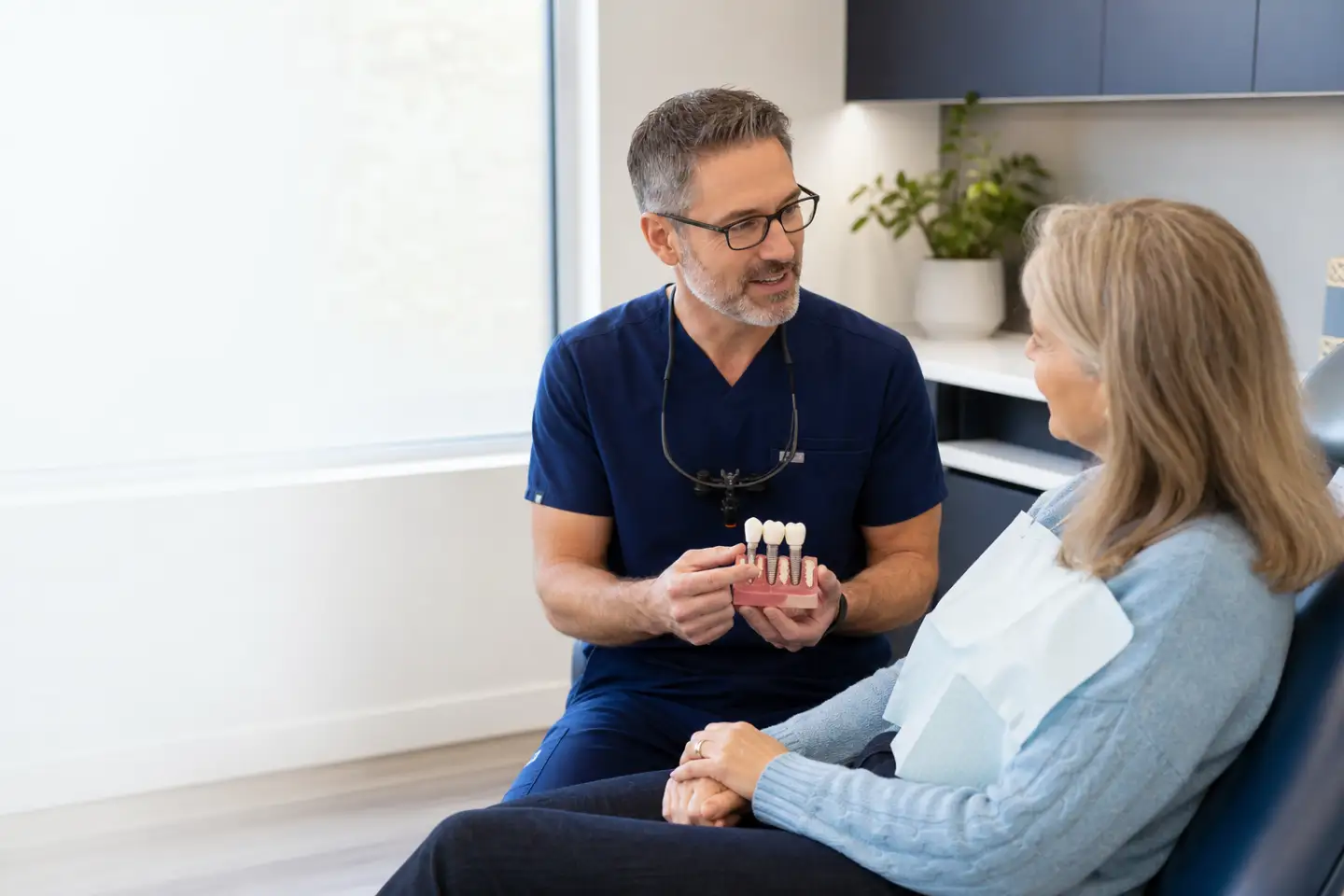
A bridge fills a gap by anchoring a replacement tooth to its neighbours. Wilsonville patients can compare bridges, implants and partials at our Port Dover office.
Let’s get you smiling
Tell us how we can help. Our team will follow up to confirm a time.
Caring for Wilsonville patients at our Port Dover office
See every dental service for WilsonvilleSpanning the gap
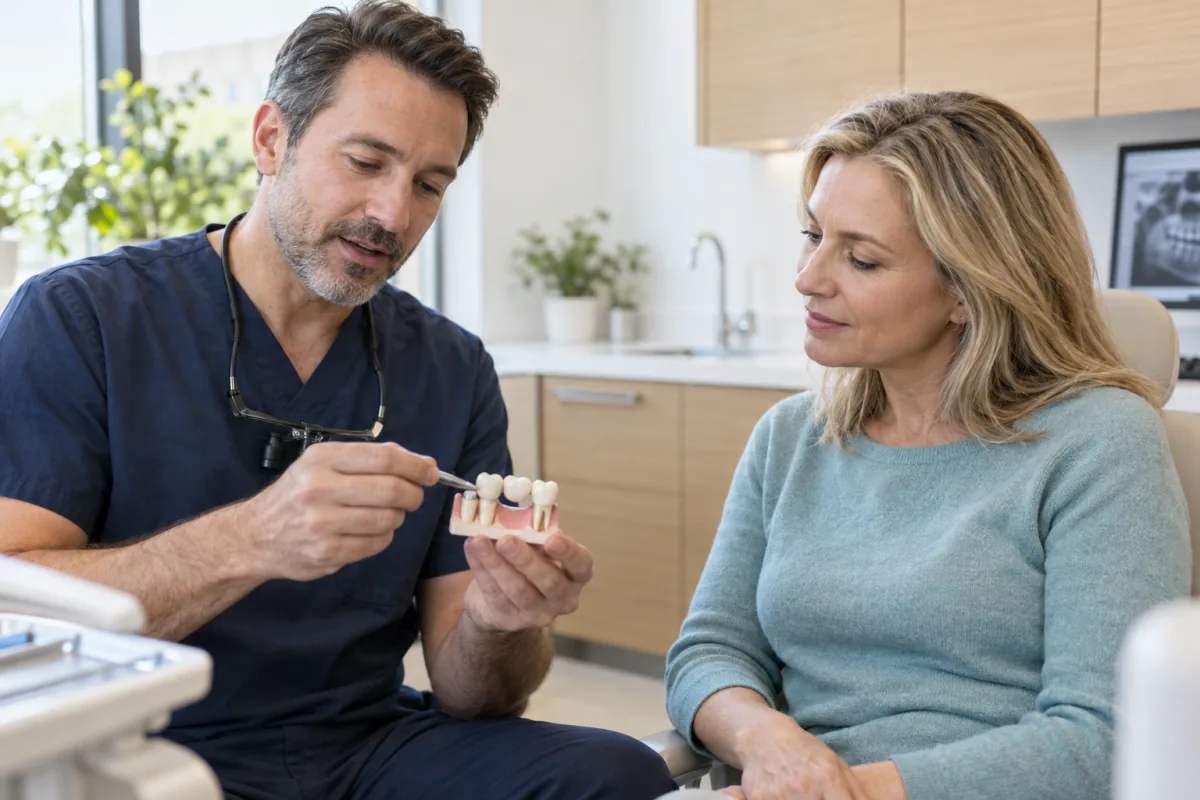
A dental bridge replaces one or more missing teeth with an artificial tooth held in place by crowns on the neighbouring teeth, or sometimes by implants. Unlike a removable partial denture, a bridge stays in place and is cleaned like natural teeth, with a few extra steps. Whether it is a good fit depends on the health of the supporting teeth.
If you live in Wilsonville and are missing a tooth, you can discuss bridge treatment at our Port Dover office. The dentist will compare a bridge with implants and partial dentures, explain how many appointments each would involve and help you weigh the long-term considerations.
Is a bridge right?
A traditional bridge requires the teeth on either side of the gap to be shaped for crowns. If those teeth already have large fillings or crowns, a bridge can be a practical way to restore them at the same time. If they are healthy and untouched, preparing them is a significant decision worth discussing.
Implants replace a tooth without involving neighbouring teeth, but need sufficient bone and healing time. Partial dentures are removable and avoid crowning teeth, though some people find them less stable or comfortable. Your dentist will review X-rays and your health history and explain the pros and cons of each choice.
Types of bridges
A traditional bridge uses crowns on both sides of the gap to hold the replacement tooth. A cantilever bridge is supported on one side only and is used in specific situations where forces are lighter. The dentist chooses a design based on the location of the gap and how your teeth meet.
A resin-bonded bridge attaches a replacement tooth to the back of neighbouring teeth with wings, requiring less preparation, though it may be less durable under heavy biting. Implant-supported bridges replace several teeth using implants rather than natural teeth as anchors. Each has particular requirements and trade-offs.
Treatment steps
The supporting teeth are numbed and shaped to make room for crowns. Impressions or digital scans are taken and the shade is selected. This step can take some time, so let the team know if you need breaks. Any decay found during preparation is addressed before the impression.
A temporary bridge protects the prepared teeth while the final bridge is made. At the next visit, the temporary is removed and the permanent bridge is checked for fit, appearance and bite before it is cemented. Speak up if anything feels uneven or uncomfortable during this check.
Caring for it
Food and plaque can collect under the replacement tooth. Floss threaders, special floss or small interdental brushes help clean this space. The hygienist can show you a technique. Brushing twice a day with fluoride toothpaste protects the crowns’ edges, where decay can develop if plaque builds up.
Regular checkups allow the dentist to examine the bridge and the gum around it. Report looseness, pain or a bad taste near the bridge promptly. Avoid chewing very hard foods with the bridge. If you grind your teeth, a night guard may help protect your restoration.
Planning your appointment
Book a consultation at our Port Dover office to learn whether a bridge, implant or partial denture suits your situation. Ask about the number of appointments so you can plan your visits.
Bring any previous X-rays or treatment plans, and let the team know about medical conditions or medications that affect healing.
Before you book
Have a question about your situation? Our team can help you plan a visit.
Many bridges last for years with good care. Longevity depends on the health of the supporting teeth, oral hygiene and bite forces. Regular checkups help catch problems early.
Local anaesthetic is used while the teeth are prepared. Some tenderness or sensitivity may occur afterward and usually settles. Contact the office if pain persists or the bite feels high.
Most people can chew comfortably once they adjust. Avoid very hard or sticky foods that could damage the bridge. Cut tougher foods into smaller pieces if needed.
Decay under a crown can threaten the bridge. Treatment depends on how extensive it is. Careful cleaning and regular checkups reduce this risk and allow early detection.
Both have advantages. Implants avoid preparing neighbouring teeth but need adequate bone and healing time. Bridges may be quicker. Your dentist can compare them for your mouth.
Implants replace missing teeth with a post placed in the jawbone. Wilsonville patients can learn about suitability, healing time and care at our Port Dover office.
Thinking about dentures, or adjusting to your first set? Wilsonville patients can learn about fit, speaking, eating and daily care with our Port Dover dental team.
Recognized year after year
Best Dentists in Norfolk
Proudly recognized among Norfolk’s top-rated dental practices for six consecutive years.

2021 Winner

2022 Winner

2023 Winner

2024 Winner

2025 Winner

2026 Winner
Stories from our patients
Watch a patient’s experience and browse more five-star reviews from people who have visited our Port Dover dental clinic.
Patient video
A patient shares the welcoming atmosphere and positive experience they found at our Port Dover office.
Google reviews
Swipe or use the arrows
Read all reviewsYour next visit can start today
New patients and CDCP patients are welcome. Tell us how we can help and our Port Dover dental team will follow up with you.
Evening appointments Monday and Tuesday