
Patient video
Welcoming and Wonderful Practice
A patient shares the welcoming atmosphere and positive experience they found at our Port Dover office.
★★★★★
Port Dover Family Dentistry
A fixed bridge anchors a false tooth to its neighbours. Compare it with implants and dentures, and see the two-visit process for Tillsonburg patients.
Let’s get you smiling
Tell us how we can help. Our team will follow up to confirm a time.
Tillsonburg patients are welcome at our Port Dover office
Every dental service for Tillsonburg patientsClosing the gap
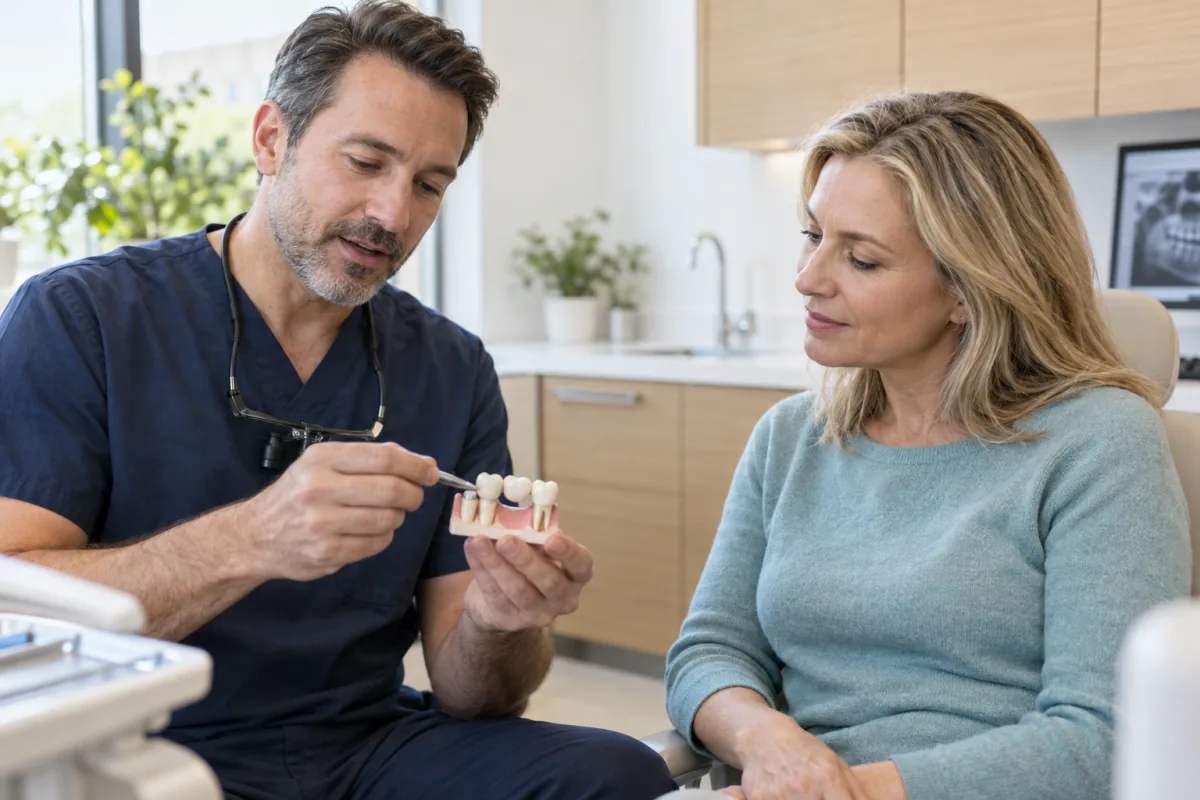
When a tooth is missing, the space can affect chewing, speech and appearance, and nearby teeth may drift or tip over time. A fixed bridge replaces one or more missing teeth by attaching a false tooth to crowns placed on the neighbouring teeth, or in some cases to implants. It is cemented in place rather than removed daily.
Patients from Tillsonburg can explore bridges at our Port Dover office alongside other replacement options. Since a bridge usually involves at least two appointments, ask early about the sequence so the trips can be planned around work and home life.
Is a bridge suitable?
A traditional bridge depends on the teeth on either side of the gap, which are reshaped to hold crowns. Those teeth need healthy roots, good gum support and enough structure. If they already have large fillings, crowning them may offer protection, but if they are untouched, reshaping them is a trade-off worth discussing.
Implants and removable partial dentures are other ways to fill a gap. Each differs in the number of visits, the effect on nearby teeth and long-term maintenance. Ask the dentist to compare options for your specific space and explain the reasons behind the recommendation before you decide.
Preparing the teeth
After freezing the area, the dentist shapes the supporting teeth so the crowns of the bridge will fit over them. Any decay is removed during this step. Ask how much tooth will be reshaped and how the dentist will protect the nerves. Let the team know about any sensitivity you have noticed in those teeth.
Impressions or scans are taken so the bridge can be made to fit your bite. A temporary bridge is usually placed to protect the teeth and fill the space in the meantime. Ask how to eat and clean around it, and what to do if it loosens before your next appointment.
Fitting the bridge
When the bridge is ready, the dentist removes the temporary and tries in the new bridge. They check how it fits around the gums, how your teeth meet and whether the shade blends. Speak up if anything feels high or tight. Allow time for adjustments so you are not hurrying back to Tillsonburg.
Once you and the dentist are satisfied, the bridge is cemented in place. Mild sensitivity or tenderness is common for a few days. Contact the Port Dover office if the bite feels uneven, pain increases or the gum around the bridge stays swollen beyond the first several days.
Long-term care
Food and plaque can collect under the false tooth, so cleaning beneath it is important. Floss threaders, interdental brushes or water flossers can help. Ask the team to demonstrate a method that suits your bridge. Brushing twice daily and cleaning under the bridge each day lowers the risk of decay on the anchor teeth.
Regular checkups and cleanings allow the dentist to check the bridge edges, the gums and the supporting teeth. Decay or gum disease around an anchor tooth can put the whole bridge at risk. Call the office if the bridge feels loose, you notice a bad taste or the gums bleed often.
Planning your appointment
Call our Port Dover office to discuss a missing tooth and ask how bridges compare with other options. Ask how many visits are usually needed and how far apart they are.
Bring any recent X-rays from another dentist and let the team know if you have sensitivity or old work near the gap.
Before you book
Have a question about your situation? Our team can help you plan a visit.
Many bridges last for years with good home care and regular checkups, but none are permanent. The health of the supporting teeth and gums has a major influence. The dentist can explain what to expect for your situation.
Each option has advantages. A bridge does not require surgery but relies on reshaping neighbouring teeth, while an implant replaces the root independently. The dentist will compare them based on your teeth, bone and preferences.
Local anaesthetic is used when preparing the supporting teeth. Some sensitivity afterwards is common and usually settles. Discuss comfort options and any concerns with the team before the first appointment.
Use floss threaders, interdental brushes or a water flosser to clean beneath the false tooth daily. The team can demonstrate the technique. Consistent cleaning helps protect the anchor teeth from decay and the gums from inflammation.
Contact the office for advice. Keep the temporary safe and avoid chewing on that side. The team can discuss whether it should be recemented before your next visit, which matters because the prepared teeth need protection.
An implant replaces a tooth root to hold a crown, bridge or denture. Candidacy, the staged timeline and long-term care for patients coming from Tillsonburg.
Considering dentures? What to expect from planning, the first weeks of adjustment and daily care, written for patients travelling from Tillsonburg.
Recognized year after year
Best Dentists in Norfolk
Proudly recognized among Norfolk’s top-rated dental practices for six consecutive years.

2021 Winner

2022 Winner

2023 Winner

2024 Winner

2025 Winner

2026 Winner
Stories from our patients
Watch a patient’s experience and browse more five-star reviews from people who have visited our Port Dover dental clinic.
Patient video
A patient shares the welcoming atmosphere and positive experience they found at our Port Dover office.
Google reviews
Swipe or use the arrows
Read all reviewsYour next visit can start today
New patients and CDCP patients are welcome. Tell us how we can help and our Port Dover dental team will follow up with you.
Evening appointments Monday and Tuesday