
Patient video
Welcoming and Wonderful Practice
A patient shares the welcoming atmosphere and positive experience they found at our Port Dover office.
★★★★★
Port Dover Family Dentistry
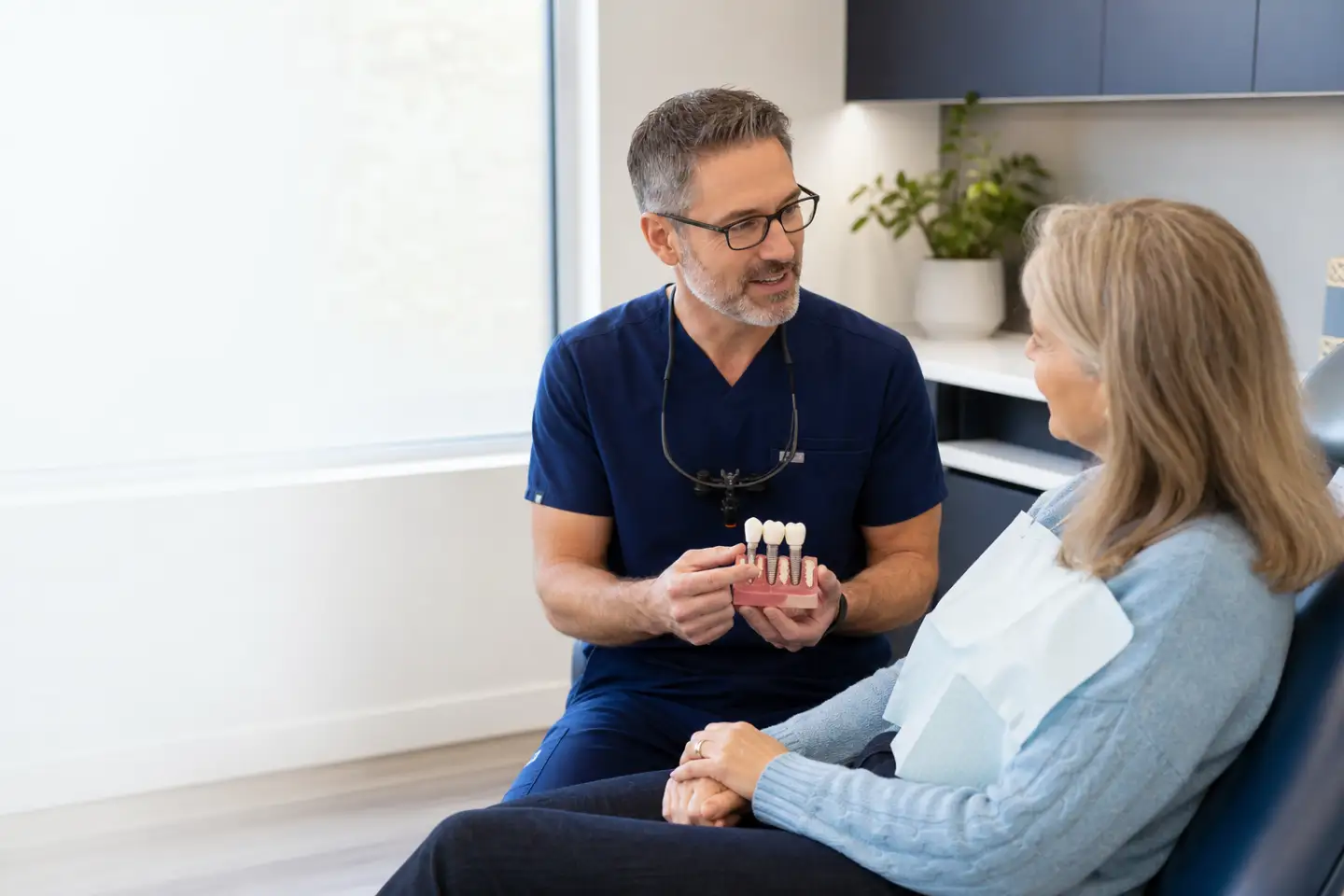
A bridge spans a gap using neighbouring teeth for support. Long Point patients can compare bridges with implants and partials at our Port Dover office.
Let’s get you smiling
Tell us how we can help. Our team will follow up to confirm a time.
Caring for Long Point residents, cottagers and visitors at our Port Dover office
Browse every dental service for Long PointSpanning the gap
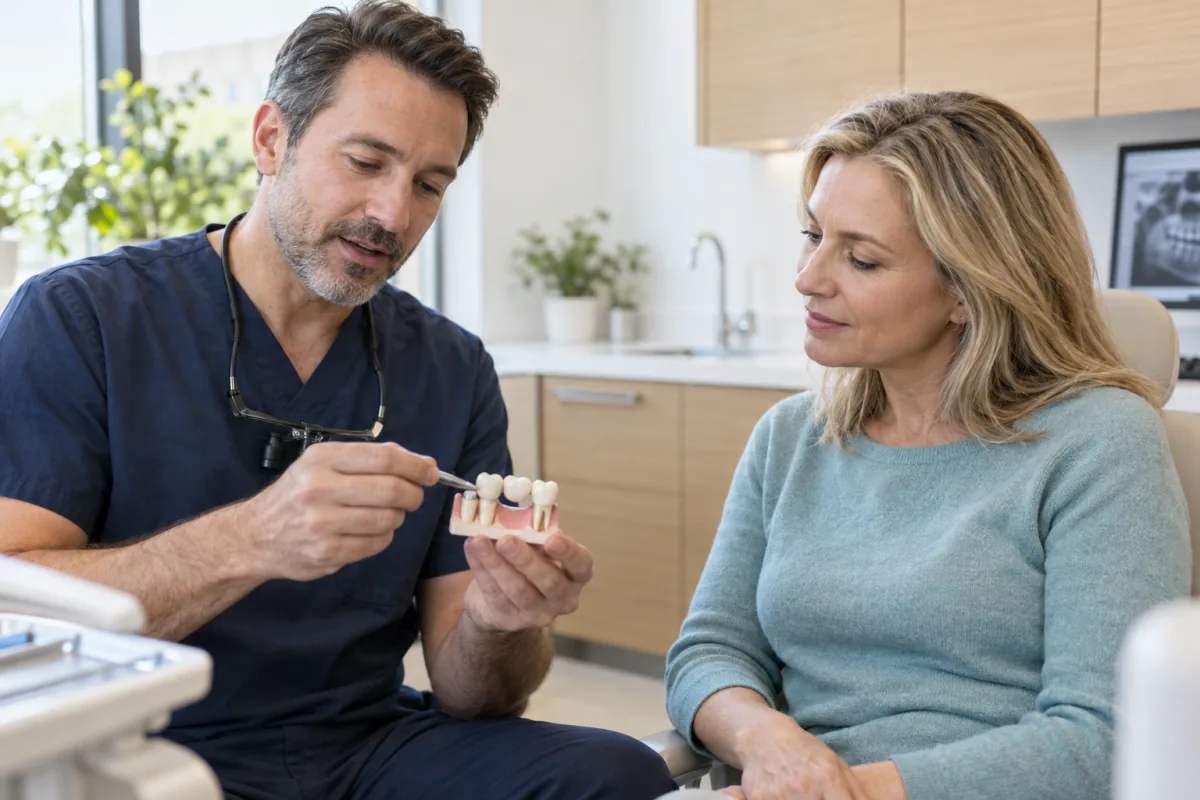
A fixed dental bridge replaces one or more missing teeth with an artificial tooth held in place by crowns on the neighbouring teeth. Once cemented, it does not come out like a denture. Bridges can restore chewing and appearance and keep surrounding teeth from drifting into the gap, but they depend on the strength and health of those supporting teeth.
Long Point patients thinking about a bridge can be assessed at our Port Dover office. The process usually involves at least two visits with laboratory time between, so plan around your seasonal schedule.
Is a bridge suitable?
The dentist examines the teeth on each side of the gap, checking for decay, large fillings, cracks and gum support. X-rays show roots and bone. If the anchor teeth already need crowns, a bridge may be an efficient choice. If they are healthy and unrestored, preparing them for crowns removes enamel that will not return.
An implant replaces a tooth without involving neighbouring teeth but requires surgery and healing. A partial denture is removable and often less involved. The dentist will lay out the pros, cons and maintenance of each option so you can choose based on your health, preferences and timeline.
Bridge types
A traditional bridge uses crowns on the teeth either side of the gap to support the replacement tooth. Materials such as porcelain, zirconia or porcelain fused to metal may be considered, depending on location and appearance. The dentist will explain how each material balances strength and aesthetics.
Resin-bonded bridges attach with wings to the back of neighbouring teeth and require less preparation, though they suit limited situations. Implant-supported bridges use implants instead of natural teeth as anchors. Ask which designs are suitable for your gap and why.
Getting a bridge
At the first visit, the anchor teeth are numbed and shaped to make room for crowns. Impressions or scans are taken and sent to a laboratory. A temporary bridge is usually placed to protect the prepared teeth and maintain appearance. Be gentle with it, avoiding sticky or hard foods.
When the final bridge is ready, the temporary is removed and the new bridge is checked for fit, colour and bite before it is cemented. The dentist will adjust high spots. You may notice the bridge feels slightly different at first, but it should soon feel natural when chewing.
Long-term care
Food and plaque can collect under the replacement tooth. Use floss threaders, small interdental brushes or water flossers as shown by the hygienist to clean there daily. Neglecting this area can lead to gum inflammation or decay on the anchor teeth, which threatens the whole bridge.
Regular checkups allow the dentist to check the margins of the crowns and the health of the gums. Report any looseness, a bad taste, sensitivity or a change in bite. If you grind your teeth, ask whether a night guard would help protect the bridge from excessive force.
Planning your appointment
Call our Port Dover office to arrange an assessment of the gap and neighbouring teeth. Ask how long laboratory work usually takes so you can schedule both visits within your time nearby.
If a tooth was removed recently, mention when, since the healing period can influence the timing and design of a bridge.
Before you book
Have a question about your situation? Our team can help you plan a visit.
Many bridges last for years with good home care and checkups, but longevity depends on the anchor teeth, oral hygiene and bite. Decay or gum disease around the supports is a common reason bridges fail.
Neither is better for everyone. Bridges avoid surgery but involve preparing neighbouring teeth. Implants preserve those teeth but require healing time. The dentist will explain which suits your situation.
Freezing is used when preparing the anchor teeth. Some sensitivity or gum tenderness afterward is common and usually settles. Report persistent pain or sensitivity to the office.
Most people return to regular eating once the final bridge is fitted. Avoid very hard or sticky foods on a temporary bridge. With the permanent bridge, use the same care you would with natural teeth.
Floss threaders, interdental brushes or water flossers can reach under the replacement tooth. Ask the hygienist to demonstrate the method that works best for your bridge.
Implants replace missing teeth with a post placed in the jawbone. Long Point patients can learn about suitability, healing and upkeep at our Port Dover office.
New to dentures or replacing an old set? Long Point patients can talk through options, the adjustment period and daily care with our Port Dover team.
Recognized year after year
Best Dentists in Norfolk
Proudly recognized among Norfolk’s top-rated dental practices for six consecutive years.

2021 Winner

2022 Winner

2023 Winner

2024 Winner

2025 Winner

2026 Winner
Stories from our patients
Watch a patient’s experience and browse more five-star reviews from people who have visited our Port Dover dental clinic.
Patient video
A patient shares the welcoming atmosphere and positive experience they found at our Port Dover office.
Google reviews
Swipe or use the arrows
Read all reviewsYour next visit can start today
New patients and CDCP patients are welcome. Tell us how we can help and our Port Dover dental team will follow up with you.
Evening appointments Monday and Tuesday