
Patient video
Welcoming and Wonderful Practice
A patient shares the welcoming atmosphere and positive experience they found at our Port Dover office.
★★★★★

Port Dover Family Dentistry
Bonding uses tooth-coloured resin to repair chips, close small gaps or reshape edges. Lynedoch patients can ask our Port Dover dentist if bonding fits their smile.
Let’s get you smiling
Tell us how we can help. Our team will follow up to confirm a time.
Caring for Lynedoch patients at our Port Dover office
Every dental service for Lynedoch patientsConservative repair
Dental bonding involves applying tooth-coloured resin directly to the tooth surface, sculpting it into shape and hardening it with a curing light. It is often used for small chips, minor gaps, short or uneven teeth and some areas of discolouration. Because little or no enamel usually needs to be removed, it is considered a conservative option.
Lynedoch patients who want to fix a chipped edge or soften a gap can talk with the dentist at our Port Dover office about whether bonding is suitable. The dentist will look at the tooth, your bite and your goals, and explain how bonding compares with alternatives such as veneers or crowns.
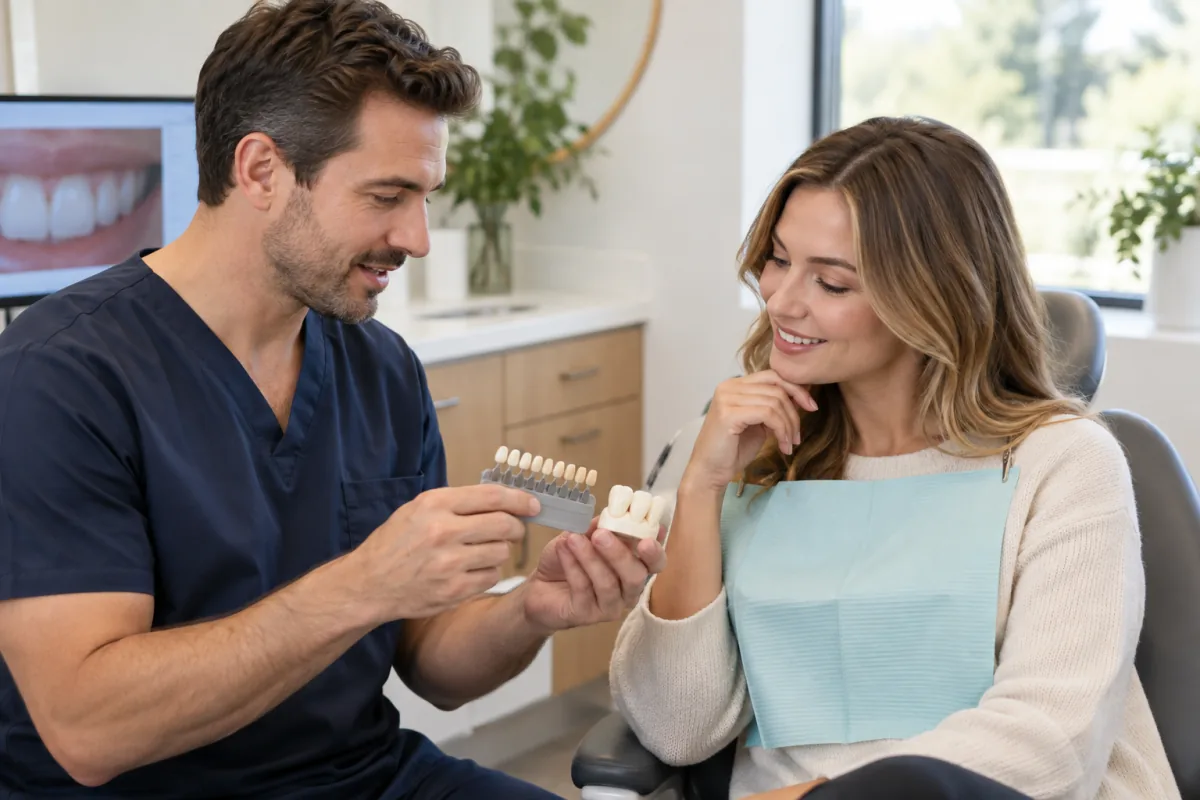
What bonding treats
Small chips on front teeth, narrow gaps between teeth, minor shape differences and exposed root surfaces near the gumline are typical uses. Bonding can also cover small stains that do not respond to whitening. The material is shaded to match neighbouring teeth, so the repair can blend in when well finished.
Large restorations on back teeth, teeth under heavy biting force or significant discolouration may be better treated with other options. Bonding can chip or stain more readily than porcelain. The dentist will discuss whether bonding offers a reasonable balance of appearance, durability and upkeep for your particular concern.
Before treatment
The dentist checks for decay and gum inflammation, which should be addressed before bonding. A shade guide is used to choose a resin colour that matches your teeth. Natural daylight can help with matching, so the dentist may compare shades from different angles before beginning the actual bonding.
Bonding material does not lighten with whitening products. If you are considering whitening, it is usually done first so the bonding can be matched to your new shade. Ask the dentist about timing if you plan to do both, since a gap between whitening and bonding may be recommended.
The appointment
The tooth surface is lightly roughened and a conditioning liquid applied so the resin adheres well. Freezing is often not needed unless the bonding is covering a sensitive area or decay. The dentist then applies the resin in layers, shaping it carefully to recreate the look of natural enamel.
Each layer is hardened with a light. Once the shape is complete, the dentist trims and polishes the bonding so it reflects light like the surrounding teeth. You will be shown the result and your bite checked. Speak up if something looks or feels off so it can be refined.
Caring for bonding
Avoid biting fingernails, pens or hard foods directly with bonded teeth, as resin can chip. Coffee, tea, red wine and tobacco may stain it over time. Brushing twice daily and regular hygiene visits help keep bonding bright. If you grind your teeth, ask whether a night guard would protect your work.
Bonding usually lasts several years but may need polishing, touch-ups or replacement eventually. At checkups the dentist looks for chips, staining or rough edges. Small issues can often be repaired without redoing the whole restoration. Let the office know if something breaks between visits.
Planning your appointment
When you contact our Port Dover office, describe the tooth you would like improved and whether you have considered whitening. The dentist can then assess suitability at your visit.
If the concern is a recent chip, mention any pain or sensitivity, since that may change how quickly you should be seen.
Before you book
Have a question about your situation? Our team can help you plan a visit.
Bonding often lasts several years, depending on location, bite forces and habits. It may need polishing or repair over time. Regular checkups help identify wear before larger problems develop.
Bonding usually requires little or no removal of enamel, making it a conservative option. The surface is lightly prepared so the resin can adhere. The dentist will explain the preparation needed for your tooth.
Yes. Resin can pick up stains from coffee, tea, wine and tobacco more readily than porcelain. Good hygiene and regular cleanings help, and stained bonding can often be polished or refreshed.
Each has advantages. Bonding is more conservative and can often be done in one visit, while porcelain veneers resist staining and may last longer. The dentist can compare them based on your goals and tooth condition.
Composite bonding is used for fillings on back teeth, but large repairs under heavy chewing may need stronger restorations. The dentist will recommend the most suitable material for the location.
Small uneven edges or a slightly pointed tooth can sometimes be refined by reshaping. Lynedoch patients can ask our Port Dover dentist whether contouring suits them.
Veneers can change the colour, shape and length of front teeth. Lynedoch residents can weigh porcelain and composite veneers with the dentist at our Port Dover office.
Recognized year after year
Best Dentists in Norfolk
Proudly recognized among Norfolk’s top-rated dental practices for six consecutive years.

2021 Winner

2022 Winner

2023 Winner

2024 Winner

2025 Winner

2026 Winner
Stories from our patients
Watch a patient’s experience and browse more five-star reviews from people who have visited our Port Dover dental clinic.
Patient video
A patient shares the welcoming atmosphere and positive experience they found at our Port Dover office.
Google reviews
Swipe or use the arrows
Read all reviewsYour next visit can start today
New patients and CDCP patients are welcome. Tell us how we can help and our Port Dover dental team will follow up with you.
Evening appointments Monday and Tuesday