
Patient video
Welcoming and Wonderful Practice
A patient shares the welcoming atmosphere and positive experience they found at our Port Dover office.
★★★★★

Port Dover Family Dentistry
A guard shaped to your own bite cushions nighttime grinding. Fitting steps, adjustment visits and daily upkeep explained for Tillsonburg patients.
Let’s get you smiling
Tell us how we can help. Our team will follow up to confirm a time.
Tillsonburg patients are welcome at our Port Dover office
Every dental service for Tillsonburg patientsProtection made for your bite
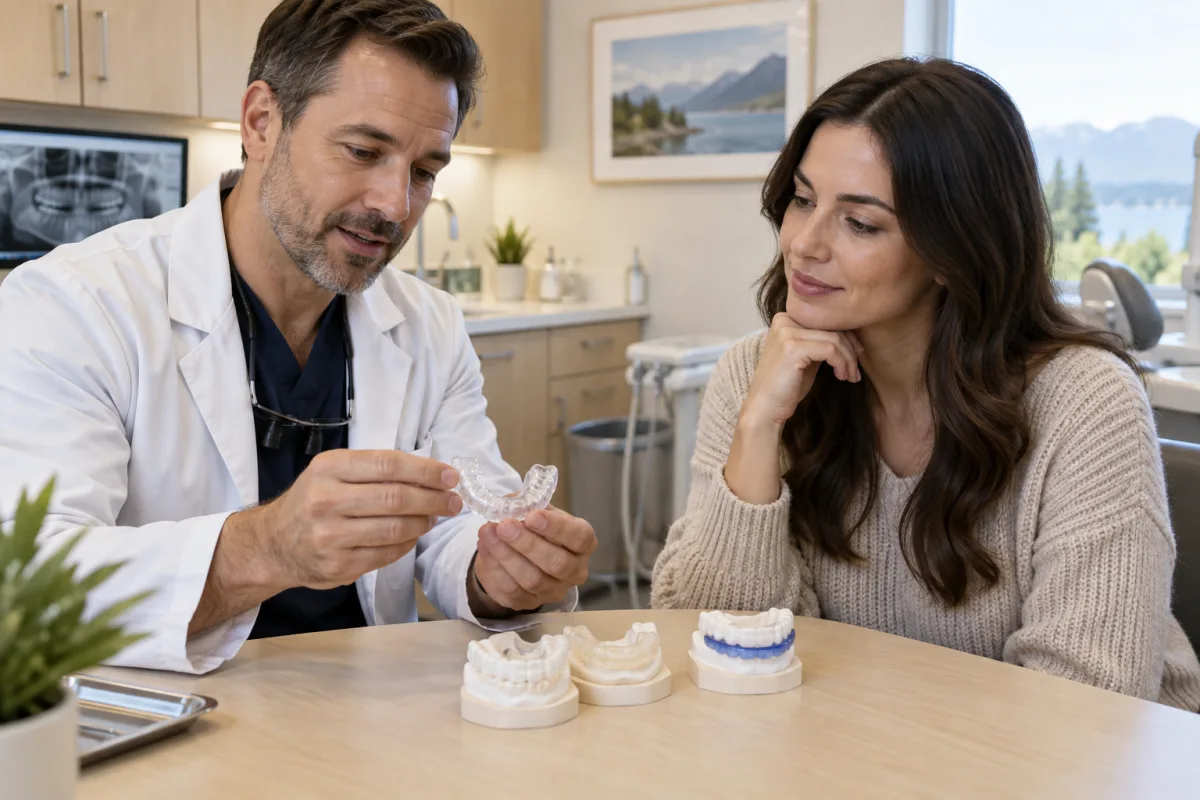
Grinding and clenching during sleep can wear down enamel, crack teeth and strain the jaw muscles. A custom night guard sits over one arch of teeth and spreads those forces across a smooth surface. Because it is made from your own impressions or scans, it tends to fit more closely than generic options.
Tillsonburg residents can be assessed and fitted for a guard at our Port Dover office. Making a guard usually takes more than one appointment, so asking about the steps in advance makes it easier to arrange the trips around your other commitments.
Do you need one?
Jaw stiffness on waking, headaches near the temples, flattened tooth edges, chipped fillings and sensitivity can all suggest nighttime grinding. A partner may notice the sound. Keep a short record of symptoms over a couple of weeks to share with the dentist, along with anything that seems to make them better or worse.
The dentist examines tooth wear, the jaw joints and muscles, and existing dental work. They may ask about sleep quality, snoring, medications and stress. If there are signs of a sleep-breathing issue, a medical evaluation may be suggested. A guard protects teeth but does not treat every underlying cause on its own.
Making the guard
The first step is taking impressions or a digital scan of your teeth and recording how your bite meets. The guard is then made to those measurements. Ask which arch the guard will cover and what material is planned, since thickness and hardness can vary depending on the severity of grinding.
At the delivery appointment, the dentist checks the fit, makes sure the guard seats evenly and adjusts any high spots. It should feel snug without pain. Let the team know about tight areas or rubbing. Leave enough time in your day for this visit so adjustments are not rushed before the drive home to Tillsonburg.
Wearing it
It can feel bulky at first, and you may produce more saliva or notice slight pressure on the teeth. Many people adjust within days or a couple of weeks of wearing it every night. If you remove it in your sleep, keep it close by and put it back in if you wake. Consistency helps the habit form.
Contact the Port Dover office if the guard causes jaw pain, your bite feels different in the morning for more than a short while, or it becomes loose or cracked. These signs may mean an adjustment is needed. Do not try to reshape or trim the guard at home, since that can affect fit and protection.
Care and replacement
Each morning, rinse the guard, brush it gently with a soft toothbrush and cool water, and let it air dry. Avoid hot water, which can warp it. Store it in a ventilated case out of reach of pets, who often find guards appealing. Clean the case regularly to keep bacteria from building up.
Bring your guard to regular checkups so the dentist can check wear, cracks and fit. Dental work such as a new crown can change how it seats, so mention any changes. Over time, a heavily used guard may need replacing. Ask how wear on your guard compares with what is expected.
Planning your appointment
Contact our Port Dover office to describe your grinding symptoms and ask about an assessment. Ask how many visits a custom guard usually involves.
Bring any guard you currently use, and mention snoring, jaw clicking or recent dental work that may affect the fit.
Before you book
Have a question about your situation? Our team can help you plan a visit.
A custom guard is made from impressions or scans of your teeth and adjusted to your bite, so it usually fits more closely and comfortably. Store-bought guards can be bulkier and may not distribute forces as evenly across the teeth.
Its main job is to protect teeth and restorations from grinding forces. Some people find symptoms ease, but the habit may continue. The dentist may suggest other strategies depending on what contributes to your grinding.
Many people adjust within several days to a couple of weeks of nightly wear. Extra saliva and a feeling of bulk usually fade. Contact the office if discomfort persists or the guard feels uneven.
Rinse and gently brush it each morning with cool water, then let it dry before storing it in a ventilated case. Avoid hot water and harsh chemicals, which can damage the material or change its shape.
It depends on how heavily you grind and the material used. Bring the guard to checkups so wear and fit can be reviewed. Cracks, thinning or looseness are signs it may need replacing.
Sore jaw or worn teeth on waking? How grinding damage is judged and whether a store-bought or dentist-made guard suits patients from Tillsonburg.
Morning jaw aches, worn edges and temple headaches can point to clenching. Here is how grinding is assessed and managed for patients from Tillsonburg.
Recognized year after year
Best Dentists in Norfolk
Proudly recognized among Norfolk’s top-rated dental practices for six consecutive years.

2021 Winner

2022 Winner

2023 Winner

2024 Winner

2025 Winner

2026 Winner
Stories from our patients
Watch a patient’s experience and browse more five-star reviews from people who have visited our Port Dover dental clinic.
Patient video
A patient shares the welcoming atmosphere and positive experience they found at our Port Dover office.
Google reviews
Swipe or use the arrows
Read all reviewsYour next visit can start today
New patients and CDCP patients are welcome. Tell us how we can help and our Port Dover dental team will follow up with you.
Evening appointments Monday and Tuesday