
Patient video
Welcoming and Wonderful Practice
A patient shares the welcoming atmosphere and positive experience they found at our Port Dover office.
★★★★★
Port Dover Family Dentistry
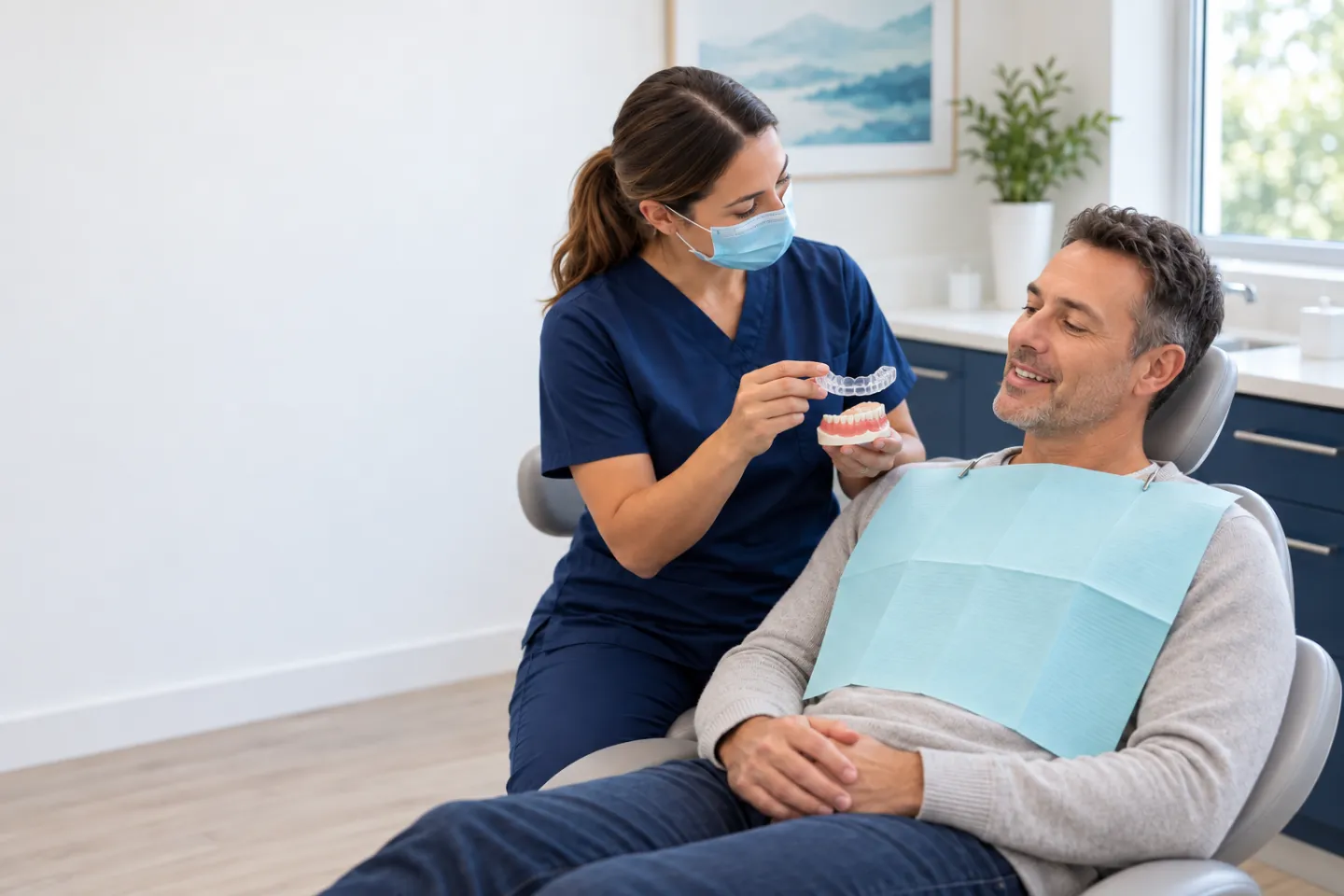
A custom night guard is shaped to your teeth to cushion grinding forces while you sleep. Find out how St. Williams patients are fitted at our Port Dover office.
Let’s get you smiling
Tell us how we can help. Our team will follow up to confirm a time.
Caring for St. Williams patients at our office in Port Dover
Every dental service for St. WilliamsMade for your bite
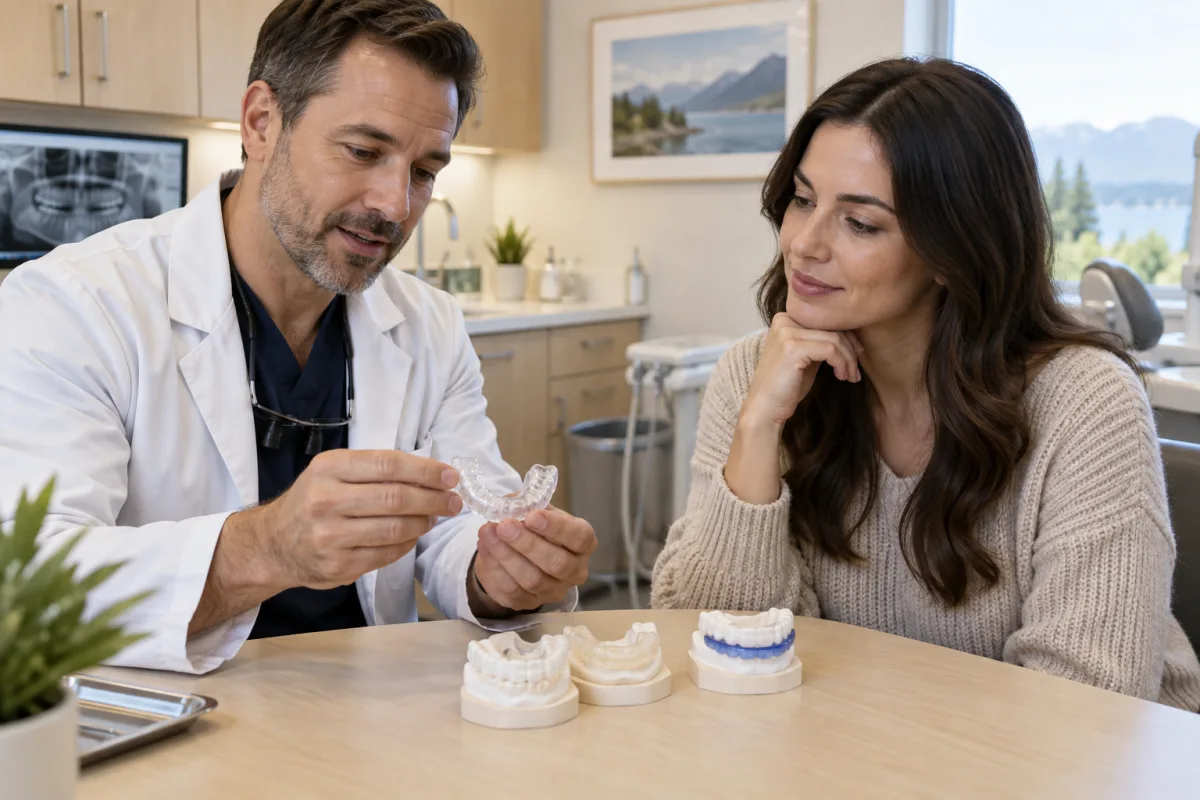
Night guards sit over the upper or lower teeth while you sleep, creating a barrier between them. They are commonly recommended for people who grind or clench at night, to reduce wear, protect restorations and sometimes ease jaw muscle strain. A custom guard is made from impressions or a scan of your teeth, so it tends to fit more securely than off-the-shelf versions.
If you live in St. Williams and wake with sore jaws or have been told you grind, a fitting at our Port Dover office can help determine whether a custom guard is a sensible next step and which design would suit your bite.
Why consider one
Grinding can flatten teeth, cause chips and loosen or crack fillings and crowns. A night guard absorbs much of that force so the teeth and restorations take less damage. If you have invested in crowns, veneers or implants, the dentist may suggest a guard to help protect that work over time.
Some people find that a guard reduces morning jaw tightness or headaches, though not everyone notices this effect. A guard does not cure the underlying cause of grinding. If symptoms continue or worsen, the dentist may look at other factors such as stress, sleep quality or jaw joint problems.
Design choices
Hard acrylic guards are durable and allow the jaw to glide smoothly. Soft guards may feel more comfortable at first but can wear quickly in heavy grinders. Dual-layer guards combine a soft inside with a harder outside. The choice depends on how much you grind and what feels manageable to wear.
Guards can be made for the upper or lower teeth. The dentist will consider your bite, existing dental work and comfort. If you have missing teeth, braces or a partial denture, mention it so the guard can be designed to fit around those features properly.
Getting fitted
At the first visit, the dentist examines your teeth and jaw and takes impressions or a digital scan. Your bite is recorded so the guard can be made to sit evenly. The guard is then fabricated, often by a dental laboratory, which takes some time before it is ready.
At the fitting, the guard is placed and checked for comfort and even contact. Adjustments are made so it does not rock or press too hard on any one area. You will learn how to put it in, take it out and clean it. Expect a short adjustment period as you get used to sleeping with it.
Care
Rinse the guard each morning, brush it gently with a soft toothbrush and let it dry before storing it in a ventilated case. Avoid hot water and harsh cleaners that can warp or damage the material. Keep it away from pets, who often find guards tempting to chew.
Bring the guard to your regular checkups so the dentist can check its fit and look for wear. Replace it if it cracks, becomes loose or causes discomfort. New dental work, such as a crown, may change how the guard fits, so let the team know when treatment is planned.
Planning your appointment
Call our Port Dover office to book an assessment. Mention signs like jaw soreness, headaches or worn teeth so the team can plan an appointment that includes the records needed.
If you already own a guard, bring it with you. The dentist can assess whether it still fits or whether a new one is advisable.
Before you book
Have a question about your situation? Our team can help you plan a visit.
A custom guard is made from records of your teeth, so it usually fits more precisely and comfortably. Store-bought guards may be bulkier and less stable. The dentist can explain whether a custom guard is worthwhile for your situation.
A properly made and adjusted guard should not change your bite. If your bite feels different in the morning for more than a short time, or the guard causes pain, contact the office so it can be checked.
It depends on how heavily you grind and the material used. Some guards last years, others need replacing sooner. Regular checkups help the dentist spot wear before the guard stops protecting your teeth.
A standard night guard is not designed to treat snoring or sleep apnea. Separate appliances exist for those issues. If you snore or feel unrested, mention it, as a medical sleep assessment may be advised.
Some people need a few weeks to adjust. If the guard feels too bulky or uncomfortable, bring it in. Adjustments or a different design may help make it easier to wear consistently.
Grinding at night can wear enamel and strain your jaw. St. Williams patients can learn how a night guard helps and what fitting involves at our Port Dover office.
Worn edges, sore jaw muscles or morning headaches can follow clenching. St. Williams patients can explore causes and protective options with our Port Dover team.
Recognized year after year
Best Dentists in Norfolk
Proudly recognized among Norfolk’s top-rated dental practices for six consecutive years.

2021 Winner

2022 Winner

2023 Winner

2024 Winner

2025 Winner

2026 Winner
Stories from our patients
Watch a patient’s experience and browse more five-star reviews from people who have visited our Port Dover dental clinic.
Patient video
A patient shares the welcoming atmosphere and positive experience they found at our Port Dover office.
Google reviews
Swipe or use the arrows
Read all reviewsYour next visit can start today
New patients and CDCP patients are welcome. Tell us how we can help and our Port Dover dental team will follow up with you.
Evening appointments Monday and Tuesday