
Existing Dental Work
Crowns, bridges, implants, large fillings and veneers can affect retention, contact and where relief is needed.
Port Dover Family Dentistry
Custom night guards in Port Dover are designed around your teeth, bite and dental work to protect against grinding-related wear and fracture.
Let’s get you smiling
Tell us how we can help. Our team will follow up to confirm a time.
Custom night guards in Port Dover
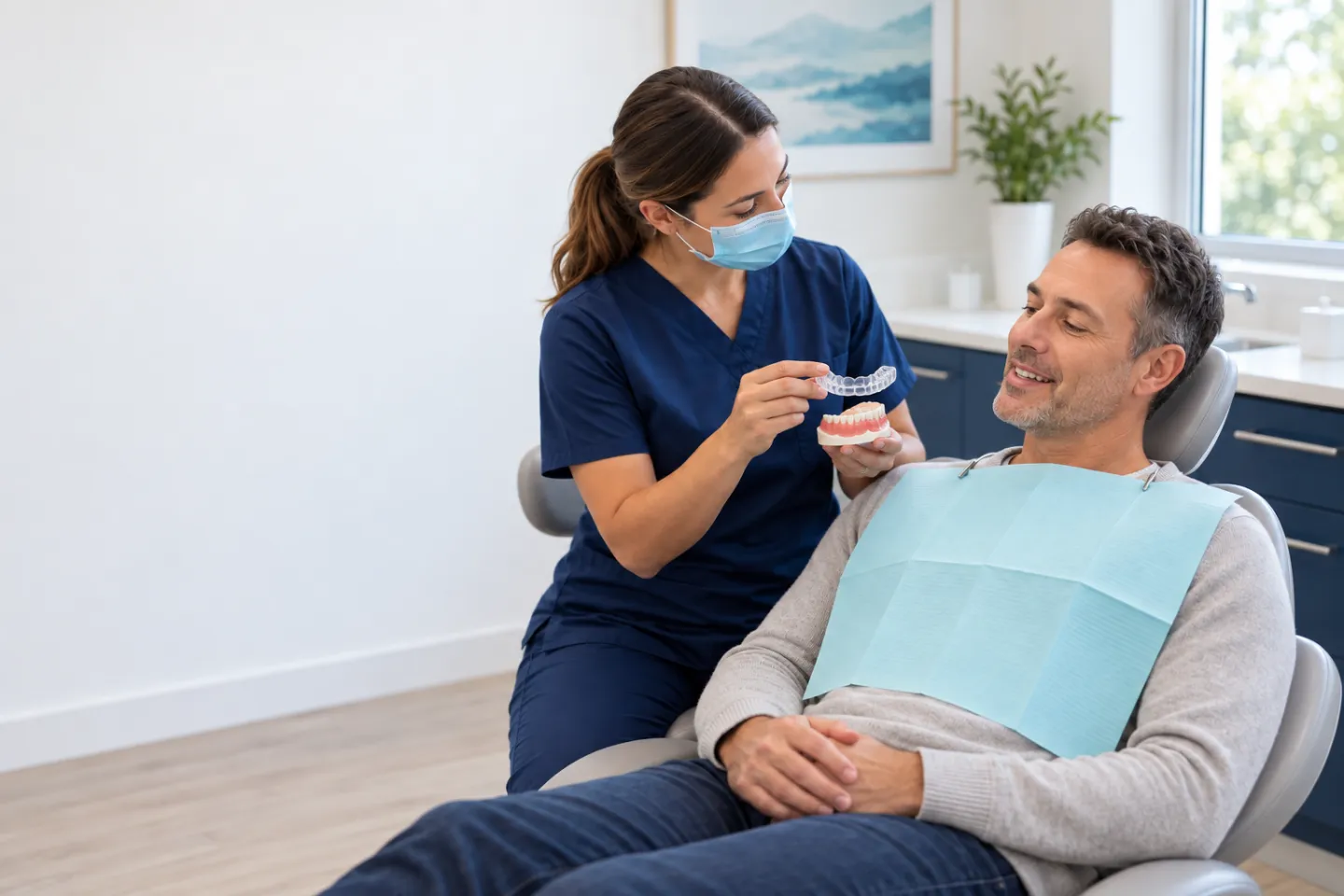
A custom night guard is made from a digital scan or impression and selected for a specific purpose. Tooth wear, restorations, missing teeth, bite contacts, retention, jaw symptoms and whether grinding occurs awake or asleep all influence the design.
The appliance creates a controlled surface between the arches to help protect teeth and dental work. It does not guarantee that clenching or grinding will stop, and it is not a substitute for diagnosing cracks, decay, gum problems, TMD or a sleep-related breathing disorder.
Purpose before material
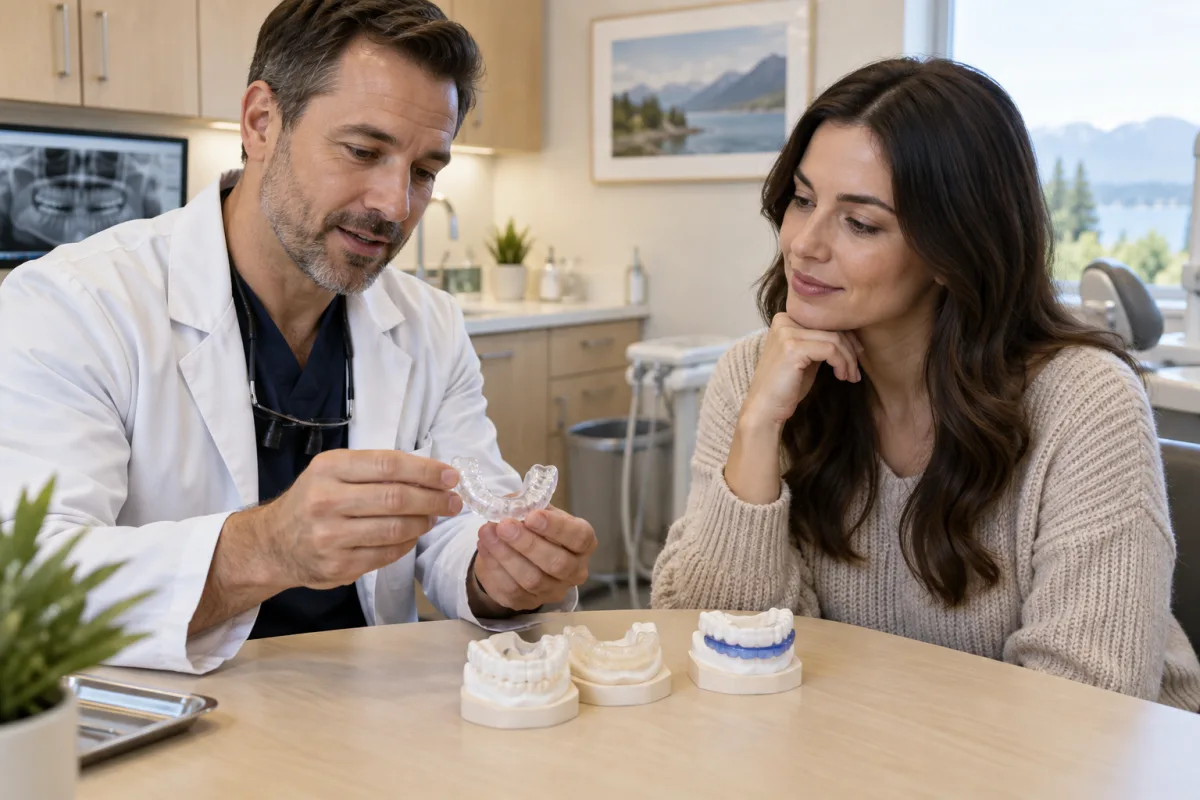
Hard, soft and layered appliances behave differently. The dentist selects the arch, material, thickness and bite surface after examining what needs protection and how your teeth meet.
Individually designed protection
Crowns, bridges, implants, large fillings and veneers can affect retention, contact and where relief is needed.
Wear facets, fractures and damaged restorations help show which teeth and directions are receiving repeated force.
Either arch may be used depending on tooth condition, missing teeth, comfort, stability and treatment goals.
The appliance can be made from hard, flexible or layered material selected for durability, comfort and the clinical situation.
A custom night guard is not a sports mouthguard and is not the same as a mandibular-advancement appliance used within a medical sleep plan.
Design, deliver and monitor
We review symptoms, examine tooth and restoration wear, check jaw movement and muscles and look for problems needing treatment first.
The dentist selects the arch, coverage, material and intended contact pattern based on the clinical findings and your ability to use and clean it.
A digital scan or impression records the teeth, and bite information helps the laboratory build the intended protective surface.
Retention, pressure, comfort and opposing contacts are checked at delivery and again after you have used the appliance.
Fit is a clinical step
The finished appliance should seat fully and remain stable without constant clenching. It should not pinch the gums, rock over the teeth or create one heavy contact that makes the jaw feel pushed to one side.
Small delivery adjustments are common. Later review is equally important because new dental work, tooth movement, material wear and changes in symptoms can alter how the guard fits and functions.
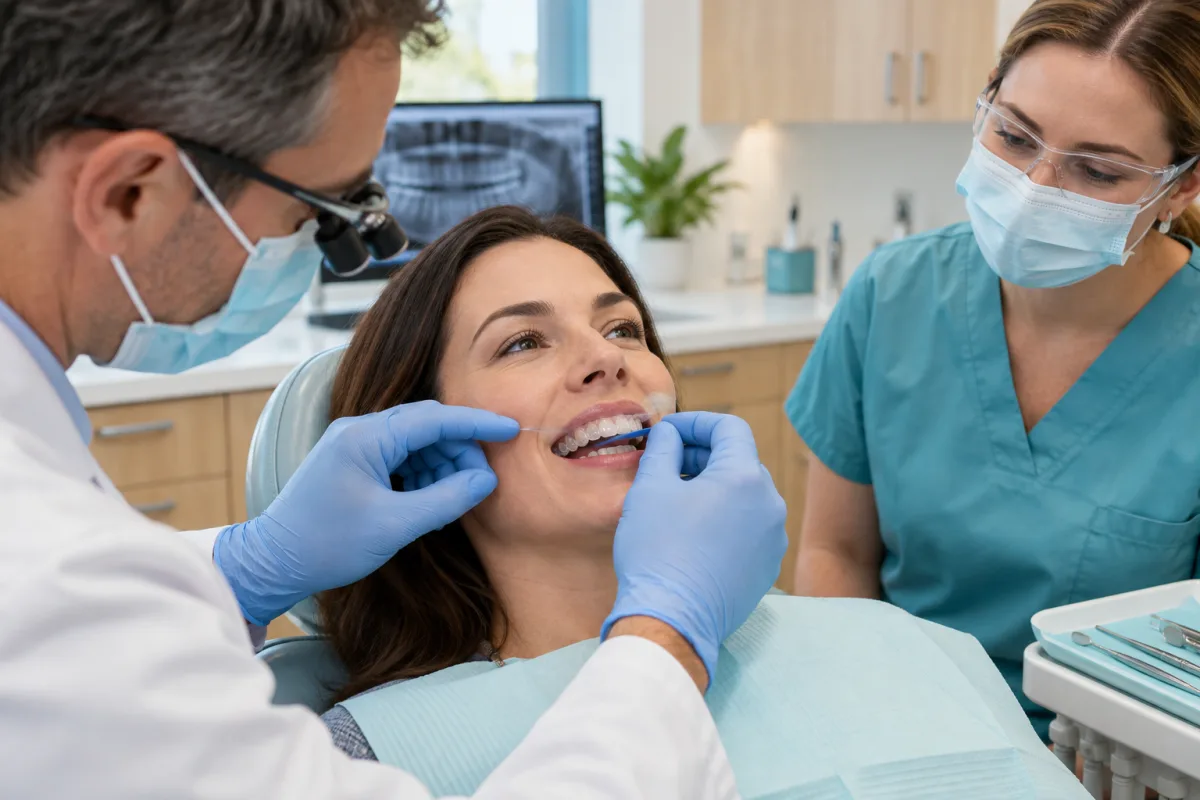
The appliance should engage the selected teeth securely while remaining practical to insert and remove.
Opposing teeth are checked against the guard and refined for the intended design rather than left to contact randomly.
Borders are assessed around the gums, tongue, cheeks and frena to reduce rubbing and improve nightly use.
A protective option—not a diagnosis
No single sign proves bruxism. The dentist considers symptoms, wear, health and alternative explanations before recommending an appliance.
Flattened edges, small fractures and recurring filling or crown damage may justify protective coverage after active disease is treated.
Audible sleep grinding or recognized awake clenching can support the history when it matches the clinical findings.
A guard may help protect extensive restorative work when strong tooth-to-tooth loading is a concern.
Tired chewing muscles on waking may prompt broader bruxism, TMD and sleep assessment rather than appliance treatment alone.
Snoring, witnessed breathing pauses, waking gasping or significant daytime sleepiness require medical assessment. A standard night guard does not treat obstructive sleep apnea.
Night-guard care
Cleaning and storage instructions vary by material. Follow the directions supplied with your appliance.
Use cool or lukewarm water and the recommended non-abrasive method after use; hot water can distort some materials.
Let the guard dry as directed and keep it in a ventilated case away from heat, sunlight, children and pets.
Fit, wear, cracks and bite contacts can be checked during dental examinations and after restorative treatment.
Stop and call if the guard no longer seats, develops a sharp edge, rocks, causes new pain or changes the bite after removal.
Custom appliance assessment
We can assess wear, restorations, bite and jaw symptoms and explain which night-guard design may be appropriate.
Custom night-guard questions
Neither material is best for everyone. Durability, tooth condition, retention, bite, symptoms and treatment purpose determine whether a hard, flexible or layered design is appropriate.
Not necessarily. Its main role is to separate and protect the teeth and restorations. Awake habits, sleep factors, muscle or joint symptoms and damaged teeth may need additional management.
An over-the-counter appliance may not provide the intended coverage, retention or contact pattern and can be difficult to monitor around dental work. Ask a dentist to assess suitability before using one for ongoing symptoms.
A properly designed appliance should not be intended to permanently change the bite. Stop using it and arrange review if the teeth continue to feel different after removal or the appliance causes new pain.
Bring it to routine visits and after significant dental treatment. Arrange an earlier check if it becomes loose, tight, cracked, worn, uncomfortable or no longer seats completely.
Recognized year after year
Best Dentists in Norfolk
Proudly recognized among Norfolk’s top-rated dental practices for six consecutive years.

2021 Winner

2022 Winner

2023 Winner

2024 Winner

2025 Winner

2026 Winner
Stories from our patients
Watch a patient’s experience and browse more five-star reviews from people who have visited our Port Dover dental clinic.
Patient video
A patient shares the welcoming atmosphere and positive experience they found at our Port Dover office.
Google reviews
Swipe or use the arrows
Read all reviewsOur community
Your next visit can start today
New patients and CDCP patients are welcome. Tell us how we can help and our Port Dover dental team will follow up with you.
Evening appointments Monday and Tuesday