
Patient video
Welcoming and Wonderful Practice
A patient shares the welcoming atmosphere and positive experience they found at our Port Dover office.
★★★★★
Port Dover Family Dentistry
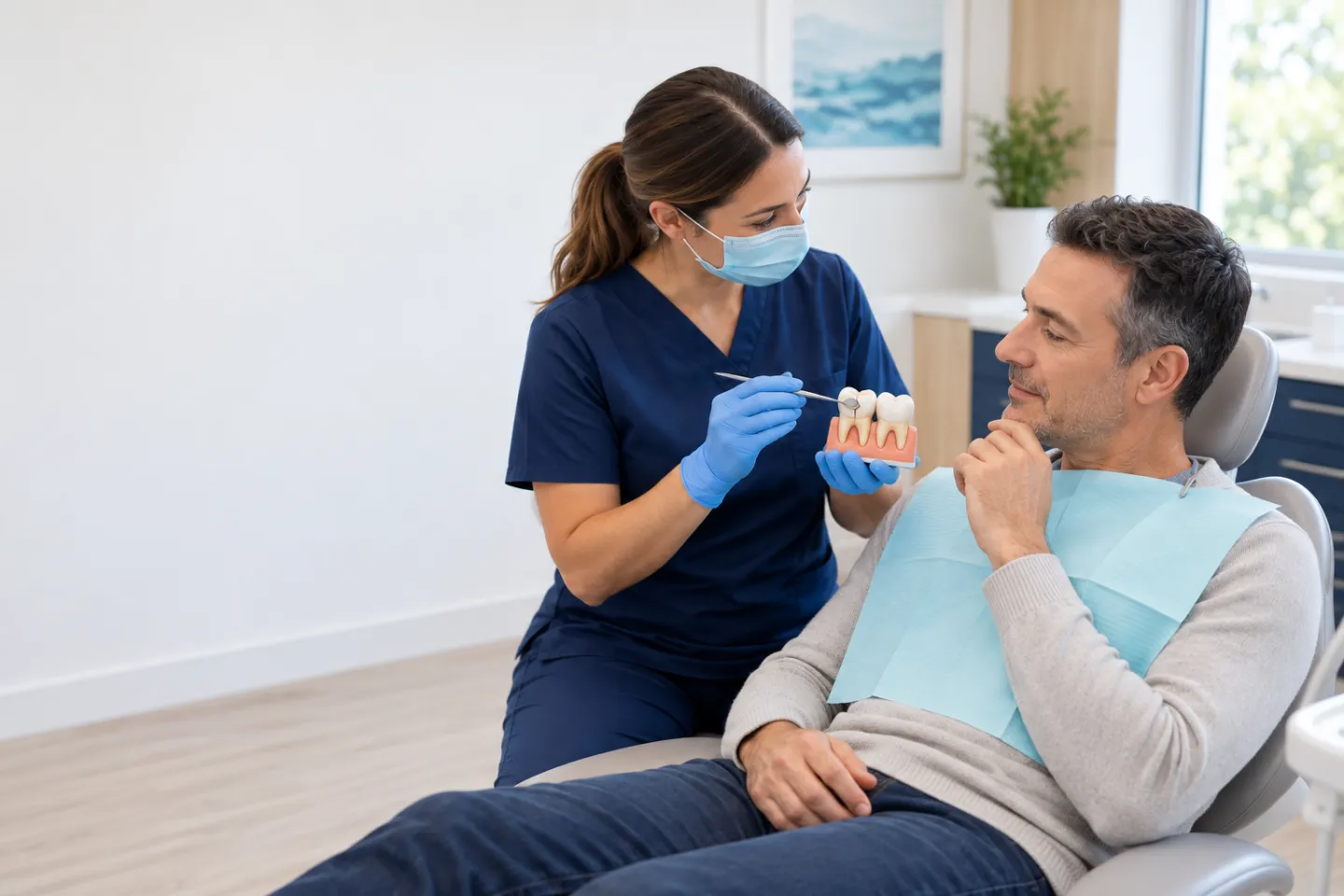
A crack may cause sharp pain when biting or sensitivity that comes and goes. Wilsonville patients can have a cracked or broken tooth assessed in Port Dover.
Let’s get you smiling
Tell us how we can help. Our team will follow up to confirm a time.
Caring for Wilsonville patients at our Port Dover office
See every dental service for WilsonvilleHard-to-pin-down tooth pain
Cracked teeth are not always easy to see. Some people feel a quick, sharp pain when biting down or releasing, while others notice sensitivity to cold that is hard to trace to one tooth. Cracks range from harmless surface lines to fractures that extend toward the root, and the right repair depends on where and how deep they run.
If you are in Wilsonville and have a tooth that hurts on chewing or recently broke, call our Port Dover office to arrange an examination. Explain when the pain occurs and whether you remember biting something hard. Avoid chewing on the affected side until a dentist has looked at it.
Symptoms
A classic sign of a cracked tooth is a sharp twinge when you bite on something specific or as you open after biting. The pain may come and go, making it tempting to ignore. Try to notice which side and which foods trigger it, as this helps narrow down the tooth during the examination.
Cold sensitivity that lingers, discomfort with sweets or occasional gum swelling near one tooth can also accompany cracks. A visible piece missing, a filling that came loose or a sharp edge are signs of a break. Any swelling or persistent throbbing should be reported promptly, since it may signal nerve involvement.
Diagnosis
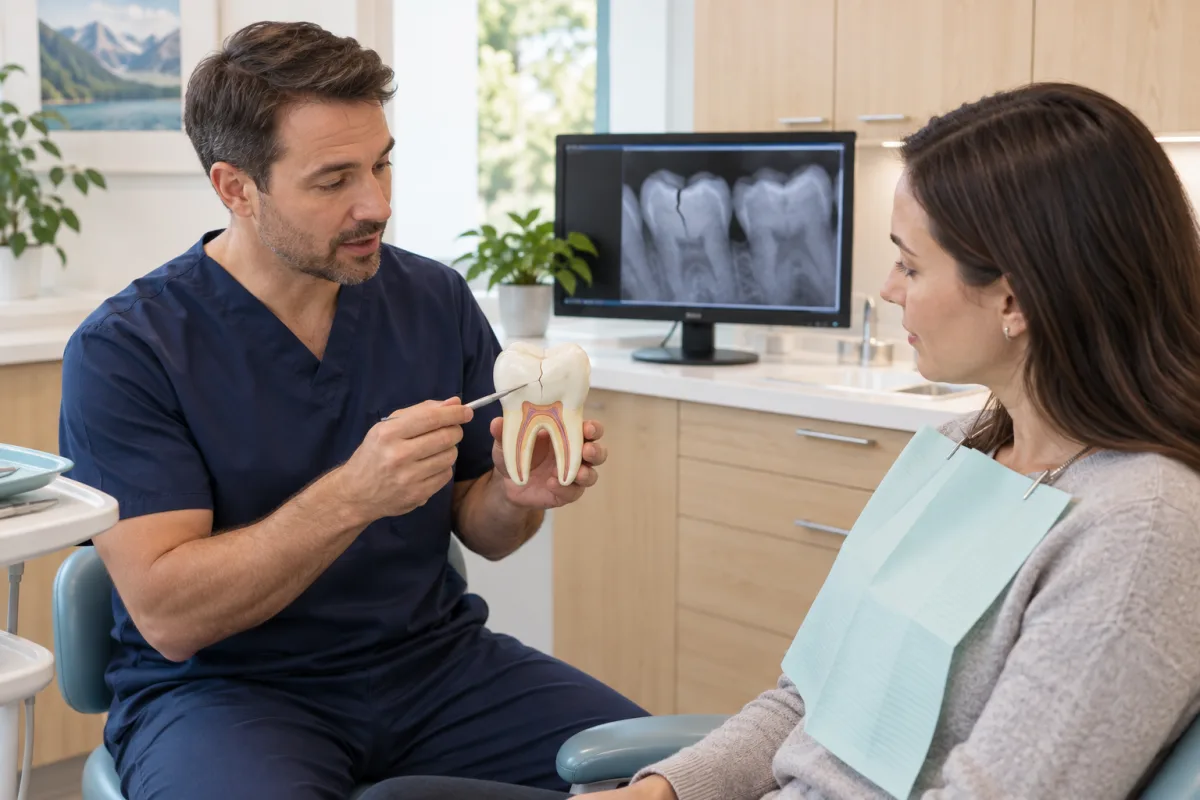
The dentist may ask you to bite on a special instrument, test the tooth with cold, examine it with magnification and take X-rays. Cracks do not always show on X-rays, so these tests are combined with your description of symptoms. Sometimes the crack becomes clearer only when an old filling is removed.
Craze lines are superficial and usually harmless. A fractured cusp may break away near a filling. A cracked tooth has a line extending deeper. A split tooth or vertical root fracture is more serious. Your dentist will explain which type seems present and how that affects whether the tooth can be saved.
Treatment
Small cracks or broken cusps may be repaired with bonding or a filling. Larger cracks often need an onlay or crown that wraps around the tooth to reduce flexing and help keep the crack from spreading. Your dentist will explain why a particular restoration is recommended and what it involves.
If the crack has reached the nerve, root canal treatment may be needed before a crown. When a fracture extends deep into the root, the tooth may not be restorable, and extraction with replacement options would be discussed. Early assessment improves the chance of keeping the tooth.
Protection
Until the tooth is repaired, chew on the other side and avoid very hard or sticky foods. If a temporary filling or crown is placed, treat it gently and keep the area clean. Call the office if pain increases, swelling develops or the temporary comes loose before your next appointment.
Clenching and grinding, chewing ice and biting hard objects are common causes of cracks. A night guard may be suggested if you grind. Large old fillings can also weaken teeth over time. Regular checkups allow the dentist to spot early fracture lines and discuss protective steps.
Planning your appointment
Call our Port Dover office and describe the pain pattern and which side is affected. The team can discuss how soon you should be seen and offer interim advice about protecting the tooth.
Mention any grinding habits, recent injuries or dental work on the tooth, and let the team know if swelling or fever develops.
Before you book
Have a question about your situation? Our team can help you plan a visit.
No, enamel and dentin do not repair themselves the way bone does. Some superficial lines need no treatment, but a crack that causes symptoms usually requires a restoration to protect the tooth.
Many cracks run in a direction that X-rays do not capture clearly. The dentist combines bite tests, cold tests and visual examination with your symptoms to identify the tooth involved.
Often, a crown is recommended for a cracked tooth to hold it together. Smaller cracks or fractures may be managed with bonding or an onlay. Your dentist will explain what is appropriate for the extent of damage.
A crack can spread, potentially reaching the nerve or splitting the tooth. This could lead to more complex treatment or tooth loss. Booking an assessment early generally offers more options.
Yes, intermittent pain is common with cracks, depending on how you bite. Even when symptoms ease, the crack is still present, so it is worth having the tooth evaluated.
A crown covers a weakened tooth to restore strength and shape. Wilsonville patients can learn about the crown process and aftercare at our Port Dover office.
A chipped edge or broken tooth needs a prompt call. Wilsonville patients can learn what to do first and how repair is assessed at our Port Dover dental office.
Recognized year after year
Best Dentists in Norfolk
Proudly recognized among Norfolk’s top-rated dental practices for six consecutive years.

2021 Winner

2022 Winner

2023 Winner

2024 Winner

2025 Winner

2026 Winner
Stories from our patients
Watch a patient’s experience and browse more five-star reviews from people who have visited our Port Dover dental clinic.
Patient video
A patient shares the welcoming atmosphere and positive experience they found at our Port Dover office.
Google reviews
Swipe or use the arrows
Read all reviewsYour next visit can start today
New patients and CDCP patients are welcome. Tell us how we can help and our Port Dover dental team will follow up with you.
Evening appointments Monday and Tuesday