
Patient video
Welcoming and Wonderful Practice
A patient shares the welcoming atmosphere and positive experience they found at our Port Dover office.
★★★★★
Port Dover Family Dentistry
Sharp pain when you bite and release could be a cracked tooth. Walsingham patients can learn how cracks are found and why early treatment can protect the tooth.
Let’s get you smiling
Tell us how we can help. Our team will follow up to confirm a time.
Serving Walsingham households from our Port Dover office
See every dental service for WalsinghamHard to see, easy to feel
A cracked tooth can be frustrating because the pain comes and goes. Many people notice a brief, sharp twinge when biting down on something firm or when the pressure is released, along with sensitivity to cold. The tooth may look perfectly normal. Left alone, a crack can deepen, affect the nerve or split the tooth beyond repair.
If you are in Walsingham and suspect a cracked tooth, our Port Dover dentists can examine it, test the bite and use X-rays to look for related problems. The goal is to find out how far the crack extends and recommend a repair that protects the tooth from further damage.
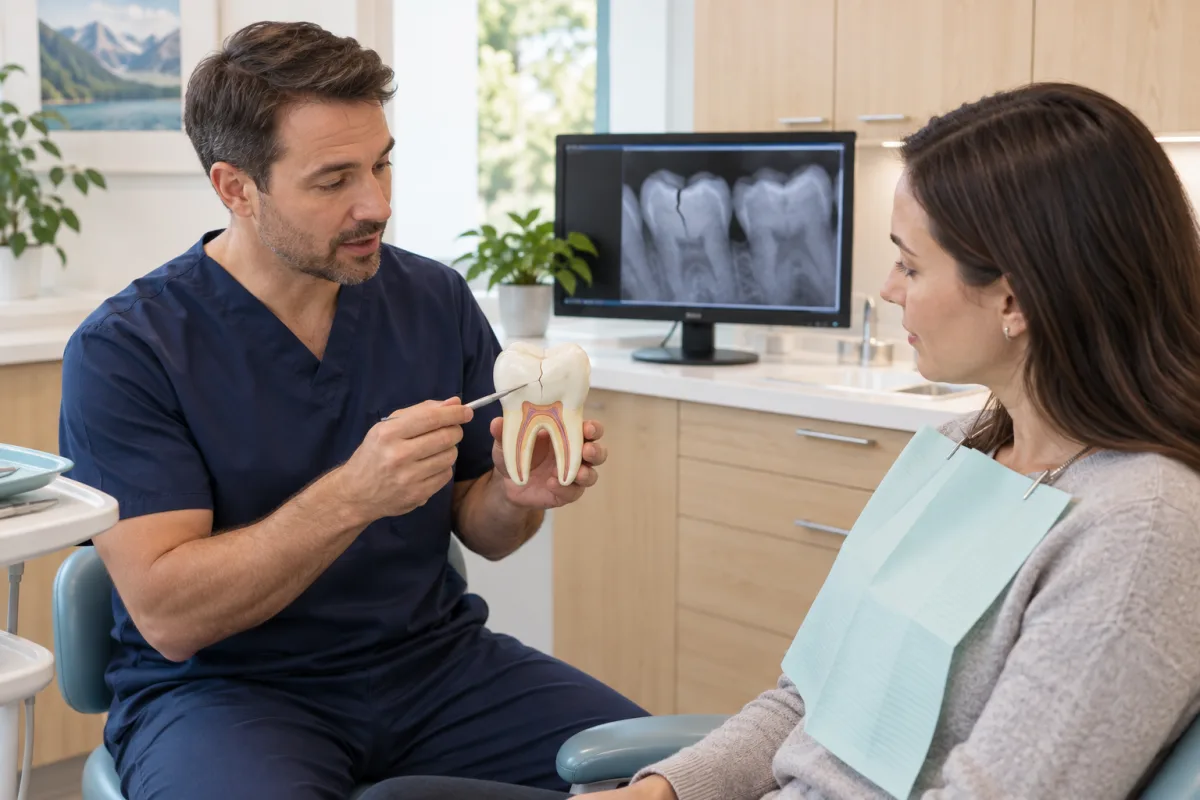
Recognizing a crack
A classic sign is sharp pain when chewing that disappears quickly, often on one specific tooth. It may happen only with certain foods, such as seeds, nuts or crusty bread. Try to identify which tooth seems responsible and whether the pain is linked to biting, releasing or both. That detail can help the dentist narrow down the cause.
Cold drinks or air may trigger discomfort, and sometimes the gum next to a cracked tooth becomes sore or swollen. Constant throbbing, swelling or pain that keeps you awake may mean the nerve is affected or infection has developed. In those cases, call promptly rather than waiting for a routine appointment.
Finding it
The dentist examines the tooth under bright light and magnification, may apply a dye to highlight fine lines and asks you to bite on a small tool that tests individual cusps. Cold testing helps assess the nerve. Existing large fillings, grinding habits and previous injuries are also considered, since they make cracks more likely.
X-rays are useful for checking bone, the nerve and nearby decay, but many cracks do not show up on them. The dentist may therefore rely on symptoms and clinical tests together. Sometimes the full extent of a crack only becomes clear once an old filling is removed during treatment.
Repair options
Small cracks limited to the outer enamel may need only monitoring or a bonded repair. When a cusp is cracked, an onlay or crown can hold the tooth together and spread biting forces. The dentist will explain why a particular restoration is recommended and how it is expected to protect the tooth over time.
If the crack has reached the nerve, root canal treatment may be needed before a crown is placed. A crack that extends deep below the gum or splits the root often means the tooth cannot be saved. In that case, the dentist will discuss removal and options for replacing the tooth, such as an implant, bridge or partial denture.
Protecting the tooth
If treatment cannot happen right away, chew on the other side, avoid very hard or sticky foods and steer clear of extreme temperatures. A temporary crown may be placed while a permanent one is made. Treat it gently and call the office if it comes loose, because the cracked tooth beneath remains vulnerable.
Grinding and clenching put heavy forces on teeth and are a common factor in cracks. Ask whether a night guard is recommended. Avoid chewing ice, popcorn kernels and hard candy, and do not use your teeth as tools. Regular checkups allow the dentist to watch for early cracks in other teeth before symptoms develop.
Planning your appointment
Call our Port Dover office and describe when the tooth hurts, how long it has been happening and whether there is swelling. The team will discuss how soon you should be seen based on your symptoms.
Note which foods or temperatures trigger the pain, and bring a list of medications. If you grind your teeth, mention it when booking.
Before you book
Have a question about your situation? Our team can help you plan a visit.
No. Unlike bone, tooth enamel and dentin do not repair cracks. Some small enamel lines remain stable, but a symptomatic crack generally needs assessment and treatment to prevent it from spreading.
Biting can flex the cracked parts of the tooth slightly, irritating the inner layers. When pressure is released, the pain may stop. This intermittent pattern is common and is one reason cracks can be hard to pin down.
Not always. The choice depends on where the crack is and how deep it goes. Small cracks may be managed with bonding or monitoring, while larger ones often benefit from an onlay or crown.
No. A root canal is needed only if the nerve has been damaged or infected. The dentist tests the nerve and considers your symptoms before recommending it.
The crack may grow, leading to more pain, nerve damage or the tooth splitting. Earlier treatment usually offers more options for saving the tooth, so it is worth having symptoms checked.
A crown covers and strengthens a tooth weakened by a large filling, crack or root canal. Walsingham patients can learn about materials, visits and long-term care.
Chipped a tooth in Walsingham? Find out what to save, what to watch for, and how our Port Dover dentists decide between smoothing, bonding, a crown or other care.
Recognized year after year
Best Dentists in Norfolk
Proudly recognized among Norfolk’s top-rated dental practices for six consecutive years.

2021 Winner

2022 Winner

2023 Winner

2024 Winner

2025 Winner

2026 Winner
Stories from our patients
Watch a patient’s experience and browse more five-star reviews from people who have visited our Port Dover dental clinic.
Patient video
A patient shares the welcoming atmosphere and positive experience they found at our Port Dover office.
Google reviews
Swipe or use the arrows
Read all reviewsYour next visit can start today
New patients and CDCP patients are welcome. Tell us how we can help and our Port Dover dental team will follow up with you.
Evening appointments Monday and Tuesday