
Patient video
Welcoming and Wonderful Practice
A patient shares the welcoming atmosphere and positive experience they found at our Port Dover office.
★★★★★
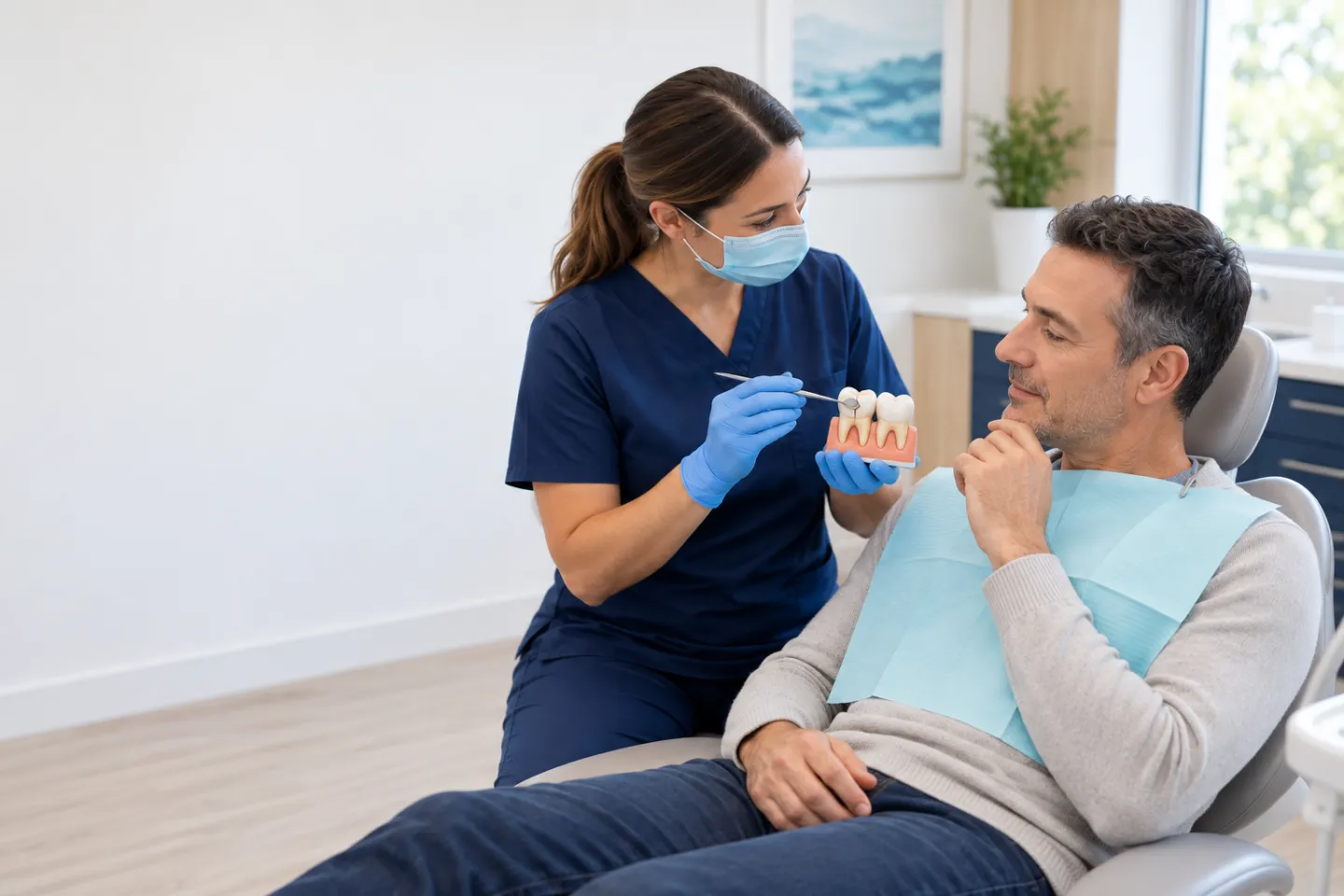
Port Dover Family Dentistry
Sharp pain on biting can signal a crack. Turkey Point patients can learn how cracked teeth are diagnosed and which repairs may help, at our Port Dover office.
Let’s get you smiling
Tell us how we can help. Our team will follow up to confirm a time.
Caring for Turkey Point patients at our Port Dover office
See every dental service for Turkey PointFinding cracks before they spread
Cracks range from harmless surface lines in enamel to splits that run toward the root. Some cause a sharp twinge when you bite or release, others make a tooth sensitive to cold, and some cause no symptoms until a piece breaks away. Catching a crack early often allows a simpler repair and a better chance of keeping the tooth.
If a tooth near the back of your mouth has started acting up, patients from Turkey Point can arrange an exam at our Port Dover office. Tell the team which side hurts, what triggers it and how long it has been happening.
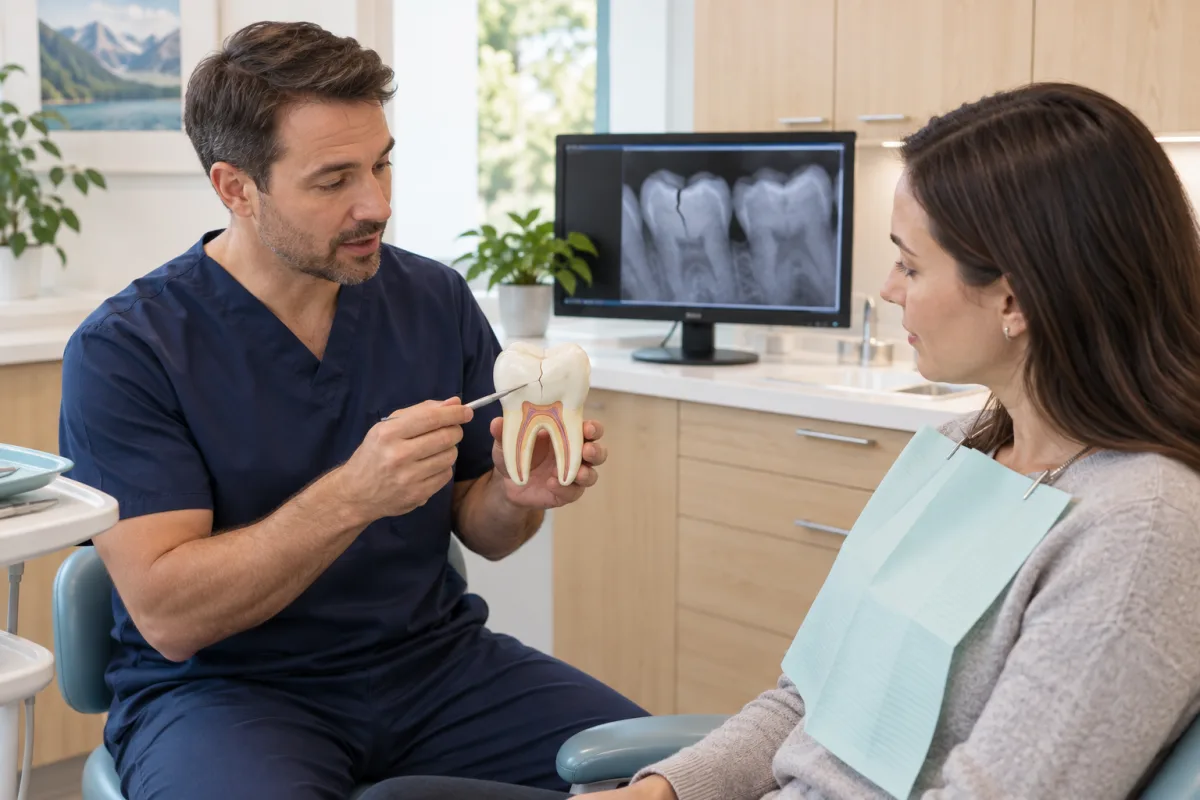
Symptoms to note
A brief sharp pain when biting down on something firm, or when letting go after a bite, is a classic clue. The pain may come and go, which makes it easy to dismiss. Try to identify which tooth seems to be involved and which foods trigger it. This information helps the dentist focus testing on the right area.
Lingering sensitivity to cold or hot, or tenderness of the gum next to one tooth, can also accompany a crack. Swelling or a pimple-like bump on the gum may suggest infection and should be reported promptly. If you grind or clench, mention it, since those forces are a common cause of cracks.
Diagnosis
The dentist may ask you to bite on a special instrument one cusp at a time to reproduce the pain. Magnification, dyes or light can help reveal fine lines in the enamel. Existing fillings may be checked or sometimes removed to look underneath. Each step helps determine where the crack is and how far it extends.
X-rays are useful for checking the nerve and surrounding bone but often cannot show a crack directly. That is why the dentist relies on several tests together. Sometimes a definite diagnosis is only possible once treatment begins. Ask the dentist how confident they are in the findings and what might change the plan.
Repair options
Shallow cracks or small broken cusps may be restored with a filling or bonding. Larger cracks often need an onlay or crown that holds the tooth together and spreads biting forces. The aim is to stop the crack from spreading further. The dentist will explain why a particular restoration is recommended for your tooth.
If the crack has reached the pulp and caused inflammation or infection, root canal treatment may be needed before a crown is placed. A crack that splits the tooth or runs deep into the root may mean the tooth cannot be saved. In that case, the dentist will discuss extraction and options to replace it.
Protecting the tooth
If a temporary restoration is placed while a crown is made, avoid sticky and hard foods on that side. Report any increase in pain, swelling or a temporary that comes loose. Once the final restoration is in, the bite should feel normal. If it does not, an adjustment may be needed, so call the office.
Grinding, chewing ice, biting pens and cracking hard shells all raise the risk of new cracks. A night guard can help if you clench or grind. Keep up regular checkups so the dentist can monitor teeth with large fillings or visible craze lines, which are more prone to cracking over time.
Planning your appointment
Phone our Port Dover office to describe your symptoms and which tooth seems affected. The team can advise how soon to be seen and book an assessment.
Avoid chewing on the sore side until your appointment. Note any foods or temperatures that trigger pain to share with the dentist.
Before you book
Have a question about your situation? Our team can help you plan a visit.
No. Unlike bone, teeth do not repair cracks. Treatment aims to hold the tooth together and prevent the crack from spreading. Early assessment improves the chance of a simpler repair.
Cracks can flex open and closed as you chew, causing intermittent pain. Temperature changes may also trigger it. This variability is common and is a good reason to have the tooth examined.
Only if the crack has affected the nerve. Many cracked teeth are managed with a crown or filling alone. The dentist will test the tooth to determine whether the nerve is healthy.
Craze lines are tiny surface lines in enamel that are common and usually harmless. The dentist can distinguish them from deeper cracks that need treatment.
Not always. Cracks that split the tooth or extend deep into the root may make it unrestorable. The dentist will explain the findings and discuss replacement options if needed.
A crown covers and strengthens a weakened tooth. Turkey Point patients can learn when a crown is advised, how it is made and how to care for it, all in Port Dover.
Chipped a tooth on the beach or at the cottage? Learn what to save, how to protect the tooth and when Turkey Point patients should call our Port Dover office.
Recognized year after year
Best Dentists in Norfolk
Proudly recognized among Norfolk’s top-rated dental practices for six consecutive years.

2021 Winner

2022 Winner

2023 Winner

2024 Winner

2025 Winner

2026 Winner
Stories from our patients
Watch a patient’s experience and browse more five-star reviews from people who have visited our Port Dover dental clinic.
Patient video
A patient shares the welcoming atmosphere and positive experience they found at our Port Dover office.
Google reviews
Swipe or use the arrows
Read all reviewsYour next visit can start today
New patients and CDCP patients are welcome. Tell us how we can help and our Port Dover dental team will follow up with you.
Evening appointments Monday and Tuesday