
Patient video
Welcoming and Wonderful Practice
A patient shares the welcoming atmosphere and positive experience they found at our Port Dover office.
★★★★★

Port Dover Family Dentistry
A sharp twinge when you bite and release can signal a crack. St. Williams patients can learn how cracked or broken teeth are diagnosed and restored in Port Dover.
Let’s get you smiling
Tell us how we can help. Our team will follow up to confirm a time.
Caring for St. Williams patients at our office in Port Dover
Every dental service for St. WilliamsCracks can be hard to find
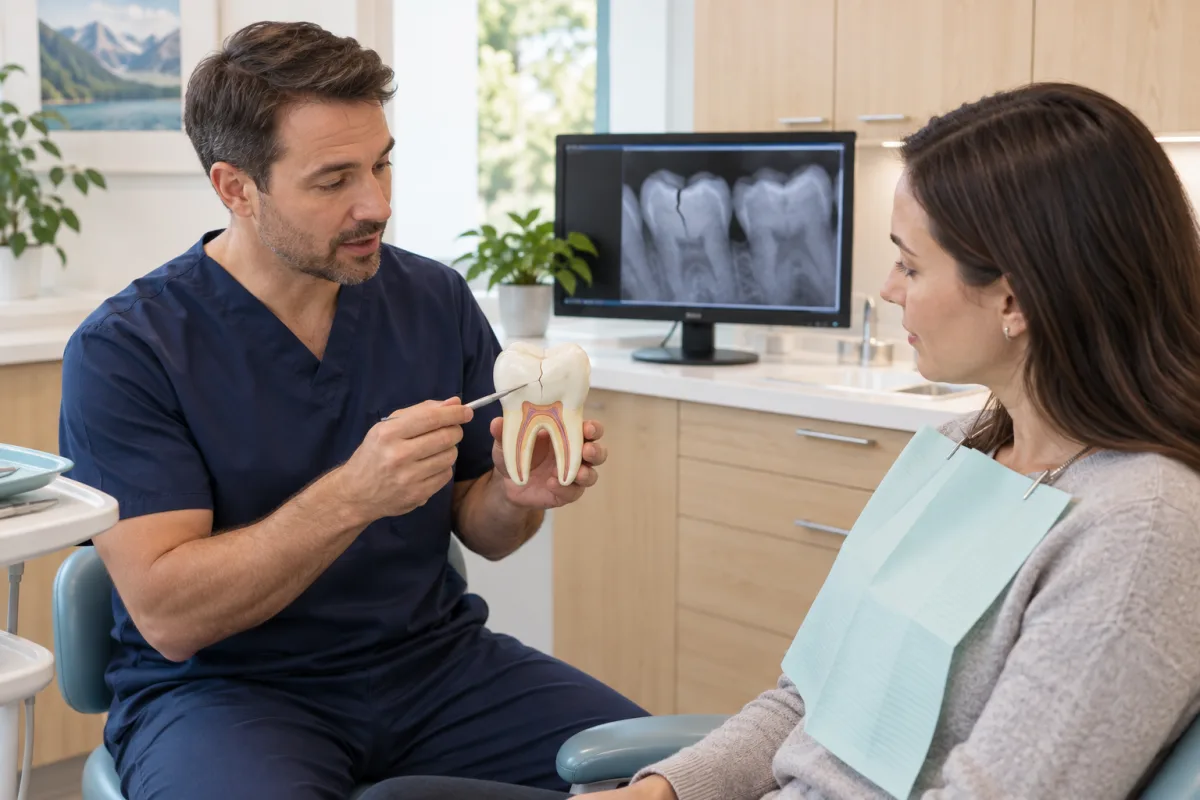
Cracks in teeth range from harmless surface lines to fractures that reach the root. Some cause sharp pain only when biting or releasing, while others lead to sensitivity, swelling or a visible broken piece. Because cracks may not show on X-rays, careful testing and examination are often needed to locate the problem and decide how to treat it.
When a tooth starts to feel unreliable, St. Williams residents can have it examined at our Port Dover office. The dentist will explain how far the crack seems to extend and which repair, from bonding to a crown, gives the tooth the best chance of staying in service.
Symptoms
A classic sign of a cracked tooth is a brief, sharp pain when you bite down on something or let go after chewing. It may come and go and be hard to pin to a specific tooth. Note which foods trigger it and which side of the mouth seems affected to help the dentist narrow it down.
Sensitivity to cold or sweets, lingering pain after temperature changes and swelling of the gum near a tooth can all suggest that a crack has reached deeper layers. Swelling or a pimple-like bump on the gum may indicate infection. Mention these symptoms when you call so the team can judge urgency.
Diagnosis
The dentist may ask you to bite on a special instrument one cusp at a time, use a light or magnification to look for lines, test sensitivity and take X-rays to check the surrounding bone. Removing an old filling sometimes reveals a crack beneath. No single test always confirms a crack, so findings are considered together.
Craze lines are shallow and usually harmless. A fractured cusp breaks off a corner of the tooth. A cracked tooth has a line extending toward the root, and a split tooth has separated into parts. Vertical root fractures start in the root. The type affects which treatment is possible.
Treatment
Small cracks or broken cusps may be repaired with bonding or a filling. More extensive cracks often need a crown or onlay to brace the tooth against chewing forces. If the nerve is inflamed or infected, root canal treatment may be required before the final restoration. The dentist will explain the sequence.
Cracks that extend below the gum or into the root can make a tooth difficult or impossible to save. In those cases, extraction and replacement may be discussed. Ask about the outlook for the tooth with each option, since even successful repairs cannot always guarantee the crack will not progress.
Protecting it
Avoid chewing ice, hard candy, popcorn kernels and other very hard foods. If you clench or grind, a night guard may help reduce stress on teeth. Use the repaired tooth normally once the dentist says it is safe, but be cautious with very hard foods while a temporary restoration is in place.
Cracked teeth are often checked at future visits to see whether symptoms return or the crack extends. Report new pain, swelling or a change in your bite promptly. Other teeth with large fillings may also be at risk, and the dentist may discuss protecting them before problems appear.
Planning your appointment
Call our Port Dover team and describe when the tooth hurts, which side is affected and whether you have swelling. That helps the team decide how soon you should be seen.
If a piece of tooth or filling has broken off, bring it in a small container, and chew on the other side until your appointment.
Before you book
Have a question about your situation? Our team can help you plan a visit.
No. Unlike bone, tooth enamel and dentin do not heal. A crack can stay stable or worsen over time. Early assessment and appropriate restoration give the best chance of keeping the tooth.
Cracks can flex when you bite certain foods, causing pain only at that moment. This intermittent pattern is common. Note what triggers it and share those details with the dentist.
Not always. A root canal is needed when the crack has inflamed or infected the nerve. The dentist will test the tooth and explain whether root canal treatment is necessary before restoring it.
Often it cannot, especially if the crack runs in a certain direction. X-rays still help check for bone changes or infection. The dentist combines several tests to reach a diagnosis.
Call promptly, especially if there is pain, bleeding or a sharp edge. The team can discuss how soon to see you. Seek emergency medical care for facial injuries, uncontrolled bleeding or breathing difficulty.
A crown covers a weakened, cracked or root-canal-treated tooth to restore its shape. St. Williams patients can learn how crowns are planned and fitted in Port Dover.
A chipped edge or a tooth that broke on something hard? St. Williams patients can call our Port Dover office to describe the damage and arrange an assessment.
Recognized year after year
Best Dentists in Norfolk
Proudly recognized among Norfolk’s top-rated dental practices for six consecutive years.

2021 Winner

2022 Winner

2023 Winner

2024 Winner

2025 Winner

2026 Winner
Stories from our patients
Watch a patient’s experience and browse more five-star reviews from people who have visited our Port Dover dental clinic.
Patient video
A patient shares the welcoming atmosphere and positive experience they found at our Port Dover office.
Google reviews
Swipe or use the arrows
Read all reviewsYour next visit can start today
New patients and CDCP patients are welcome. Tell us how we can help and our Port Dover dental team will follow up with you.
Evening appointments Monday and Tuesday