
Patient video
Welcoming and Wonderful Practice
A patient shares the welcoming atmosphere and positive experience they found at our Port Dover office.
★★★★★
Port Dover Family Dentistry
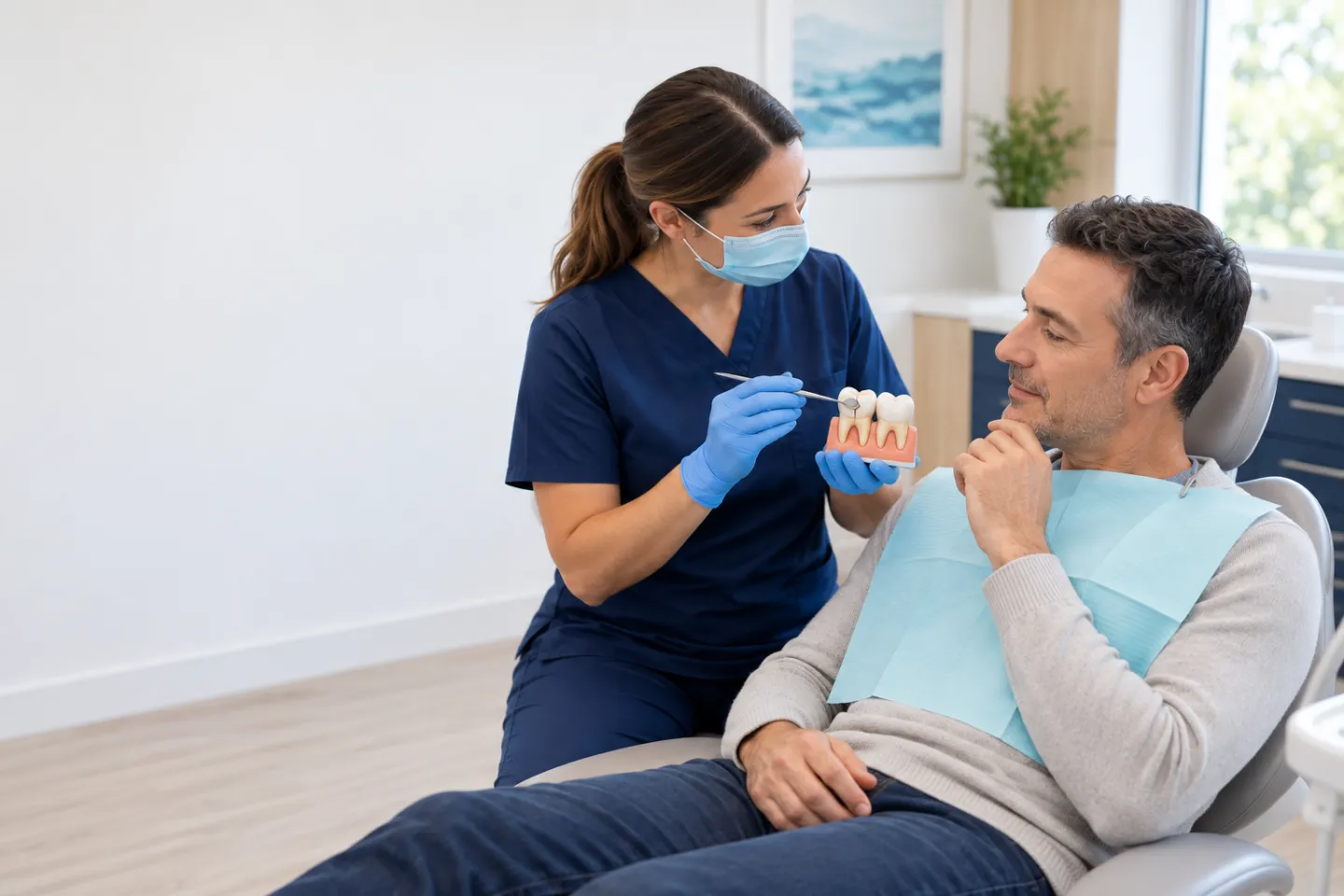
A crack can cause pain only when biting or with cold. Port Ryerse residents can have it diagnosed and repaired with a filling, crown or other care in Port Dover.
Let’s get you smiling
Tell us how we can help. Our team will follow up to confirm a time.
Caring for Port Ryerse patients at our Port Dover office
Every dental service for Port RyerseFinding the hidden crack
A cracked tooth might hurt sharply when you release a bite, react to cold or ache on and off without an obvious cause. Some cracks are only surface lines in enamel, while others extend deeper toward the root. Because symptoms come and go, cracked teeth are often among the more challenging dental problems to pinpoint.
Residents of Port Ryerse can have a suspected crack examined at our Port Dover office. The dentist will try to locate the affected tooth, judge how far the crack extends and explain whether a filling, crown, root canal treatment or another approach offers the best outlook.
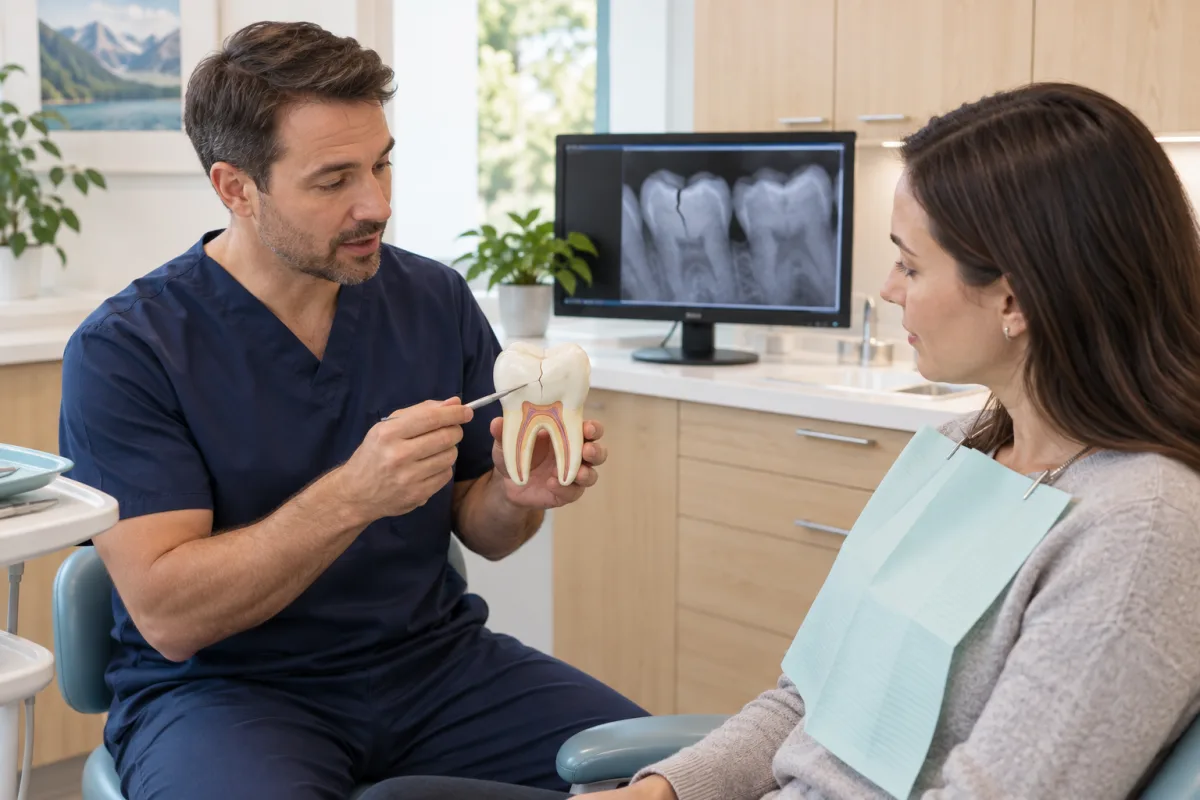
Recognizing a crack
Brief, sharp pain when chewing, particularly when letting go of a bite, is a classic sign. Sensitivity to cold or sweet foods, a tooth that feels different when you bite in a certain spot or gum tenderness around one tooth may also suggest a crack. Large old fillings increase the likelihood.
Note which foods trigger the pain and which side of the mouth it seems to come from. Grinding, clenching and chewing hard items such as ice or popcorn kernels can aggravate cracks. Avoid chewing on the suspected side until it has been assessed, and report swelling or constant pain promptly.
Diagnosis
The dentist examines the tooth under good light and magnification, may ask you to bite on a special instrument to reproduce the pain and tests sensitivity to cold. Removing an old filling sometimes reveals a crack beneath. X-rays help check for related problems, although cracks themselves are often not visible on them.
Superficial craze lines usually need no treatment. A crack that extends into dentin may need a protective restoration. If it reaches the nerve, root canal treatment may be required. A crack that splits the tooth or extends deep into the root may mean the tooth cannot be saved predictably.
Repair options
Small cracks may be managed with a bonded filling. Larger cracks often need a crown or onlay that covers the chewing surface and braces the tooth against flexing. A temporary band or crown is sometimes placed first to see whether symptoms settle before the final restoration is made.
If the nerve becomes inflamed or infected, root canal treatment may be recommended before the crown. When a tooth is split or cracked below the gum, extraction may be the most predictable option, followed by discussion of replacements such as an implant, bridge or partial denture.
Protecting your teeth
Follow instructions about chewing on temporary restorations and report any return of pain after treatment. Even a crowned tooth can develop problems if the crack progresses, so regular checkups remain important. Mention any change in how the tooth feels when you bite.
If grinding or clenching is a factor, a night guard may help protect your teeth. Avoid chewing ice, hard candy and non-food items. Large old fillings in other teeth may be monitored for signs of cracking. Early attention often allows simpler treatment.
Planning your appointment
Call our Port Dover office and describe when the tooth hurts and what triggers it. Mention any swelling or constant pain so the team can judge how soon you should be seen.
Until your visit, chew on the other side and avoid very cold or hard foods that set off the pain.
Before you book
Have a question about your situation? Our team can help you plan a visit.
No. Unlike bone, a crack in a tooth does not heal. Treatment aims to stop it from spreading and protect the tooth. Early assessment often allows simpler, more conservative repair.
Biting can flex the pieces of a cracked tooth slightly, irritating the inner layers. Releasing the bite often causes a sharp twinge. This pattern is a common clue the dentist will use during diagnosis.
Not always. Small cracks may be managed with a bonded filling. Larger cracks, especially in back teeth with big fillings, often benefit from a crown. The dentist will explain the reasoning for your specific tooth.
Yes, if the crack allows bacteria to reach the nerve or causes ongoing inflammation. Signs include lingering pain to hot or cold, spontaneous aching or swelling. Not every cracked tooth needs nerve treatment.
The dentist will discuss extraction and replacement options, including implants, bridges and partial dentures. Each has different requirements and timelines. Ask about the pros and cons before deciding.
A crown covers a weakened tooth to restore strength and shape. Port Ryerse patients can learn when a crown makes sense and what the visits involve in Port Dover.
Chipped a tooth at the lake or over dinner? Port Ryerse patients can call our Port Dover office to describe the break, protect the tooth and arrange an exam.
Recognized year after year
Best Dentists in Norfolk
Proudly recognized among Norfolk’s top-rated dental practices for six consecutive years.

2021 Winner

2022 Winner

2023 Winner

2024 Winner

2025 Winner

2026 Winner
Stories from our patients
Watch a patient’s experience and browse more five-star reviews from people who have visited our Port Dover dental clinic.
Patient video
A patient shares the welcoming atmosphere and positive experience they found at our Port Dover office.
Google reviews
Swipe or use the arrows
Read all reviewsYour next visit can start today
New patients and CDCP patients are welcome. Tell us how we can help and our Port Dover dental team will follow up with you.
Evening appointments Monday and Tuesday