
Patient video
Welcoming and Wonderful Practice
A patient shares the welcoming atmosphere and positive experience they found at our Port Dover office.
★★★★★
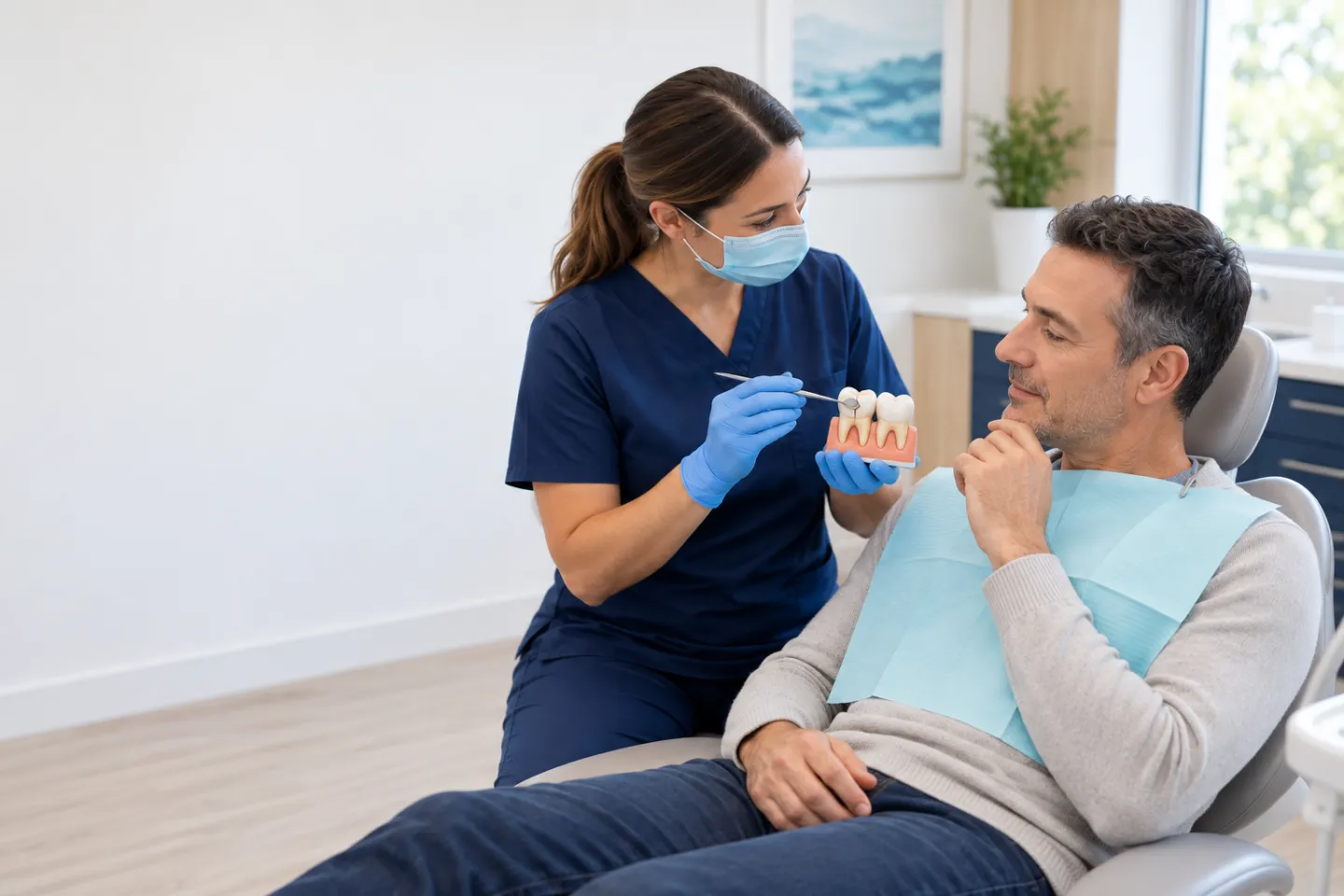
Port Dover Family Dentistry
A cracked tooth can cause sharp pain on biting or lingering sensitivity. Pine Grove residents can read how cracks are found, repaired and protected over time.
Let’s get you smiling
Tell us how we can help. Our team will follow up to confirm a time.
Caring for Pine Grove patients at our Port Dover office
Browse every dental service for Pine GroveFind the crack, protect the tooth
Teeth can crack from biting hard foods, grinding, large old fillings or simple wear over many years. Some cracks are shallow lines in the enamel that cause no trouble. Others extend deeper and lead to sharp pain when chewing, sensitivity to temperature or eventually a piece breaking away. Early assessment can make the difference between repair and loss.
Pine Grove residents with a tooth that hurts on biting can be assessed at our Port Dover office. Describe which side hurts and what triggers it, since precise details help the dentist pinpoint a crack.
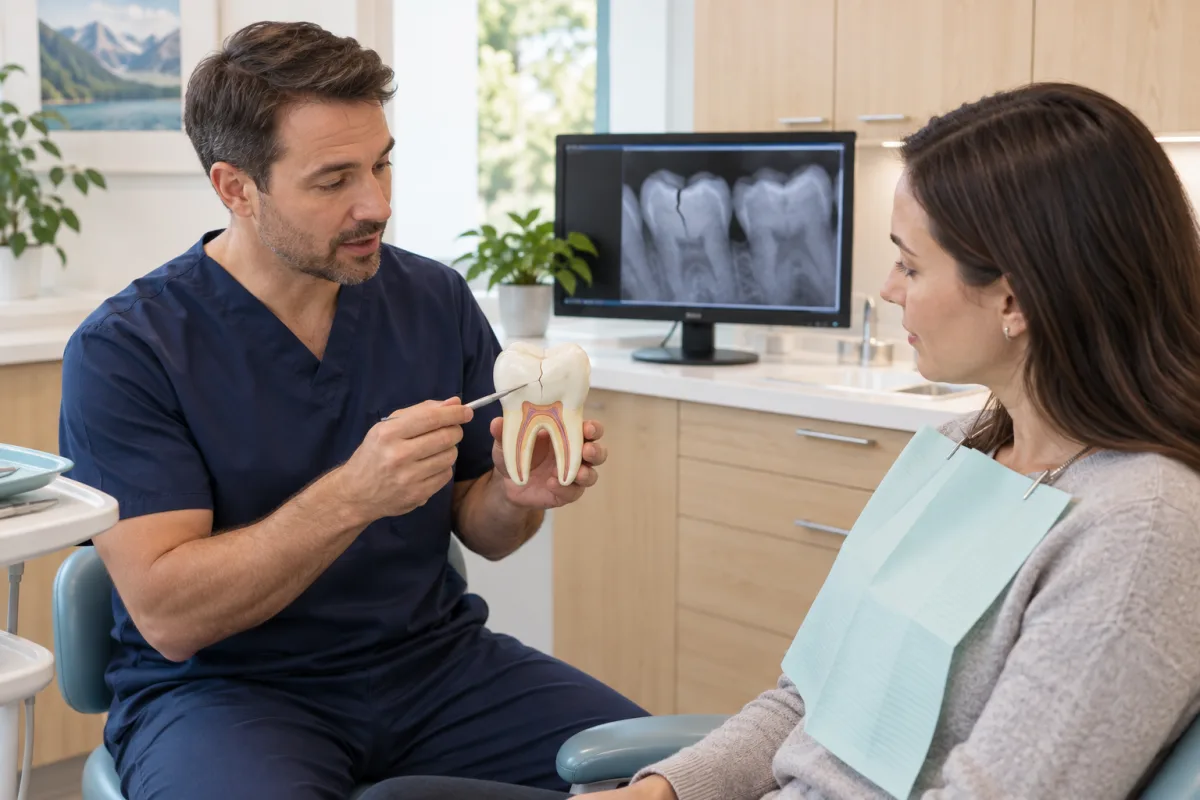
Recognize symptoms
Sharp pain when you bite down or release, sensitivity to cold or sweets, and discomfort that comes and goes are typical. The pain may be hard to locate to one tooth. Some people avoid chewing on one side without realizing it. Swelling near the gum or constant throbbing may mean the nerve is affected and needs prompt attention.
Sometimes a crack is visible as a line, or a corner of the tooth has broken off. A filling may have loosened or fallen out. Even without pain, visible breaks deserve an examination because the remaining tooth can be weak. Avoid chewing hard foods on that side until the tooth has been checked.
Diagnosis
The dentist may ask you to bite on a special instrument one cusp at a time, test the tooth with cold, use magnification or a light to reveal lines, and check gum pockets around the tooth. Old fillings may be examined closely. Your description of the pain is an important part of reaching a diagnosis.
X-rays help show decay, bone and nerve health, but many cracks do not appear on them. That is why clinical tests and symptoms carry weight. Occasionally a crack is only confirmed once a filling is removed. The dentist will explain how confident they are in the diagnosis and what remains uncertain.
Repair options
Shallow cracks may be bonded or simply monitored. A cracked cusp is often protected with an onlay or crown that holds the tooth together and spreads biting forces. Placing protection early can stop a crack from spreading. Ask what the dentist expects if you delay treatment and how quickly symptoms may change.
If the crack has reached the nerve, root canal treatment may be needed before the tooth is crowned. Cracks that extend deep into the root may mean the tooth cannot be saved, and extraction with replacement options will be discussed. The dentist will explain the outlook honestly so you can make an informed choice.
Protecting your teeth
Avoid chewing ice, hard candy, popcorn kernels and pens. Do not use your teeth to open packages. If you clench or grind, ask about a night guard. Large old fillings can weaken teeth, and the dentist may recommend reinforcing them before they fail. These steps help protect both repaired and natural teeth.
After a crown or onlay, attend follow-up appointments so the dentist can check fit and nerve health. Report any return of biting pain, sensitivity or swelling promptly. Cracks may develop in other teeth over time, so regular checkups remain important for catching early signs before they lead to breaks.
Planning your appointment
Call our Port Dover office and describe the pain, which side it is on and what triggers it. Severe pain or swelling should be mentioned so urgency can be discussed.
Note which foods or temperatures cause pain and bring your medication list. Mention if you grind your teeth or have a night guard.
Before you book
Have a question about your situation? Our team can help you plan a visit.
No. Unlike bone, tooth enamel and dentin do not heal. A crack can stay stable or worsen. Protective treatment, such as an onlay or crown, often helps prevent it from spreading.
That pattern is common with cracks because the pieces flex apart and then snap back together. It is a useful detail to mention, as it helps the dentist narrow down the problem.
Not always. The decision depends on the crack’s depth, the remaining tooth structure and symptoms. The dentist will explain whether bonding, an onlay, a crown or monitoring is most suitable.
Deep cracks can let bacteria reach the nerve, which may lead to infection. Swelling, throbbing or a gum pimple near the tooth should be reported promptly so it can be assessed.
Severe pain, swelling or a large broken piece deserves a prompt call. Mild intermittent pain is less urgent but still needs an appointment soon, before the crack has a chance to progress.
A crown covers a weakened tooth to restore strength and shape. Pine Grove patients can see when crowns are advised, which materials exist and how fitting works.
Chipped a tooth? Pine Grove patients can learn how to protect the fragment, judge urgency and which repairs the Port Dover dentist may discuss after an exam.
Recognized year after year
Best Dentists in Norfolk
Proudly recognized among Norfolk’s top-rated dental practices for six consecutive years.

2021 Winner

2022 Winner

2023 Winner

2024 Winner

2025 Winner

2026 Winner
Stories from our patients
Watch a patient’s experience and browse more five-star reviews from people who have visited our Port Dover dental clinic.
Patient video
A patient shares the welcoming atmosphere and positive experience they found at our Port Dover office.
Google reviews
Swipe or use the arrows
Read all reviewsYour next visit can start today
New patients and CDCP patients are welcome. Tell us how we can help and our Port Dover dental team will follow up with you.
Evening appointments Monday and Tuesday