
Patient video
Welcoming and Wonderful Practice
A patient shares the welcoming atmosphere and positive experience they found at our Port Dover office.
★★★★★
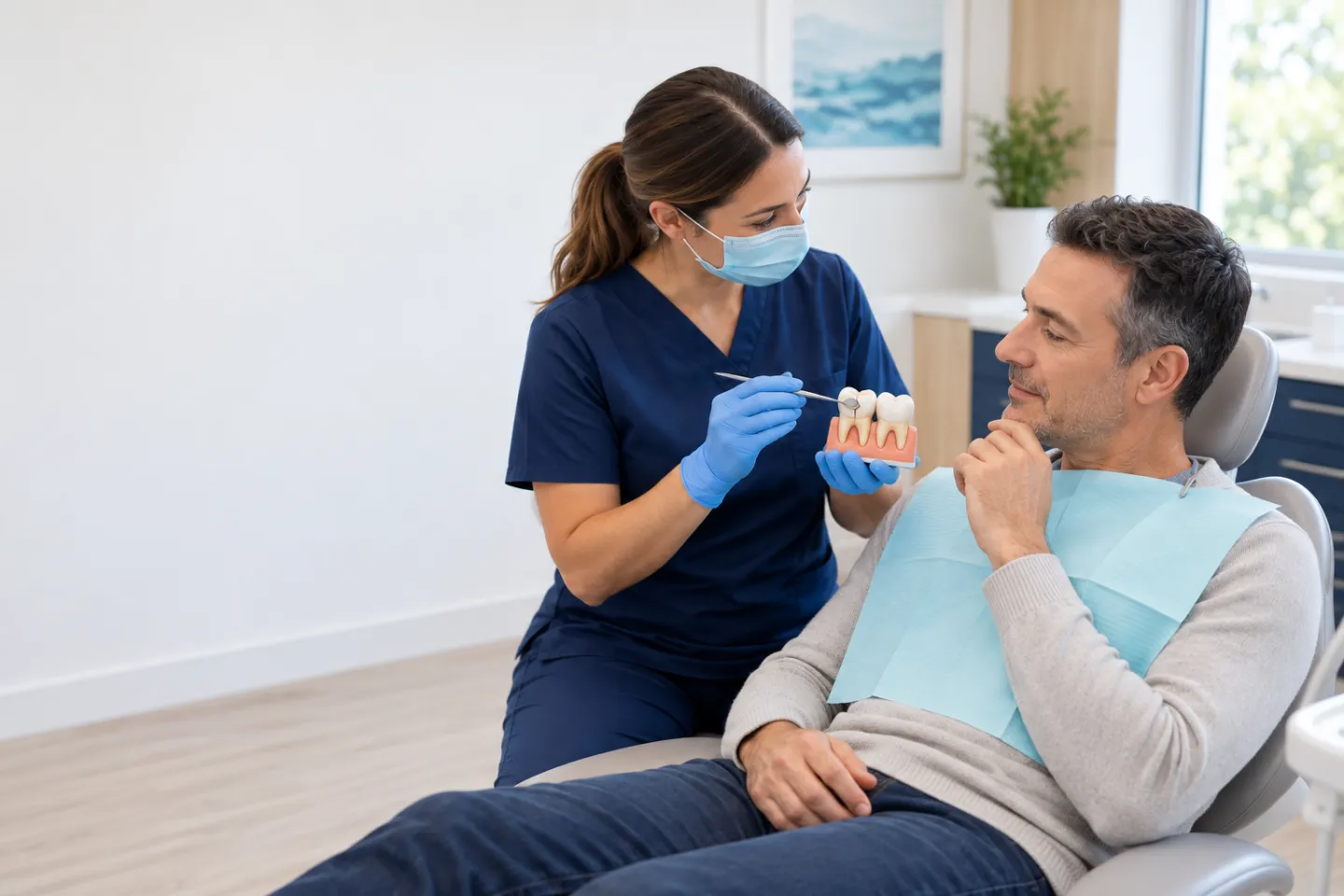
Port Dover Family Dentistry
Sharp pain when you bite and release can point to a cracked tooth. Peacock Point patients can have the crack located and repair options explained in Port Dover.
Let’s get you smiling
Tell us how we can help. Our team will follow up to confirm a time.
Caring for Peacock Point residents and cottagers at our Port Dover office
Browse every dental service for Peacock PointFind the crack, protect the tooth
A cracked tooth often announces itself with a brief, sharp pain when you bite down or release, or a twinge with cold. The crack itself may be invisible, even on X-rays. Left untreated, it can spread deeper, so recognizing the symptoms and having the tooth examined promptly can make a difference to how it is repaired.
Patients from Peacock Point, whether living there year-round or spending the season at the cottage, can have a suspected crack assessed at our Port Dover office. Describe exactly when the pain occurs, as those details help the dentist pinpoint which tooth is involved.
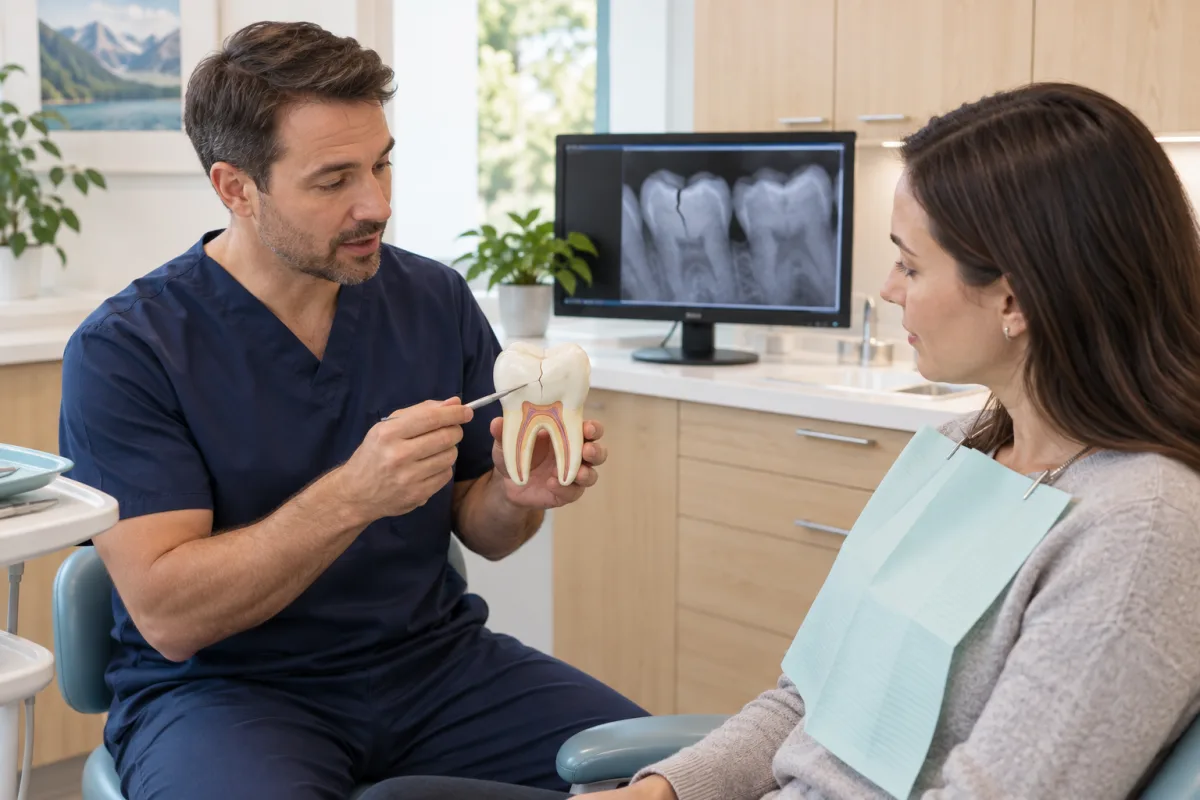
Symptoms
Pain on biting that comes and goes, discomfort when releasing a bite, sensitivity to cold or sweet foods and a feeling that something is not quite right with a tooth are common signs. Sometimes a piece breaks off completely. Teeth with large fillings or a history of grinding are more prone to cracking, though any tooth can be affected.
Try to note whether pain happens with particular foods, on one side of the mouth or when you chew in a certain way. You might find it hard to pinpoint the exact tooth, which is normal. Avoid chewing on the suspected side until it is examined, and mention any jaw clenching or grinding you are aware of.
Diagnosis
The dentist may ask you to bite on a special instrument one cusp at a time, use magnification or a bright light to look for lines and test the tooth’s response to cold. X-rays help rule out other problems, though many cracks do not show on them. Removing an old filling sometimes reveals a crack beneath.
Cracks range from superficial lines in enamel to splits that extend toward the root. The depth and direction determine what can be done. A crack confined to the crown can often be protected, while one extending below the gumline may be harder to treat. The dentist will explain what the findings suggest and the outlook for the tooth.
Repair options
A small crack or chip may be repaired with bonding. More commonly, an onlay or crown is recommended to cover the cusps and reduce flexing that can spread the crack. The dentist will discuss which restoration offers suitable protection given the location of the tooth, your bite and the amount of healthy structure remaining.
If the crack has reached the nerve, causing lingering pain or infection, root canal treatment may be needed before a crown. When a crack extends deep into the root, the tooth may not be saveable, and extraction with replacement options would be discussed. Ask for a clear explanation of the prognosis before proceeding.
Protection
Until the tooth is repaired, chew on the other side and avoid very hard or sticky foods. If a temporary crown is placed, follow care instructions closely. After the final restoration, mild sensitivity may occur briefly. Contact the office if pain worsens, the bite feels uneven or swelling appears near the tooth.
Grinding and clenching put considerable force on teeth and are common contributors to cracks. If this applies to you, ask about a night guard. Avoid chewing ice, popcorn kernels and hard candy. Regular checkups allow the dentist to monitor other teeth that may show early cracks and recommend protection before symptoms develop.
Planning your appointment
Call our Port Dover office and describe your symptoms, especially pain when biting or releasing. The team will discuss how soon the tooth should be examined based on what you report.
Mention any grinding habits, large fillings in the area and whether the pain is constant or only occurs when chewing.
Before you book
Have a question about your situation? Our team can help you plan a visit.
A crack can flex slightly under pressure, irritating the nerve. Pain on biting or releasing is a common sign. Have the tooth examined, since cracks can spread if left untreated and early protection may improve the outlook.
No. Unlike bone, tooth enamel and dentin do not repair themselves. Treatment aims to hold the tooth together and prevent the crack from spreading. Early assessment gives more options for protecting the tooth.
Many cracked teeth benefit from a crown or onlay to cover the cusps and reduce flexing. Smaller cracks may be managed with bonding. The dentist will recommend an option based on the crack’s depth and location.
If the crack extends deep into the root, the tooth may need to be removed. The dentist will explain replacement options such as implants, bridges or partial dentures so you can plan the next steps.
Avoid chewing ice and hard objects, wear a mouthguard for sports and ask about a night guard if you grind. Regular checkups help identify teeth at risk, such as those with large fillings.
A crown covers and strengthens a tooth weakened by decay, cracks or root canal care. Peacock Point patients can review crown options at our Port Dover dental office.
Chipped a tooth at the cottage or on the beach? Peacock Point patients can call our Port Dover office to describe the break and arrange a prompt dental assessment.
Recognized year after year
Best Dentists in Norfolk
Proudly recognized among Norfolk’s top-rated dental practices for six consecutive years.

2021 Winner

2022 Winner

2023 Winner

2024 Winner

2025 Winner

2026 Winner
Stories from our patients
Watch a patient’s experience and browse more five-star reviews from people who have visited our Port Dover dental clinic.
Patient video
A patient shares the welcoming atmosphere and positive experience they found at our Port Dover office.
Google reviews
Swipe or use the arrows
Read all reviewsYour next visit can start today
New patients and CDCP patients are welcome. Tell us how we can help and our Port Dover dental team will follow up with you.
Evening appointments Monday and Tuesday