
Patient video
Welcoming and Wonderful Practice
A patient shares the welcoming atmosphere and positive experience they found at our Port Dover office.
★★★★★
Port Dover Family Dentistry
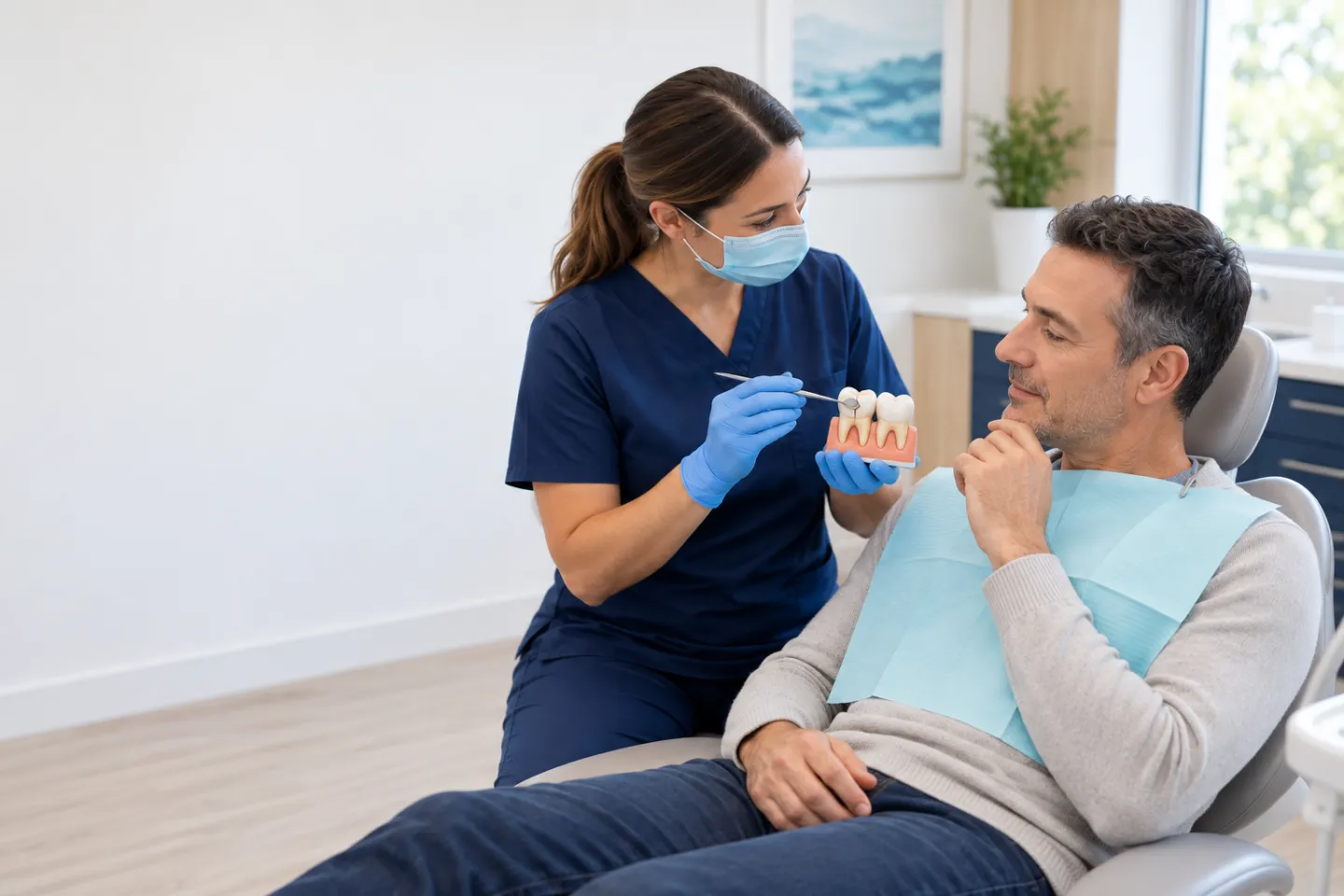
Sharp pain when biting or releasing can signal a cracked tooth. Normandale patients can learn how cracks are found and repaired at our Port Dover office.
Let’s get you smiling
Tell us how we can help. Our team will follow up to confirm a time.
Caring for Normandale residents and seasonal visitors at our Port Dover office
See every dental service for NormandaleHidden fractures
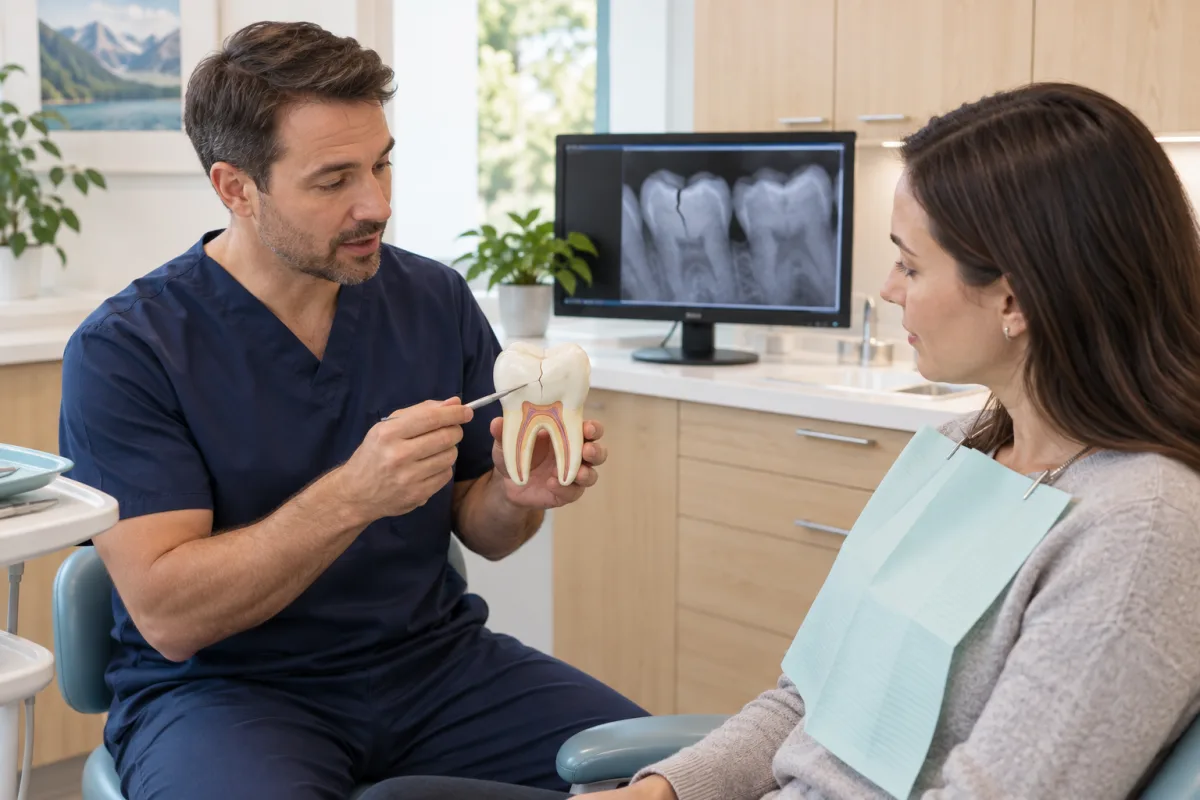
Teeth crack for many reasons: biting on something hard, grinding, large old fillings, temperature changes and simple wear over the years. Some cracks are tiny lines in the enamel that cause no trouble. Others extend into the inner tooth and produce sharp, fleeting pain when you chew, especially when you release your bite.
Normandale residents who suspect a cracked or broken tooth can book with our Port Dover office for an examination. The dentist will try to locate the crack, judge how deep it goes and explain which repair offers the best chance of keeping the tooth.
Symptoms
A brief jolt of pain when biting or letting go of a bite is a classic sign. Sensitivity to cold or sweet foods that fades quickly is also common. Because the discomfort is intermittent, people sometimes cannot tell which tooth is affected. Note which foods or movements trigger it to help the dentist narrow it down.
Sometimes a piece breaks away entirely, or a filling comes loose because the tooth around it fractured. You might feel a sharp edge with your tongue. Even if there is no pain, a broken tooth should be examined, since the crack can continue to spread and lead to further damage.
Finding the crack
The dentist may ask you to bite on a special instrument one cusp at a time to reproduce the pain. Magnification, a bright light and dyes can make fine lines more visible. Temperature tests help assess the health of the nerve, and the gums are checked for signs that a crack runs below the gumline.
Many cracks do not show up on x-rays because they run in a direction the image cannot capture. X-rays are still useful for checking surrounding bone and roots. A diagnosis may rely on a combination of findings, and sometimes the full extent is only known once old filling material is removed.
Repair options
Small cracks in enamel may only need smoothing or a bonded filling. When a cusp is cracked or broken, an onlay or crown can cover and brace the tooth to reduce flexing and prevent the crack from spreading. The dentist will explain why a particular restoration is recommended for your tooth.
If the crack reaches the nerve and causes lasting pain or infection, root canal treatment may be needed before a crown. A crack that splits the tooth or extends deep down the root may mean the tooth cannot be saved. In that case the dentist will discuss extraction and replacement options.
Protect the repair
Some sensitivity can follow treatment and usually eases. If you receive a temporary crown, avoid sticky or hard foods on that side until the permanent restoration is placed. Call the office if pain returns, increases or you notice swelling, since cracks can occasionally progress despite treatment.
Avoid chewing ice, hard candies, popcorn kernels and pens. If you clench or grind, ask about a night guard to reduce stress on your teeth. Regular checkups help the dentist spot new cracks or weak fillings early, when simpler repairs are more likely to work.
Planning your appointment
Call our Port Dover office and describe when the pain happens, which foods trigger it and whether a piece has broken off. That helps the team decide how soon you should be seen.
If you have swelling, severe pain or a fever alongside the tooth problem, mention it right away when you call.
Before you book
Have a question about your situation? Our team can help you plan a visit.
When you release pressure, the cracked parts can shift slightly and irritate the inner tooth. This pattern is a common sign of a cracked tooth and worth having examined.
No. Unlike bone, teeth do not repair fractures. Treatment aims to stabilize the tooth and prevent the crack from spreading. Delaying can allow the problem to worsen.
Not always. Small cracks may be managed with bonding or an onlay. Larger cracks that affect a cusp often benefit from a crown. The dentist will explain the options for your specific tooth.
Cracks extending below the gumline or into the root are more complex. The tooth may still be treatable or may need extraction. The dentist will discuss the findings and the realistic outlook.
Yes, grinding and clenching place heavy forces on teeth and can contribute to cracks over time. A night guard and attention to triggers may help reduce the risk.
A crown covers a weakened tooth to restore strength and shape. Normandale patients can learn when crowns are advised and what fitting involves at our Port Dover office.
Chipped or broke a tooth in Normandale? Learn what to save, what to watch for and how our Port Dover team assesses the damage before suggesting a repair.
Recognized year after year
Best Dentists in Norfolk
Proudly recognized among Norfolk’s top-rated dental practices for six consecutive years.

2021 Winner

2022 Winner

2023 Winner

2024 Winner

2025 Winner

2026 Winner
Stories from our patients
Watch a patient’s experience and browse more five-star reviews from people who have visited our Port Dover dental clinic.
Patient video
A patient shares the welcoming atmosphere and positive experience they found at our Port Dover office.
Google reviews
Swipe or use the arrows
Read all reviewsYour next visit can start today
New patients and CDCP patients are welcome. Tell us how we can help and our Port Dover dental team will follow up with you.
Evening appointments Monday and Tuesday