
Patient video
Welcoming and Wonderful Practice
A patient shares the welcoming atmosphere and positive experience they found at our Port Dover office.
★★★★★
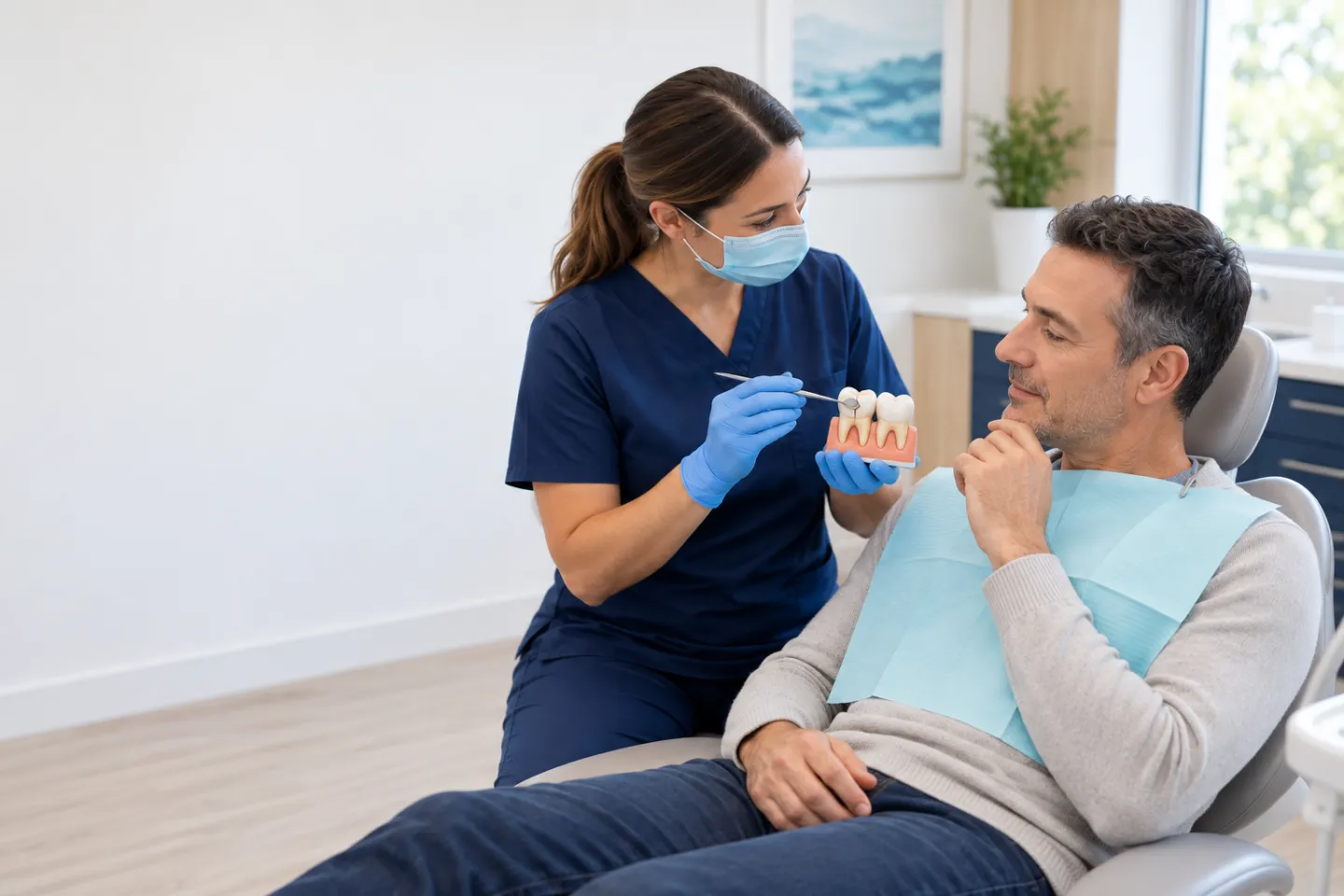
Port Dover Family Dentistry
A sharp twinge when biting or releasing can signal a cracked tooth. Nixon patients can learn how cracks are located, which repairs fit and why timing matters.
Let’s get you smiling
Tell us how we can help. Our team will follow up to confirm a time.
Serving patients from Nixon and the surrounding countryside at our Port Dover office
See every dental service for NixonHard to see, easy to feel
Cracks can develop gradually from years of chewing, grinding or large old fillings, or suddenly after biting something hard like a popcorn kernel or a cherry pit. Many cause brief, sharp pain when biting down or letting go, along with sensitivity to cold. Because symptoms can be intermittent, it is easy to put off getting them checked.
If you live in Nixon and one tooth has started to feel unpredictable, book an examination at our Port Dover office. Finding a crack early may allow a simpler repair, while waiting can let it spread. The dentist will explain what was found and outline suitable options in plain terms.
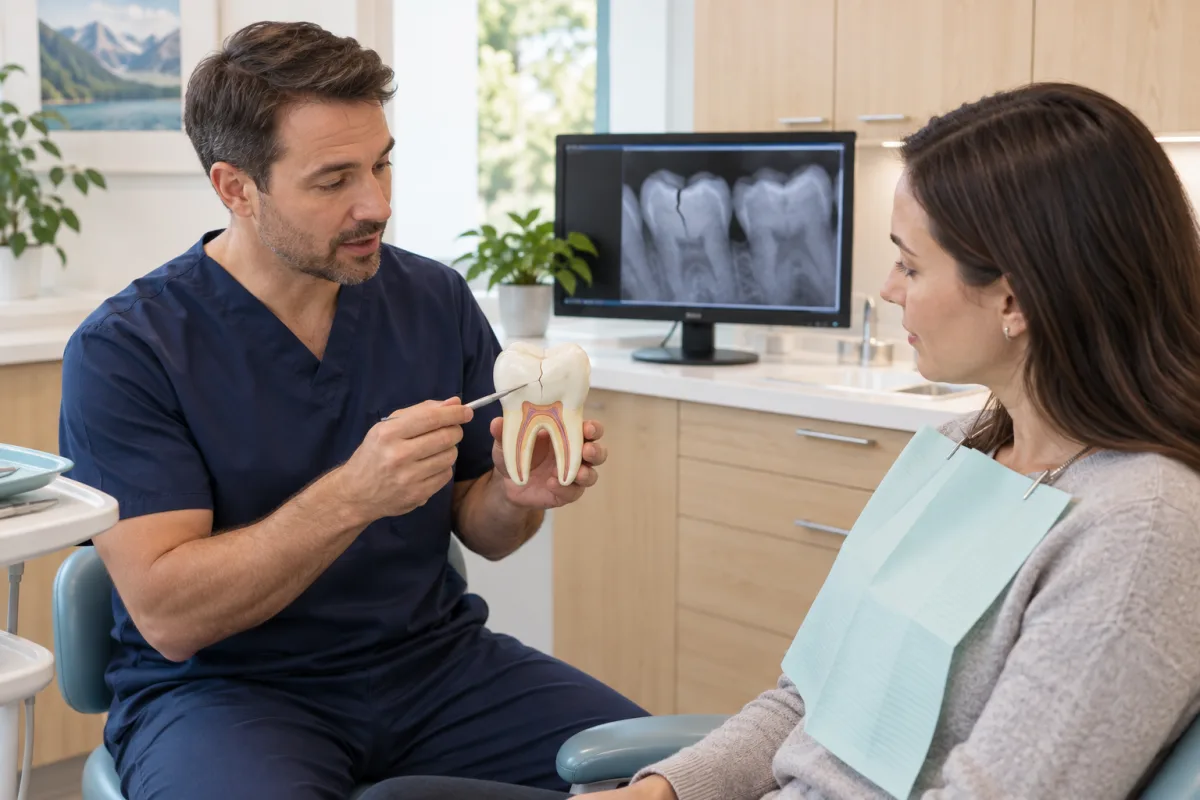
Recognizing a crack
Pain that flashes when you bite on something specific, especially when releasing, is a classic sign. Some people notice the tooth reacts to cold or sweet foods, while others feel nothing until a piece breaks away. Pain may be hard to pinpoint, sometimes seeming to come from the upper or lower jaw. These mixed signals are common and are not a reason to dismiss the problem.
Before your appointment, try to note which side hurts, what foods trigger it and whether the pain lingers. Mention any history of grinding, clenching or a recent hard bite. If you see a visible line or feel a sharp edge, describe it. Avoid chewing on that side in the meantime, as continued pressure can sometimes cause a crack to deepen.
Finding it
The dentist may ask you to bite on a special instrument one cusp at a time to reproduce the pain. Examining the tooth under magnification or with a bright light can reveal fine lines. Existing fillings may be checked for fractures around their edges. Each test adds information, and together they help confirm which tooth, and which part of it, is causing your symptoms.
Many cracks run in directions that do not appear on X-rays, especially early ones. Images are still useful to look at the root, the bone and signs of infection. If the crack is not obvious, the dentist may recommend monitoring or a protective measure while symptoms are observed. Understanding these limits helps set realistic expectations about the diagnosis and the plan that follows.
Repair options
A small crack in the enamel may need only monitoring or smoothing. When a crack affects a cusp or runs into the tooth, a crown or onlay is often recommended to hold the tooth together and spread biting forces. Bonding may be used for minor surface cracks. The dentist will explain why one option is preferred for your tooth and what to expect from it.
If a crack reaches the nerve, root canal treatment may be needed before the tooth is protected with a crown. A crack that extends deep into the root may mean the tooth cannot be saved, and removal with replacement options would be discussed. Ask the dentist about the outlook for your tooth, so you can weigh treatment with a clear understanding of its chances.
Afterward
After treatment, some tenderness when biting is common for a short period. Follow any instructions about avoiding hard or sticky foods while a temporary restoration is in place. Contact the office if pain worsens, swelling develops or the tooth becomes sensitive to heat. These signs may mean the nerve needs further attention, and reporting them early keeps more options open.
If grinding or clenching contributed to the crack, a night guard may help protect your teeth. Avoid chewing ice, hard candies or unpopped popcorn kernels. Large older fillings can weaken teeth, so the dentist may watch them more closely at checkups. Regular visits help spot early cracks in other teeth before they cause pain or break apart unexpectedly.
Planning your appointment
Call our Port Dover office and describe the pain pattern when you book. If a piece of tooth has broken off or the pain is severe, mention it so the team can discuss how soon you should be seen.
Avoid chewing on the affected side until your appointment, and bring any broken fragments in a clean container with a little water.
Before you book
Have a question about your situation? Our team can help you plan a visit.
When you release pressure, the parts of a cracked tooth can shift slightly, irritating the nerve. This release pain is a common clue. The dentist can use specific tests to confirm whether a crack is responsible and which part of the tooth is affected.
Unlike bone, teeth do not heal cracks. Some small enamel lines remain stable for years, but cracks that cause pain often need treatment to prevent them from spreading. The dentist will advise whether monitoring or repair is more appropriate.
Not always. The choice depends on where the crack is and how deep it runs. Some teeth can be treated with bonding or an onlay. The dentist will explain the reasons behind any recommendation and the alternatives available.
Severe pain, swelling or a large piece breaking off should be assessed promptly. Mild, occasional discomfort still deserves an appointment soon. Call the office to describe your symptoms so the team can advise on timing.
Large fillings can leave less natural tooth to support chewing forces, which may make cracks more likely. The dentist monitors older restorations at checkups and may suggest protective options if a tooth appears to be at risk.
A crown covers and strengthens a weakened tooth. Nixon patients can learn when crowns are advised, how the two-visit process works and how to keep one lasting.
Chipped a tooth near Nixon? See what to save, when to call our team and how bonding, fillings or crowns may be considered once the damage is assessed.
Recognized year after year
Best Dentists in Norfolk
Proudly recognized among Norfolk’s top-rated dental practices for six consecutive years.

2021 Winner

2022 Winner

2023 Winner

2024 Winner

2025 Winner

2026 Winner
Stories from our patients
Watch a patient’s experience and browse more five-star reviews from people who have visited our Port Dover dental clinic.
Patient video
A patient shares the welcoming atmosphere and positive experience they found at our Port Dover office.
Google reviews
Swipe or use the arrows
Read all reviewsYour next visit can start today
New patients and CDCP patients are welcome. Tell us how we can help and our Port Dover dental team will follow up with you.
Evening appointments Monday and Tuesday