
Patient video
Welcoming and Wonderful Practice
A patient shares the welcoming atmosphere and positive experience they found at our Port Dover office.
★★★★★

Port Dover Family Dentistry
A sharp twinge when biting can signal a cracked tooth. Nanticoke patients can learn how cracks are found and which repairs are considered in Port Dover.
Let’s get you smiling
Tell us how we can help. Our team will follow up to confirm a time.
Caring for Nanticoke patients at our Port Dover office
Browse every service for Nanticoke patientsHairline cracks to larger breaks
A cracked tooth often announces itself with a quick, sharp pain when biting down or releasing, or brief sensitivity to cold. The crack itself may be too fine to see. Left alone, cracks can spread, letting bacteria reach the nerve or splitting the tooth further, so early assessment improves the chances of a simpler repair.
For people living around Nanticoke, the dentist at our Port Dover office can examine a suspected cracked tooth, explain what the findings suggest and outline repair options ranging from bonding to a crown, depending on where the crack runs.
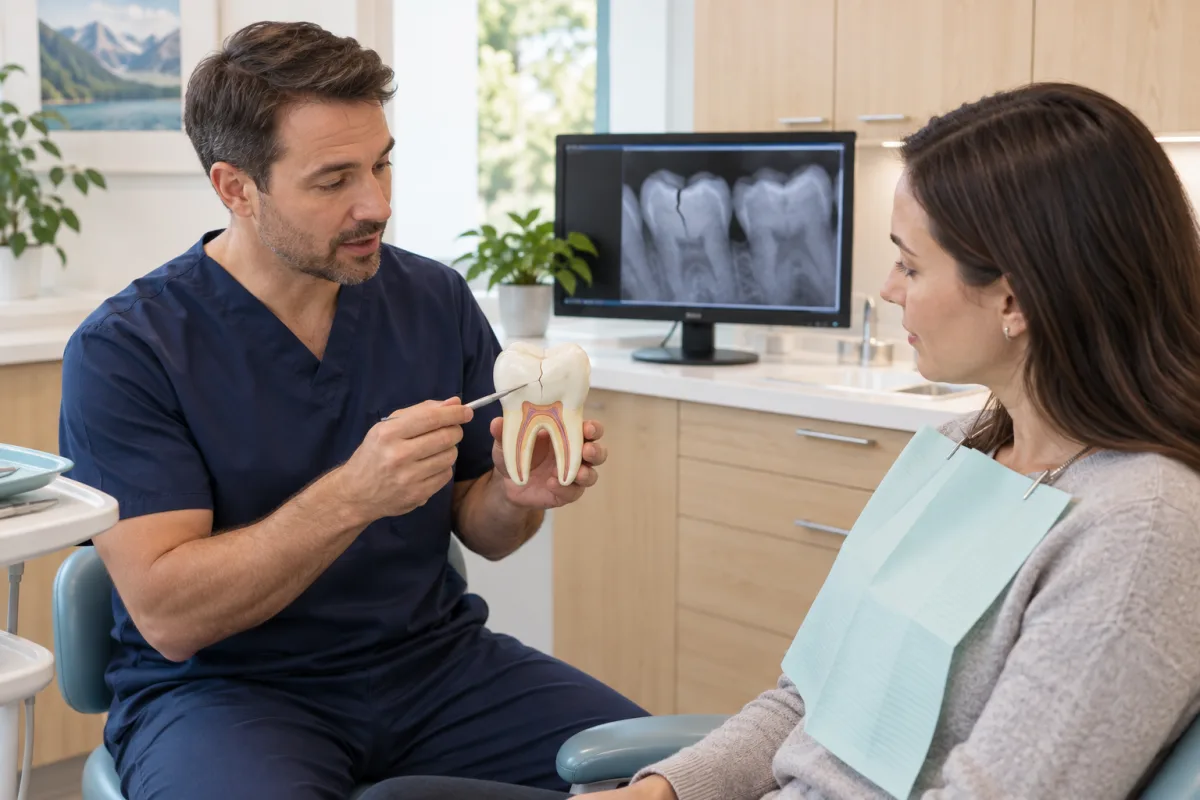
Symptoms
Pain that appears only when chewing certain foods, or when releasing a bite, is a classic sign. Some people notice brief sensitivity to cold or sweets. The discomfort may be hard to pin to a single tooth. Try to note which side and which foods trigger it, since these details help the dentist narrow down the source.
Lingering pain after hot or cold, spontaneous throbbing, swelling or a pimple on the gum near the tooth may suggest the crack has affected the nerve or led to infection. These symptoms should be reported promptly. A tooth that feels like it moves in separate pieces when you bite also needs attention soon.
Diagnosis
The dentist may ask you to bite on a special tool one cusp at a time, shine a bright light through the tooth or apply a dye to highlight fracture lines. X-rays help rule out other causes, though fine cracks often do not show up on them. Existing fillings may be examined closely, since cracks frequently start near their edges.
Cracks can be difficult to confirm because they may only open under biting pressure. Sometimes the full extent is only visible once an old filling is removed. The dentist should explain what is known, what remains uncertain and how the plan might change once the tooth is opened during treatment.
Repair options
Small cracks in enamel may be monitored or bonded. A cracked cusp is often managed by removing the weak piece and placing a filling, onlay or crown. A crown covers and binds the tooth, which can help prevent a crack from spreading further under chewing forces. Ask the dentist why one approach is favoured.
If the crack has reached the nerve, root canal treatment may be needed before a crown. Cracks extending below the gum line or splitting the root can make a tooth impossible to save, and removal with replacement options would then be discussed. Understanding these possibilities helps you weigh decisions without feeling rushed.
Protecting it
Some tenderness may follow a repair for a short time. If you are waiting for a crown, a temporary restoration may be placed; chew gently on that side and avoid sticky foods. Report pain that intensifies, swelling or a temporary that comes loose, rather than waiting for the next scheduled appointment.
Grinding, clenching, chewing ice and biting hard objects all increase the risk of cracks. A night guard may be suggested if grinding is suspected. Regular checkups allow the dentist to monitor teeth with large fillings, which are more prone to cracking, and to suggest protective restorations before a break occurs.
Planning your appointment
Call our Port Dover office and describe when the tooth hurts and which foods trigger it. Mention any swelling or lingering pain so the team can judge how soon you should be seen.
Chew on the opposite side in the meantime, avoid very hard foods, and bring a list of your medications.
Before you book
Have a question about your situation? Our team can help you plan a visit.
No. Unlike bone, teeth do not repair cracks naturally. Some small enamel cracks may simply be monitored, but symptomatic cracks usually need treatment to prevent them from spreading or affecting the nerve.
Cracks may open slightly under biting pressure and close when pressure is released, irritating the inner tooth intermittently. That is why pain often appears with certain foods or movements rather than constantly.
Not always. Depending on the size and location, bonding, a filling or an onlay may be suitable. Crowns are often recommended when a crack threatens a cusp or the tooth needs to be held together.
No. Root canal treatment is usually considered only if the nerve has been affected. The dentist will assess symptoms and test results and explain whether nerve involvement is suspected.
Cracks that split a root or extend well below the gum may make a tooth non-restorable. The dentist will discuss removal and replacement options such as an implant, bridge or partial denture.
A crown covers a weakened tooth to protect and restore it. Nanticoke patients can learn when crowns are suggested and how they are made in Port Dover.
Chipped a tooth in Nanticoke? Find out what to do in the first hours, what to save, and how repair options are assessed at our Port Dover dental office.
Recognized year after year
Best Dentists in Norfolk
Proudly recognized among Norfolk’s top-rated dental practices for six consecutive years.

2021 Winner

2022 Winner

2023 Winner

2024 Winner

2025 Winner

2026 Winner
Stories from our patients
Watch a patient’s experience and browse more five-star reviews from people who have visited our Port Dover dental clinic.
Patient video
A patient shares the welcoming atmosphere and positive experience they found at our Port Dover office.
Google reviews
Swipe or use the arrows
Read all reviewsYour next visit can start today
New patients and CDCP patients are welcome. Tell us how we can help and our Port Dover dental team will follow up with you.
Evening appointments Monday and Tuesday