
Patient video
Welcoming and Wonderful Practice
A patient shares the welcoming atmosphere and positive experience they found at our Port Dover office.
★★★★★
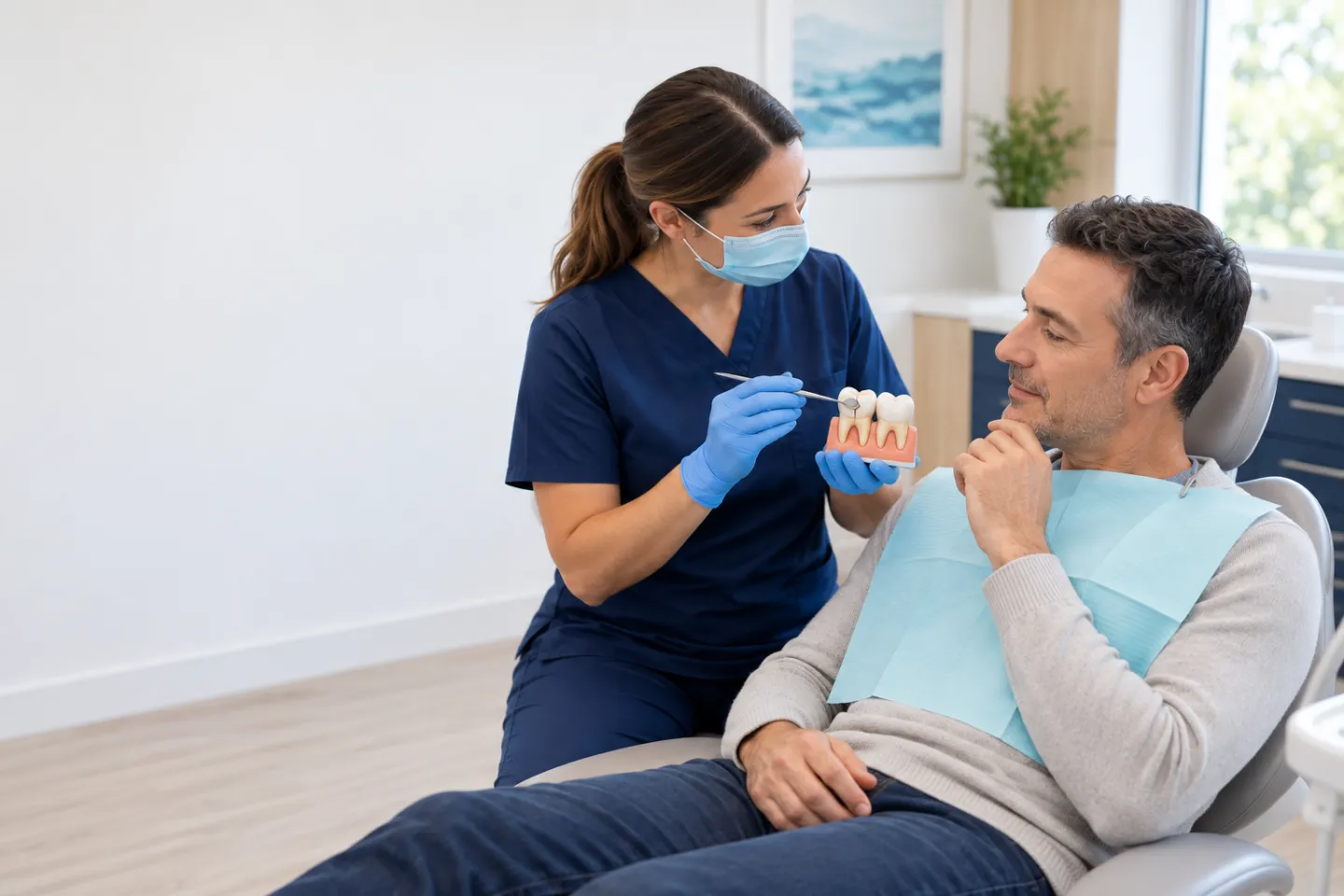
Port Dover Family Dentistry
A tooth that hurts when you release a bite may be cracked. Lynedoch patients can have cracks diagnosed and repair options explained at our Port Dover dental office.
Let’s get you smiling
Tell us how we can help. Our team will follow up to confirm a time.
Caring for Lynedoch patients at our Port Dover office
Every dental service for Lynedoch patientsHidden cracks, real symptoms
A cracked tooth does not always look damaged. Many people notice a sharp twinge when biting down or letting go of a bite, or brief sensitivity to cold that comes and goes. Because the crack may be fine and hidden beneath a filling, it can take careful testing to locate the tooth involved and judge how deep the crack extends.
Lynedoch patients with a tooth that hurts unpredictably on chewing can arrange an assessment at our Port Dover office. The dentist will try to identify the cracked tooth, explain how serious the damage appears and discuss repairs that may help hold the tooth together.
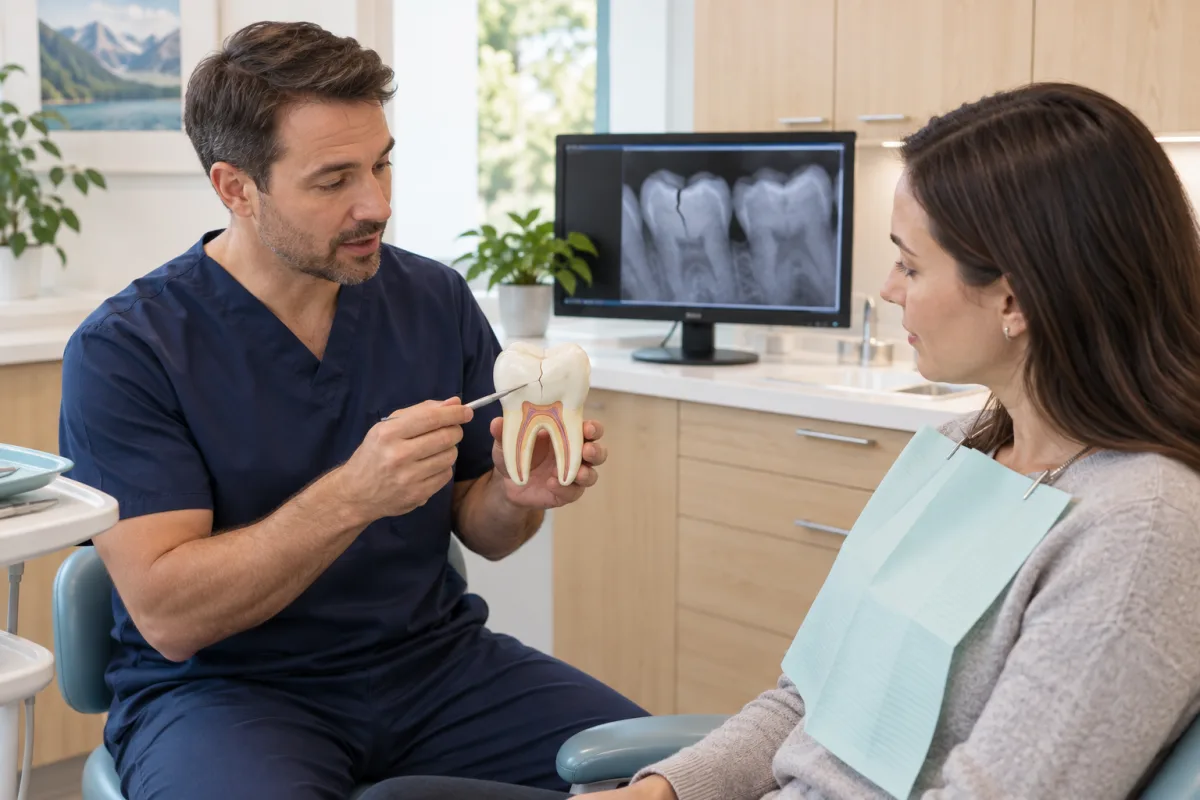
Recognizing a crack
Pain that appears when you bite on something firm, or a sharp sensation as you release, is a common sign of a cracked tooth. You may find yourself chewing on one side without thinking. Note which foods trigger it and roughly where in your mouth the pain seems to come from before your visit.
Crack symptoms can be intermittent, which makes them easy to dismiss. Sensitivity to cold or sweets may appear for a few seconds and then vanish. Even if the tooth feels fine most days, a crack can grow over time. Mention any recurring pattern rather than waiting until the pain becomes constant.
Diagnosis
The dentist may ask you to bite on a small instrument placed on individual cusps to reproduce the pain. Cold testing and gentle tapping can also help pinpoint the tooth. Your feedback during these tests matters, so describe exactly what you feel and when the sensation occurs.
X-rays help check for other problems, though fine cracks often do not show on them. Magnification, light and staining can make a crack more visible. In some cases the extent of the crack is only clear once an old filling is removed. The dentist will explain what was found and what remains uncertain.
Repair options
For many cracks, a crown or onlay is recommended to bind the tooth and spread biting forces. A smaller crack may sometimes be managed with a bonded filling. The goal is to reduce flexing that allows the crack to grow. Ask the dentist why a particular restoration is suggested for your tooth.
If the crack has reached the nerve, root canal treatment may be needed before a crown. A crack that extends deep into the root may mean the tooth cannot be saved, and replacement options would then be discussed. Understanding the prognosis helps you make a decision with realistic expectations.
Protecting the tooth
After a crown or filling, the tooth may feel sensitive for a little while. Let the office know if pain on biting returns, sensitivity lingers or a gum swelling appears. These signs can indicate the crack has progressed or the nerve has been affected, and the tooth should be re-examined.
Avoid chewing ice, hard candy and popcorn kernels, which can stress teeth. If you clench or grind, a night guard may help protect both repaired and natural teeth. Regular checkups allow the dentist to look for early signs of cracks in other teeth before they become painful.
Planning your appointment
Call our Port Dover office and describe the pain pattern, such as discomfort on biting or release. Avoid chewing on that side until the tooth has been examined.
If pain becomes constant, throbbing or comes with swelling, mention it right away so the urgency can be discussed.
Before you book
Have a question about your situation? Our team can help you plan a visit.
Cracks can flex open under certain pressures and close again, causing intermittent pain. The symptom pattern is a common clue. Have the tooth examined even if the pain comes and goes, since cracks can grow.
No. Unlike bone, teeth do not repair cracks on their own. Treatment aims to hold the tooth together and prevent the crack from spreading. Early care usually offers more options.
Not always. Small cracks may be managed with a bonded filling, while larger ones often need a crown or onlay. The dentist will recommend an option based on the size and location of the crack.
Sometimes. If the crack reaches the nerve, inflammation or infection can develop. Root canal treatment may then be needed before the tooth is restored with a crown.
Avoid chewing very hard objects, wear a mouthguard for sports and consider a night guard if you grind. Replacing large, failing fillings when advised can also reduce stress on the remaining tooth.
A crown covers a weakened, cracked or root-treated tooth to help it function again. Lynedoch patients can learn about materials and visits at our Port Dover office.
Chipped a tooth on a hard bite or in a fall? Lynedoch patients can call our Port Dover office to describe the damage, protect the tooth and arrange an assessment.
Recognized year after year
Best Dentists in Norfolk
Proudly recognized among Norfolk’s top-rated dental practices for six consecutive years.

2021 Winner

2022 Winner

2023 Winner

2024 Winner

2025 Winner

2026 Winner
Stories from our patients
Watch a patient’s experience and browse more five-star reviews from people who have visited our Port Dover dental clinic.
Patient video
A patient shares the welcoming atmosphere and positive experience they found at our Port Dover office.
Google reviews
Swipe or use the arrows
Read all reviewsYour next visit can start today
New patients and CDCP patients are welcome. Tell us how we can help and our Port Dover dental team will follow up with you.
Evening appointments Monday and Tuesday