
Patient video
Welcoming and Wonderful Practice
A patient shares the welcoming atmosphere and positive experience they found at our Port Dover office.
★★★★★
Port Dover Family Dentistry
A crack can cause sharp pain on biting or lingering cold sensitivity. La Salette patients can learn how cracks are found and which repairs might fit.
Let’s get you smiling
Tell us how we can help. Our team will follow up to confirm a time.
Caring for La Salette patients at our Port Dover office
See every dental service for La SaletteHard-to-see damage
A tooth can crack from biting something unexpectedly hard, from years of grinding or because a large old filling has weakened it. Some cracks are obvious. Others are fine lines that only reveal themselves as a jolt of pain when you release a bite or a twinge with cold drinks.
Patients from La Salette can have a suspected cracked tooth examined at our Port Dover office. The dentist will try to locate the crack, judge how far it extends and explain which repair may protect the tooth, keeping in mind that outcomes can vary.
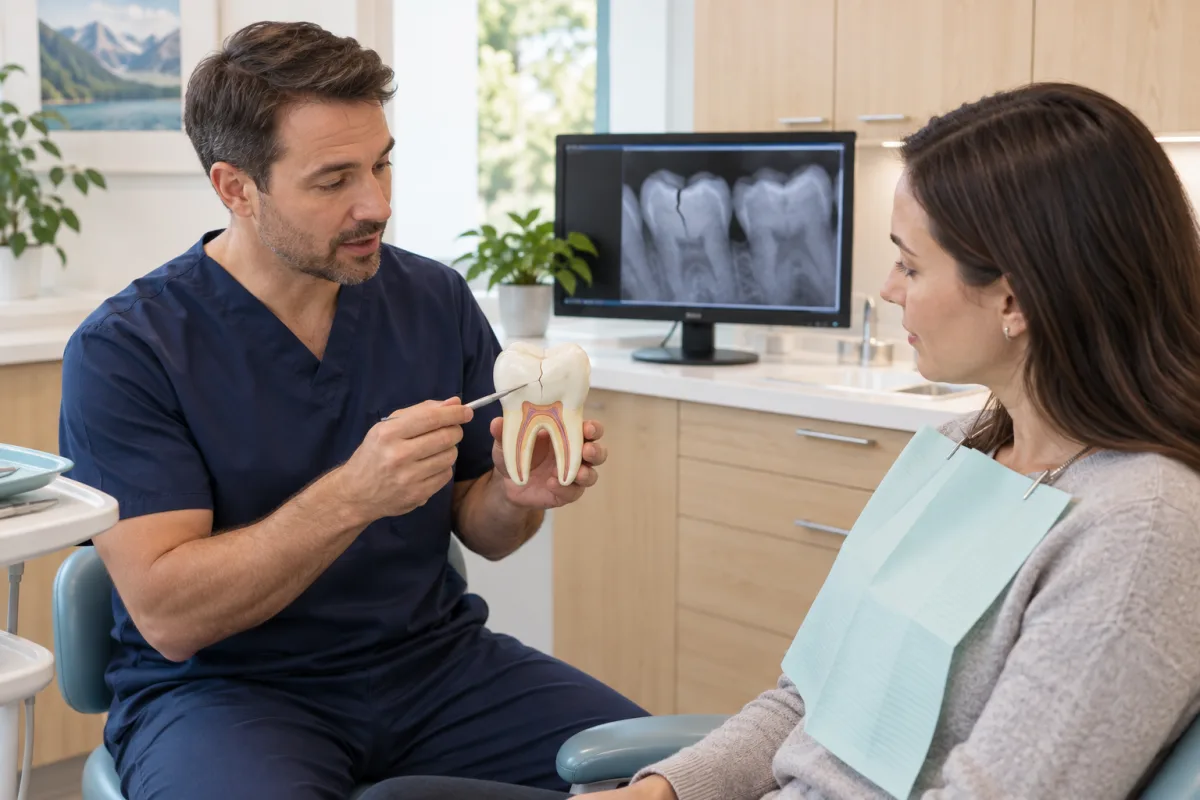
Recognizing a crack
A classic sign is sharp, brief pain when chewing, especially as you let go of the bite. You may find yourself avoiding one side of your mouth without quite realizing why. Try to identify which tooth or area is involved and which foods trigger the pain, since this helps narrow the search.
Sensitivity to cold or sweet foods that fades quickly can also occur. If pain becomes constant, throbbing or wakes you at night, or if the gum near a tooth swells, the crack may have reached the nerve. Call the office promptly in those situations rather than waiting.
Finding the crack
The dentist may ask you to bite on a special instrument one cusp at a time, apply cold to individual teeth or use magnification and light to look for fracture lines. Removing an old filling sometimes reveals a crack beneath it. Each test adds information about which tooth is affected.
Many cracks run in a direction that X-rays do not capture well, so a normal image does not always rule one out. X-rays are still useful for checking the nerve, bone and other causes of pain. The dentist will explain how confident the findings are and what may remain uncertain.
Repair options
A crack limited to the outer tooth may be treated with bonding or a filling. When a cusp has fractured or the tooth is weakened, an onlay or crown can hold the tooth together and spread biting forces. Covering a cracked tooth early may help reduce the chance that the crack spreads further.
If the crack has reached the nerve, root canal treatment may be needed before a crown. A crack extending deep into the root can make a tooth unrestorable, and removal may then be recommended. The dentist should outline the likely outcomes of each option honestly before you decide.
Protecting it
Even after treatment, a cracked tooth may need monitoring. Let the office know if pain returns, the gum swells or biting becomes uncomfortable again. A review appointment may be suggested to confirm the tooth has settled. Some teeth remain slightly tender for a time before improving.
Grinding and clenching are common contributors to cracks. A night guard may help protect your repaired tooth and others. Avoid chewing ice, hard candies, popcorn kernels and other very hard objects. Large older fillings in other teeth may also be worth evaluating at your next checkup.
Planning your appointment
Call our Port Dover office and describe which side hurts, when it started and what triggers the pain. The team can discuss timing and arrange an appropriate assessment.
Until you are seen, chew on the other side and avoid very hot, cold or hard foods that set the tooth off.
Before you book
Have a question about your situation? Our team can help you plan a visit.
Pain on releasing a bite is a common sign of a cracked tooth, as the segments of the tooth flex slightly. An examination with bite testing can help identify which tooth is involved.
Unlike bone, a tooth crack does not heal. Treatment aims to protect the tooth and prevent the crack from spreading. Waiting can allow a crack to deepen, so prompt assessment is sensible.
Often a crown or onlay is recommended to hold the tooth together, but smaller cracks may be treated differently. The dentist will explain what the examination shows and why a particular repair is suggested.
Many can, especially when treated early. A crack extending deep into the root may mean the tooth cannot be kept. The dentist will discuss the likely outlook for your tooth before treatment.
Not always. Many cracks are not visible on X-rays, so the dentist relies on symptoms, bite tests and close examination as well. Images remain useful for checking the nerve and surrounding bone.
Learn when a crown is advised for a weak or damaged tooth, what preparation involves and how La Salette patients can care for a crown placed in Port Dover.
Chipped a tooth in La Salette? See what to save, which symptoms matter and how the dentist in Port Dover assesses a break before suggesting bonding or a crown.
Recognized year after year
Best Dentists in Norfolk
Proudly recognized among Norfolk’s top-rated dental practices for six consecutive years.

2021 Winner

2022 Winner

2023 Winner

2024 Winner

2025 Winner

2026 Winner
Stories from our patients
Watch a patient’s experience and browse more five-star reviews from people who have visited our Port Dover dental clinic.
Patient video
A patient shares the welcoming atmosphere and positive experience they found at our Port Dover office.
Google reviews
Swipe or use the arrows
Read all reviewsYour next visit can start today
New patients and CDCP patients are welcome. Tell us how we can help and our Port Dover dental team will follow up with you.
Evening appointments Monday and Tuesday