
Patient video
Welcoming and Wonderful Practice
A patient shares the welcoming atmosphere and positive experience they found at our Port Dover office.
★★★★★
Port Dover Family Dentistry
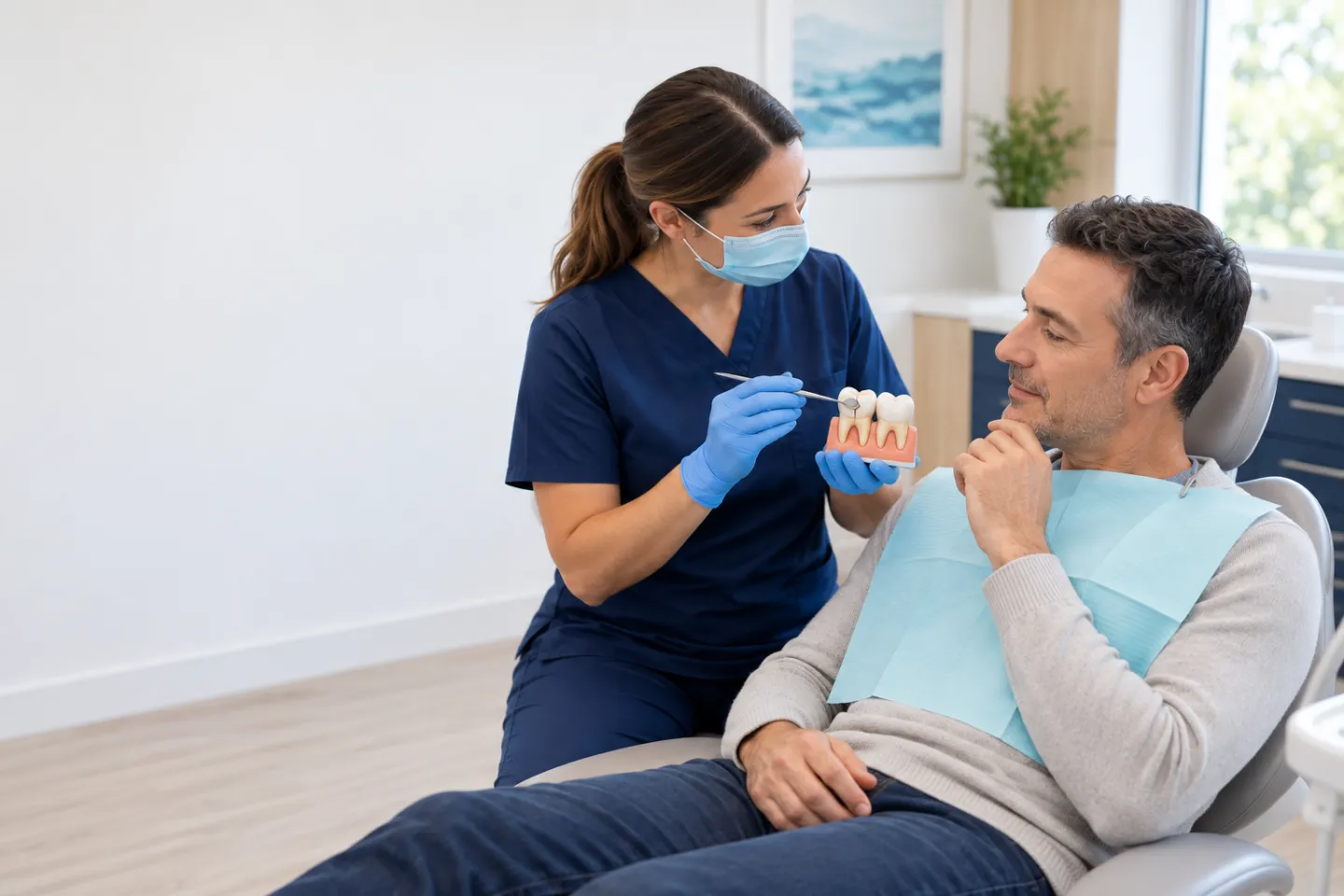
A cracked tooth may hurt only when you bite or release. Hagersville patients can learn how cracks are diagnosed and which repairs are considered in Port Dover.
Let’s get you smiling
Tell us how we can help. Our team will follow up to confirm a time.
Seeing Hagersville patients at our office in Port Dover
Browse every dental service for HagersvilleCracks can be hard to spot
Cracked teeth can be surprisingly tricky. Some show an obvious break, while others hide a fine fracture that only causes a sharp twinge when you bite down or release, or a flash of pain with cold. Because cracks can deepen with time, a timely assessment often gives more repair options than waiting until the tooth splits.
If you live in Hagersville and suspect a cracked tooth, you can book an exam at our Port Dover office. Describe the pain pattern when you call so the team can judge how soon you should be seen.
Recognising a crack
Many cracked teeth hurt only now and then, for example when chewing something firm or letting go after biting. Cold may trigger a brief sharp pain. You might not be able to tell which tooth it is. Lingering throbbing, swelling or pain that wakes you can suggest the nerve is affected and should be checked promptly.
Cracks often develop in teeth with large fillings, in people who clench or grind, or after biting on something unexpectedly hard such as a popcorn kernel or a cherry pit. Older teeth may develop fine lines in enamel that are harmless, so the dentist distinguishes these from cracks that extend deeper.
Diagnosis
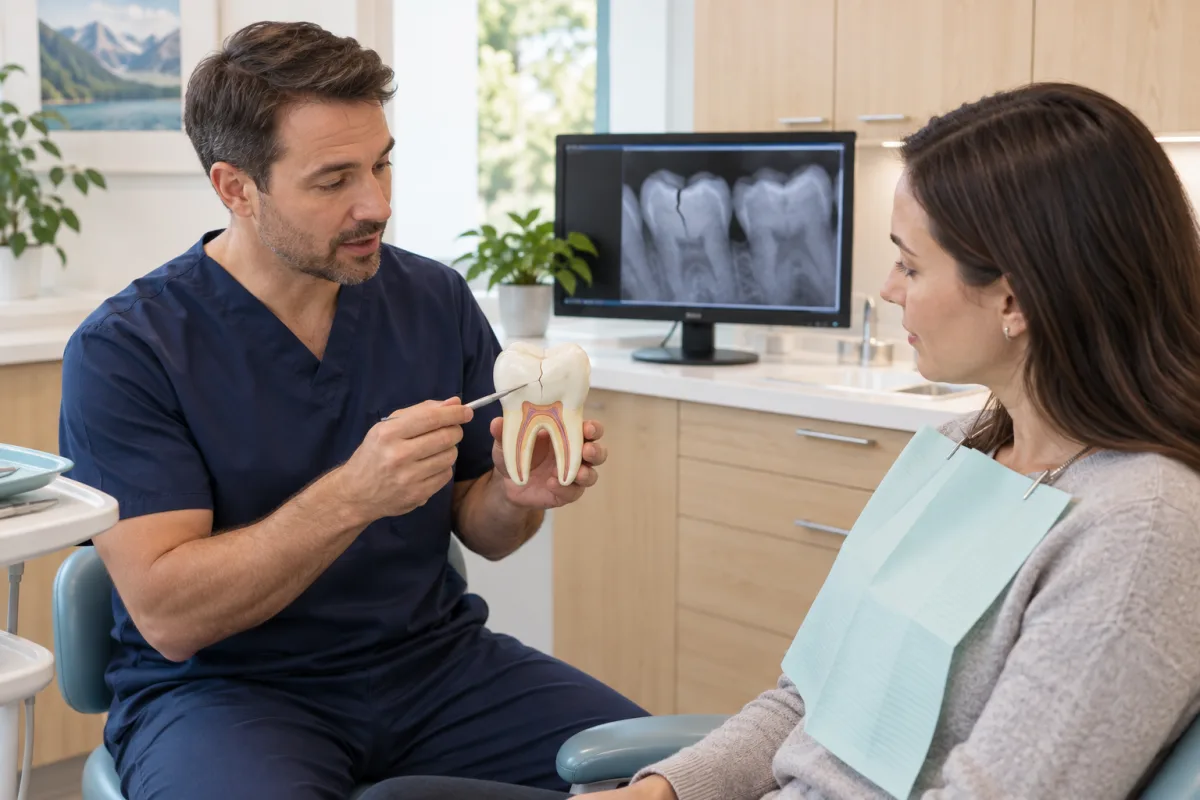
The dentist may ask you to bite on a special instrument one cusp at a time, test the tooth with cold, examine it under magnification or use a light to show fracture lines. Old fillings sometimes need removing to see the full extent. Pinpointing the crack and its depth shapes which repair, if any, is likely to succeed.
Cracks frequently run in a direction that X-rays cannot capture clearly. Images are still useful to check the nerve, bone and surrounding structures, but a normal X-ray does not rule out a crack. If findings are uncertain, the dentist may suggest monitoring or a protective step, and explain what signs should bring you back sooner.
Repair options
For cracks limited to the crown of the tooth, the dentist may recommend bonding, an onlay or a full crown to hold the pieces together and reduce flexing when you bite. Covering the cusps can help protect against the crack spreading. Temporary protection may be placed first while a permanent restoration is made.
If the crack reaches the nerve, root canal treatment may be needed before the tooth is crowned. When a crack extends deep into the root or splits the tooth, it may not be saveable, and extraction with discussion of replacement options may be recommended. The dentist will explain the likely outlook honestly.
Protecting it
Chew carefully on the treated side until any permanent restoration is in place. A temporary crown or filling is less strong than the final one. If pain returns, the tooth feels loose or a temporary comes off, call the office. Report any sensitivity that worsens rather than settles after the repair.
If grinding or clenching contributed, a night guard can reduce stress on teeth. Avoid chewing ice, hard candies or non-food items. Regular checkups allow the dentist to review other teeth with large fillings, since cracks often affect more than one tooth. Early reinforcement may prevent a future fracture.
Planning your appointment
Call our Port Dover office and describe when the tooth hurts, whether you can identify it and whether there is swelling. The team will suggest an appointment based on your symptoms.
Note foods or temperatures that trigger pain and bring details of previous dental work on that side of your mouth.
Before you book
Have a question about your situation? Our team can help you plan a visit.
No. Unlike bone, a tooth crack does not mend. Some fine enamel lines are harmless, but deeper cracks can spread. Treatment aims to hold the tooth together and protect the nerve before the crack worsens.
Pain from a cracked tooth can be hard to locate, especially with upper and lower back teeth. The dentist uses bite tests, cold tests and close inspection to identify the tooth before recommending treatment.
Not always. If the nerve is healthy, a crown or onlay may be enough. If the crack has reached the nerve and caused inflammation or infection, root canal treatment may be needed. The dentist will explain the findings.
Severe pain, swelling or a tooth that has split should be assessed promptly. Mild, occasional pain on biting is less urgent but still needs an exam soon. Call to describe the symptoms so the team can recommend timing.
A crown or onlay can reduce flexing and help protect the tooth, but it cannot guarantee a crack will never progress. The outcome depends on how deep the crack already runs. Regular follow-up is important.
A crown covers and strengthens a weakened tooth. Hagersville patients can learn when crowns are recommended, how they are made and how to care for them.
Chipped a tooth in Hagersville? Learn what to do first, which signs need a prompt call and how repair options are chosen at our Port Dover dental office.
Recognized year after year
Best Dentists in Norfolk
Proudly recognized among Norfolk’s top-rated dental practices for six consecutive years.

2021 Winner

2022 Winner

2023 Winner

2024 Winner

2025 Winner

2026 Winner
Stories from our patients
Watch a patient’s experience and browse more five-star reviews from people who have visited our Port Dover dental clinic.
Patient video
A patient shares the welcoming atmosphere and positive experience they found at our Port Dover office.
Google reviews
Swipe or use the arrows
Read all reviewsYour next visit can start today
New patients and CDCP patients are welcome. Tell us how we can help and our Port Dover dental team will follow up with you.
Evening appointments Monday and Tuesday