Crack Location
Cracks confined above the gumline may be more restorable than those extending deeply onto the root.
Port Dover Family Dentistry
Cracked and broken tooth repair in Port Dover protects damaged teeth with bonding, fillings, inlays, onlays, crowns or root canal care when appropriate.
Let’s get you smiling
Tell us how we can help. Our team will follow up to confirm a time.
Cracked and broken tooth repair in Port Dover
A tooth can crack from an injury, a large existing filling, repeated grinding or biting something hard. Symptoms may include pain when biting or releasing pressure, temperature sensitivity or intermittent discomfort that is difficult to locate.
Unlike a broken bone, a tooth crack does not heal itself. The repair depends on its type, depth and location, whether the pulp is involved and how much healthy tooth structure remains. Earlier assessment may improve the chance of preserving the tooth.
Treatment depends on the crack
A superficial chip, fractured cusp, vertical crack and split tooth have different outlooks. A careful diagnosis is needed before recommending repair.
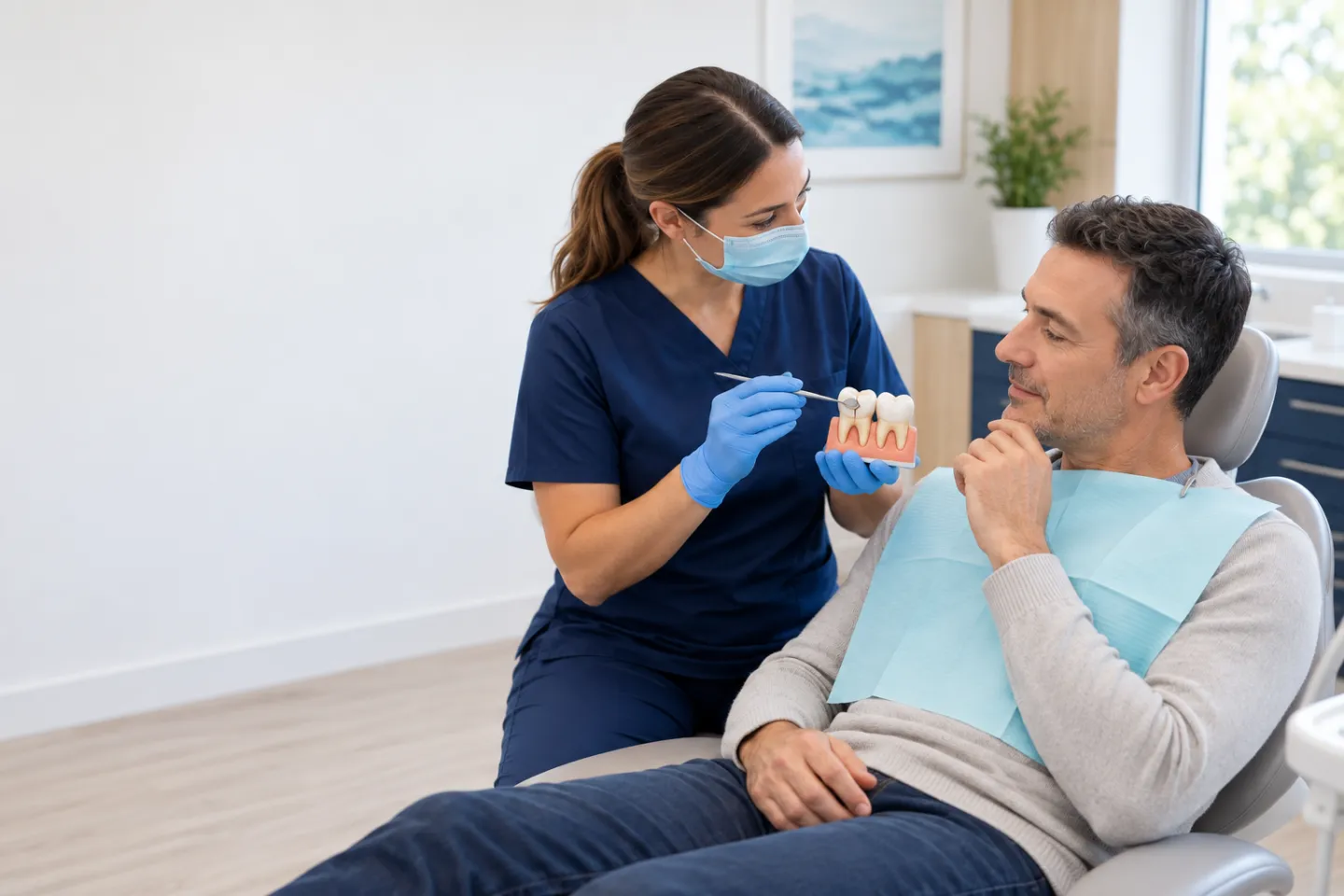
A tooth-specific assessment
Two teeth that look similar from the outside can need different treatment. We assess the damage, symptoms and supporting tissues before deciding what is predictable.
Cracks confined above the gumline may be more restorable than those extending deeply onto the root.
Temperature, biting and other tests help assess whether the tooth’s nerve is irritated or irreversibly damaged.
The amount and strength of sound enamel and dentin influence whether a filling, onlay or crown can protect the tooth.
Grinding, clenching and tooth position can affect both the cause and the long-term protection needed.
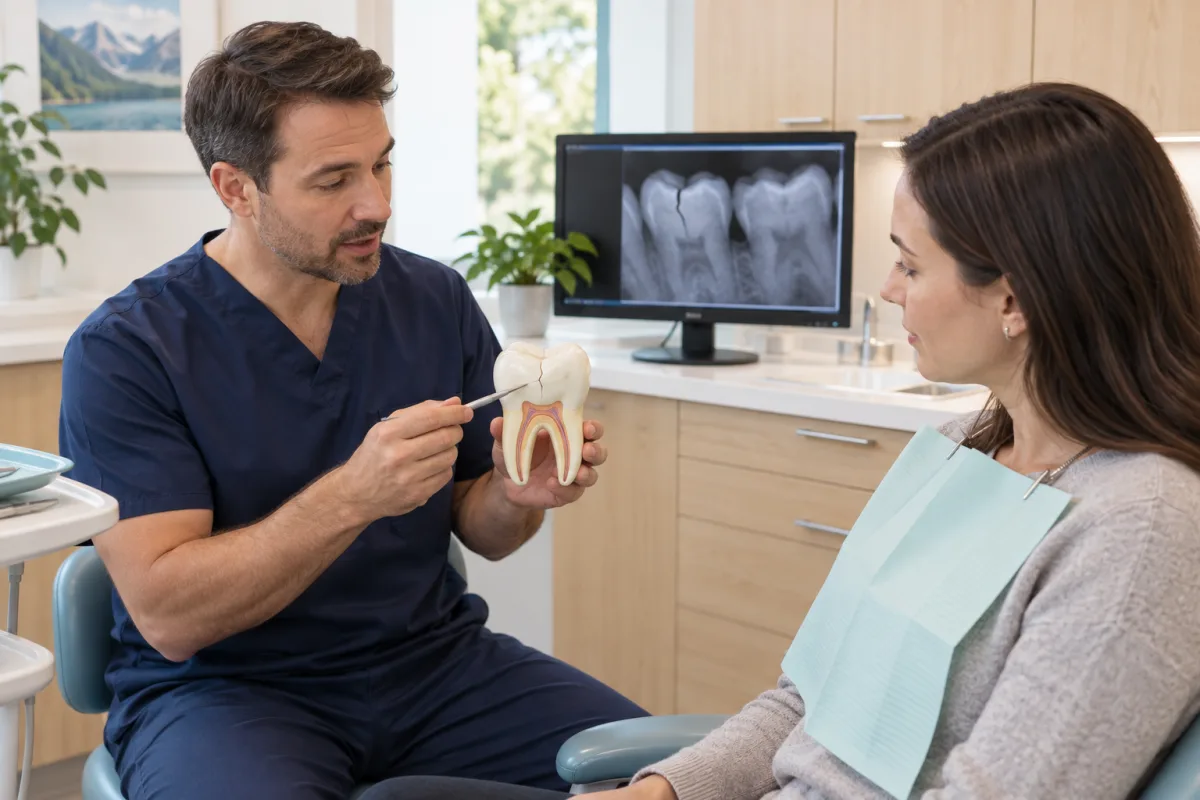
Dental X-rays can show decay, bone changes and the tissues around a root, but many cracks are too fine to appear directly. Diagnosis often combines the history, visual examination and several focused tests.
Diagnosis, protection and review
Treatment is selected only after we understand which part of the tooth is involved and whether the tooth can be restored.
The dentist reviews symptoms, examines the tooth and bite and may use magnification, bite tests, light, pulp testing or diagnostic X-rays.
Options may include bonding, a filling, inlay, onlay or crown. Pulp involvement may require root canal treatment before final coverage.
We recheck comfort, bite and pulp health. Some cracks can continue to progress despite treatment, so new symptoms should be reported.
More than one kind of damage
A small enamel chip or fractured cusp can often be rebuilt. A crack running from the chewing surface toward the root may need protective coverage, and pulp damage may add root canal treatment to the plan.
A split tooth or a crack that extends too far below the gumline may not be predictably restorable. When that happens, we explain why and review extraction and replacement choices without promising that every tooth can be saved.
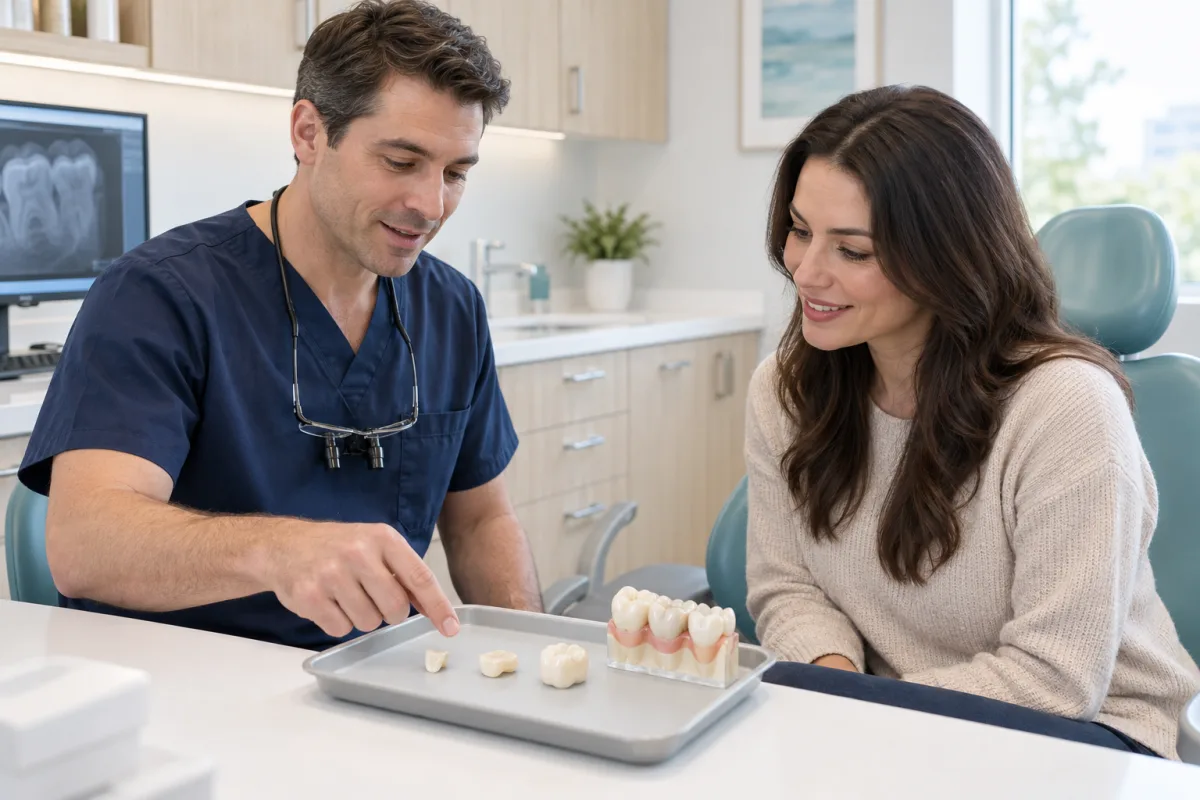
Minor chips may be smoothed or restored with tooth-coloured bonding when enough stable structure remains.
An onlay or crown may cover weakened sections and reduce flexing during everyday chewing.
Root canal treatment addresses irreversible inflammation or infection inside a restorable cracked tooth.
Changes worth checking
Symptoms can be brief, inconsistent or difficult to pinpoint. Even a painless broken tooth should be checked because exposed or unsupported structure can deteriorate further.
Sharp pain during pressure—or as pressure is released—can occur when cracked sections flex.
Temperature discomfort may reflect exposed dentin or irritation of the pulp inside the tooth.
A chipped cusp, lost fragment or rough edge should be assessed even when the tooth is not painful.
Pain without a trigger, swelling or a gum bump can indicate pulp damage or infection requiring prompt care.
Facial swelling, fever, uncontrolled bleeding, significant trauma, or difficulty breathing or swallowing requires urgent attention. Call the office promptly and seek emergency medical care for breathing or swallowing difficulty.
Until you are seen
Home measures can reduce irritation temporarily, but they cannot diagnose or permanently repair a crack.
Choose softer foods and avoid ice, hard candies, popcorn kernels and sticky foods that may flex or pull on the damaged tooth.
Brush gently and rinse with water after eating. If an edge is sharp, temporary dental wax may protect the cheek or tongue until your visit.
If you can find the piece, store it safely and bring it with you. Do not attempt to glue it back onto the tooth.
Follow your physician’s advice and package directions for over-the-counter pain relief. Never place aspirin directly on the tooth or gum.
Restorative dental care
Prompt assessment can clarify the damage and the most appropriate way to protect or restore the tooth.
Cracked tooth questions
No. Tooth structure does not heal like bone. Treatment aims to stabilize and protect the tooth, although some cracks can continue to progress despite care.
A crack may flex during biting and irritate the pulp, creating brief or unpredictable pain. Intermittent symptoms still warrant assessment.
Not always. Many cracks are too narrow or run in a direction that is difficult to see directly on an X-ray. Imaging still helps assess decay, bone, roots and other possible causes while the dentist combines several diagnostic tests.
No. Treatment depends on the type and extent of damage. Small chips may need bonding or a filling, while cracks that weaken cusps often need an onlay or crown.
Root canal treatment may be recommended when the crack has caused irreversible pulp inflammation or infection and the remaining tooth is considered restorable.
Unfortunately not. A split tooth or crack extending too far below the gum may have a poor prognosis. The dentist will explain restorative and extraction options based on the findings.
Recognized year after year
Best Dentists in Norfolk
Proudly recognized among Norfolk’s top-rated dental practices for six consecutive years.

2021 Winner

2022 Winner

2023 Winner

2024 Winner

2025 Winner

2026 Winner
Stories from our patients
Watch a patient’s experience and browse more five-star reviews from people who have visited our Port Dover dental clinic.
Patient video
A patient shares the welcoming atmosphere and positive experience they found at our Port Dover office.
Google reviews
Swipe or use the arrows
Read all reviewsOur community
Your next visit can start today
New patients and CDCP patients are welcome. Tell us how we can help and our Port Dover dental team will follow up with you.
Evening appointments Monday and Tuesday