Smooth A Small Chip
A shallow, enamel-only irregularity may sometimes be softened without adding restorative material.

Port Dover Family Dentistry
Cosmetic tooth reshaping in Port Dover can conservatively smooth small chips, uneven edges and minor shape concerns after a careful dental assessment.
Let’s get you smiling
Tell us how we can help. Our team will follow up to confirm a time.
Cosmetic tooth reshaping in Port Dover
Cosmetic tooth reshaping—also called enameloplasty or dental contouring—carefully smooths or adjusts a very small amount of enamel to refine a tooth’s outline. It may help even out minor chips, rough edges, pointed contours or subtle differences in length.
Because enamel does not grow back, reshaping must be planned conservatively. We first examine the tooth, enamel thickness and bite to determine whether contouring is safe or whether bonding, orthodontics or another option would better protect your smile.
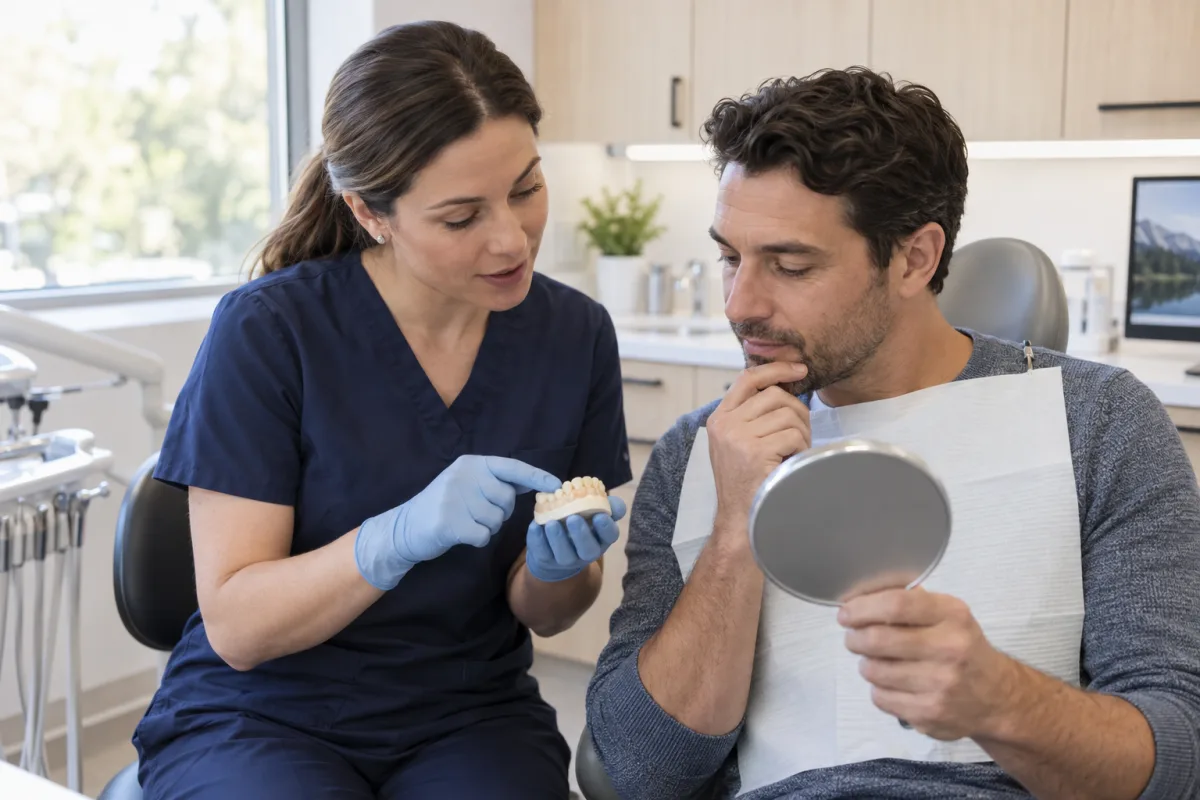
Less can be more
Thoughtful contouring preserves healthy tooth structure while creating a smoother, more balanced edge.
When reshaping may help
Reshaping is intended for limited surface and edge refinements. It does not replace treatment for decay, cracks, major wear or significant alignment concerns.
A shallow, enamel-only irregularity may sometimes be softened without adding restorative material.
Slight differences along the biting edges of front teeth may be refined for a more balanced outline.
Naturally prominent corners may be adjusted within the limits of healthy enamel and your bite.
Very small shape differences can sometimes be made less noticeable without more extensive treatment.
Contouring and tooth-coloured bonding may work together when a tooth needs both reduction and added shape.
We check tooth contact and signs of grinding so a cosmetic adjustment does not create sensitivity or uneven pressure.
A precise, measured process
The appointment is deliberately conservative because every amount of removed enamel is permanent.
We examine the tooth, enamel, bite and reason for the irregularity. Photographs or an X-ray may be recommended when the tooth’s health or structure is uncertain.
When appropriate, a fine instrument removes a minimal amount of surface enamel. Anaesthetic is often unnecessary because enamel has no nerves, but comfort needs vary.
The edge is polished smooth and your bite is checked. We review the result with you and explain any care or monitoring that is recommended.
Planned before enamel is changed
Photographs, a mirror and the way the teeth meet help identify whether one edge can be safely refined. The aim is not to make every tooth identical, but to soften a limited concern without weakening healthy structure.
If the desired change requires adding shape, moving a tooth or rebuilding damage, bonding, clear aligners or another restoration may be safer than removing more enamel.
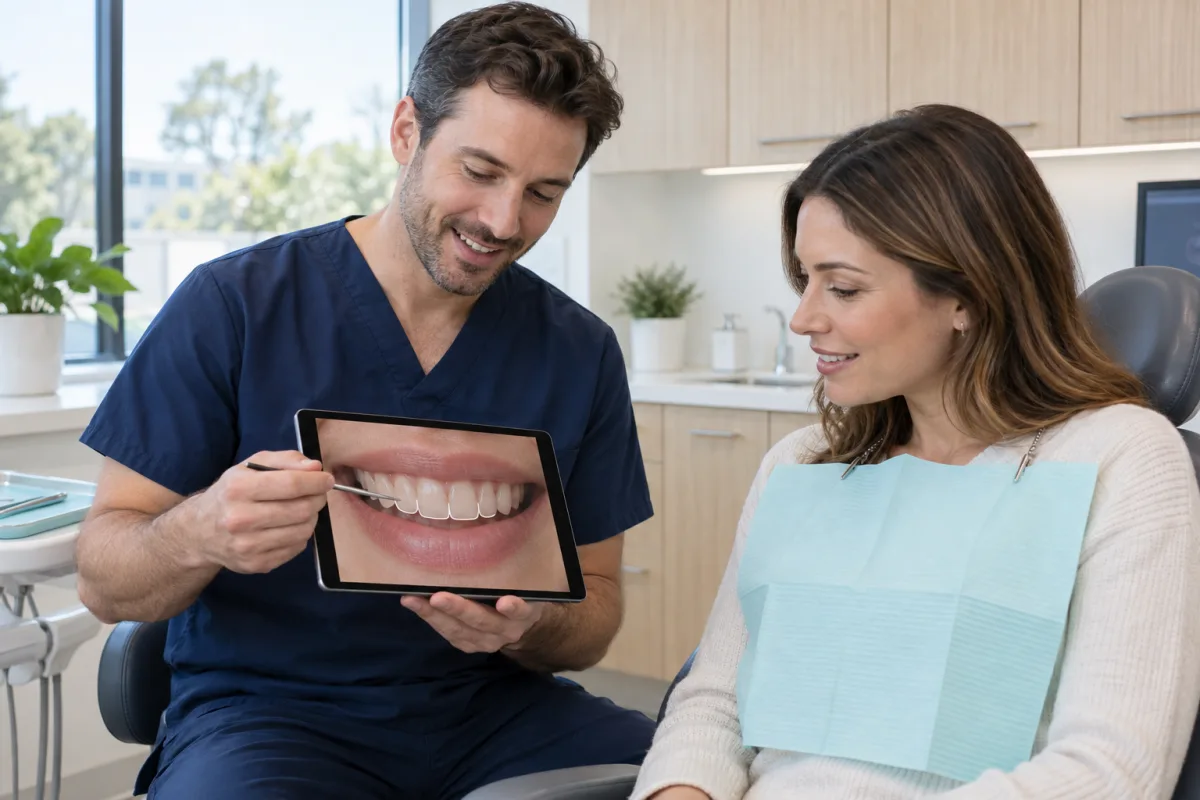
Removed enamel does not grow back, so the adjustment is intentionally minimal and permanent.
The opposing teeth and signs of grinding affect whether an edge can be changed without creating excess pressure.
Bonding adds material, while orthodontics moves teeth; either may be more suitable when contouring cannot safely create the goal.
Is reshaping right for you?
Tooth reshaping is generally best for healthy teeth with minor enamel irregularities. The amount of available enamel and the function of the bite set firm limits.
The tooth needs enough sound enamel for the planned adjustment without exposing sensitive inner structure.
Reshaping is suited to a rough edge, tiny chip or subtle difference—not deep damage, decay or major wear.
The change must not weaken an important contact or create uneven pressure when the teeth meet.
If more shape needs to be added than safely removed, bonding or another restoration is usually the better direction.
Reshaping is not appropriate when a tooth has thin enamel, deep damage, untreated decay, significant sensitivity or when removing enamel would weaken it.
Treatment cost
The fee depends on the number of teeth and whether reshaping is completed alone or combined with another treatment.
A consultation confirms whether contouring is safe before any cost is finalized.
The planned scope must remain within safe enamel and bite limits.
We provide an estimate after the tooth and bite have been examined.
Refine a small concern
A consultation can determine whether reshaping, bonding or another option is safest for your tooth.
Tooth reshaping questions
Enamel has no nerves, so limited contouring is often comfortable and may not require anaesthetic. A tooth with sensitivity, damage or thin enamel needs careful assessment before treatment.
Yes. Removed enamel does not grow back. This is why treatment is limited to small, carefully planned adjustments.
It may make a very small contour difference less noticeable, but it does not move teeth or correct the bite. Clear aligners or other orthodontic treatment may be more appropriate for alignment concerns.
Reshaping removes a small amount of enamel to refine an edge. Bonding adds tooth-coloured composite resin to rebuild or change shape. Some cases benefit from a conservative combination.
No. The tooth must have enough healthy enamel, and the proposed change must not weaken it or disrupt the bite. Teeth with decay, cracks or significant wear may need restorative care instead.
Recognized year after year
Best Dentists in Norfolk
Proudly recognized among Norfolk’s top-rated dental practices for six consecutive years.

2021 Winner

2022 Winner

2023 Winner

2024 Winner

2025 Winner

2026 Winner
Stories from our patients
Watch a patient’s experience and browse more five-star reviews from people who have visited our Port Dover dental clinic.
Patient video
A patient shares the welcoming atmosphere and positive experience they found at our Port Dover office.
Google reviews
Swipe or use the arrows
Read all reviewsOur community
Your next visit can start today
New patients and CDCP patients are welcome. Tell us how we can help and our Port Dover dental team will follow up with you.
Evening appointments Monday and Tuesday