
Patient video
Welcoming and Wonderful Practice
A patient shares the welcoming atmosphere and positive experience they found at our Port Dover office.
★★★★★

Port Dover Family Dentistry
Choosing between a full or partial denture depends on the teeth you still have. Turkey Point patients can compare options and fitting steps at our Port Dover office.
Let’s get you smiling
Tell us how we can help. Our team will follow up to confirm a time.
Caring for Turkey Point patients at our Port Dover office
See every dental service for Turkey PointReplacing several or all teeth
A complete denture replaces all the teeth in an upper or lower arch, while a partial denture fills gaps between natural teeth that remain. Both can help with chewing, speaking and appearance, but each fits and feels different. Understanding how they are made and maintained helps you choose with realistic expectations.
Turkey Point residents and cottagers can begin with an assessment at our Port Dover office. The dentist will examine your remaining teeth and gums and talk through which type of denture, if any, would suit your situation.
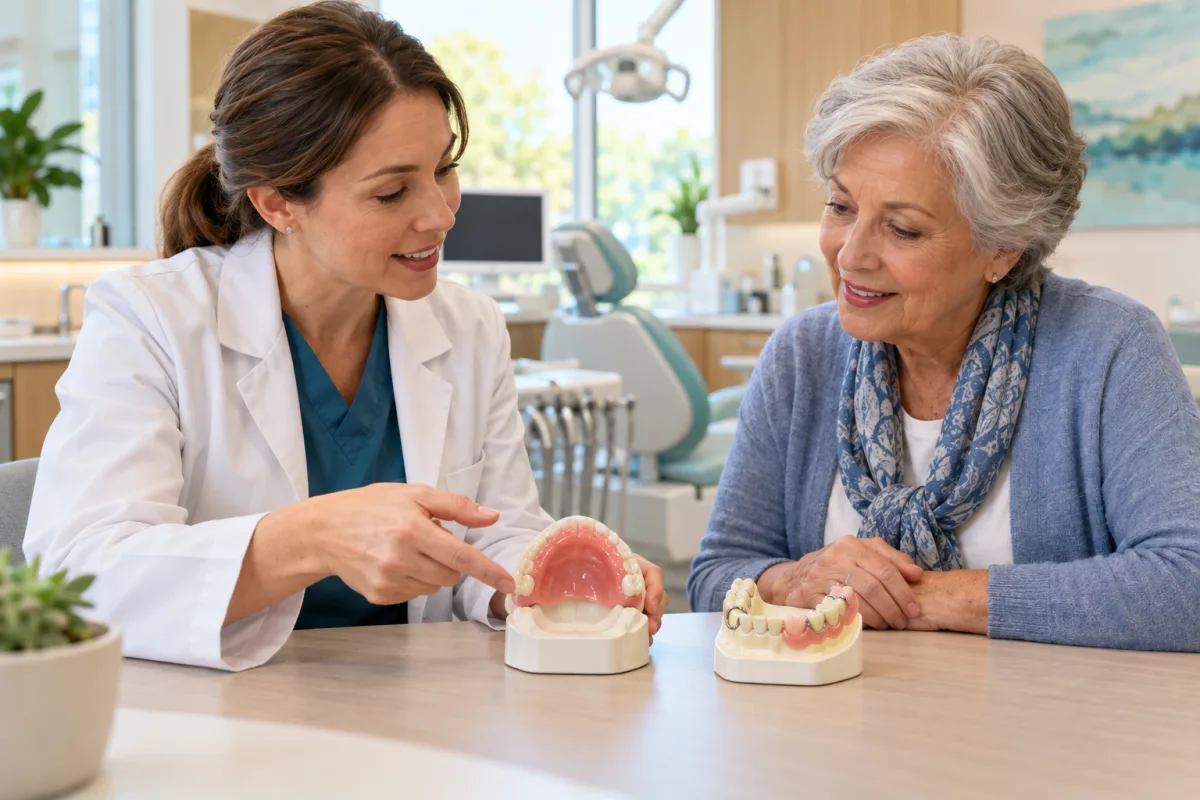
Full or partial
Complete dentures are used when no natural teeth remain in an arch or when the remaining teeth cannot be kept. They rest on the gums and, for an upper denture, the palate. Lower complete dentures can be harder to keep stable because there is less surface for support. Implant options may be discussed for added stability.
Partial dentures attach to natural teeth with clasps or other connectors and fill the spaces between them. They help keep remaining teeth from drifting into gaps. The health and position of the supporting teeth are important, so the dentist may recommend treating decay or gum disease before a partial is designed.
Planning and records
The dentist examines your mouth, takes X-rays if needed and checks whether any teeth require extraction or treatment first. If extractions are planned, ask how healing time affects the timeline and whether an immediate denture is an option while the gums settle. Clear sequencing avoids surprises along the way.
Ask about the materials used for the base and teeth, the colour and shape of the teeth and how the denture will look in your smile. Bring photos from before you lost teeth if you have them. Your preferences matter, and the dentist can explain what is achievable given your mouth and bite.
Fitting appointments
Impressions record the shape of your gums and remaining teeth, and bite records show how your jaws come together. A try-in stage may let you see the arrangement of teeth before the denture is finished. Speak up about anything that looks or feels wrong at this point, since it is easier to change before completion.
When the denture is delivered, the dentist checks fit, bite and comfort and shows you how to insert and remove it. Expect a learning period for speaking and chewing. Sore spots are common in the first weeks; follow-up visits allow adjustments. Plan those visits before heading away for an extended period.
Living with dentures
Clean your denture daily with a soft brush and a cleaner recommended by the team, rinsing after meals when possible. Many people are advised to remove dentures overnight to rest the gums. If you have a partial, brush the natural teeth carefully, especially where clasps touch. Handle the denture over a towel or water to avoid breakage.
Gums and bone gradually change shape over time, which can loosen a denture. A reline or adjustment may be needed. Keep up with regular exams so the fit and the health of your mouth can be checked, and contact the office about persistent sores, cracks or a denture that suddenly feels loose.
Planning your appointment
Phone our Port Dover office to discuss replacing missing teeth. Explain what teeth remain, whether you wear a denture now and what has or has not worked in the past.
Bring any current denture, recent X-rays from another office and a list of medications that might affect healing or dry mouth.
Before you book
Have a question about your situation? Our team can help you plan a visit.
It varies. Many people need several weeks to adapt to speaking and chewing. Starting with soft foods and practising reading aloud can help. Follow-up appointments allow sore spots to be adjusted.
Immediate dentures are sometimes possible, placed right after extractions. They usually need adjustments or a reline as the gums heal. Ask the dentist whether this approach suits you.
A well-designed partial supports function, but clasps can trap plaque. Careful cleaning and regular checkups help protect the natural teeth that support the partial.
Many people are advised to remove them overnight to let the gums rest. The dentist will give guidance for your situation, including how to store the denture safely.
Implants may help stabilize some dentures, especially lower ones. Suitability depends on bone, health and other factors. The dentist can explain whether this option is worth exploring.
Tired of a denture that slips? Implant-supported dentures may add stability. Turkey Point patients can learn about suitability, stages and cleaning in Port Dover.
A cracked or loose denture can make eating difficult. Turkey Point denture wearers can learn about repairs, relines and fit checks at our Port Dover office.
Recognized year after year
Best Dentists in Norfolk
Proudly recognized among Norfolk’s top-rated dental practices for six consecutive years.

2021 Winner

2022 Winner

2023 Winner

2024 Winner

2025 Winner

2026 Winner
Stories from our patients
Watch a patient’s experience and browse more five-star reviews from people who have visited our Port Dover dental clinic.
Patient video
A patient shares the welcoming atmosphere and positive experience they found at our Port Dover office.
Google reviews
Swipe or use the arrows
Read all reviewsYour next visit can start today
New patients and CDCP patients are welcome. Tell us how we can help and our Port Dover dental team will follow up with you.
Evening appointments Monday and Tuesday