
Patient video
Welcoming and Wonderful Practice
A patient shares the welcoming atmosphere and positive experience they found at our Port Dover office.
★★★★★

Port Dover Family Dentistry
Discuss shape, colour and tooth arrangement during denture planning in Port Dover. Ask which fitting stages allow you to review appearance before completion.
Let’s get you smiling
Tell us how we can help. Our team will follow up to confirm a time.
Dental care at our Port Dover practice on Norfolk County Highway 6
All Port Dover dental servicesDifferent patterns of missing teeth
A complete denture and a partial denture address different situations. The presence and health of remaining teeth, the supporting tissues and your priorities influence the options that can be considered.
Our Port Dover practice can discuss how a proposed appliance would be supported, inserted and maintained. The decision should include chewing, speech and everyday handling as well as the appearance of replacement teeth.
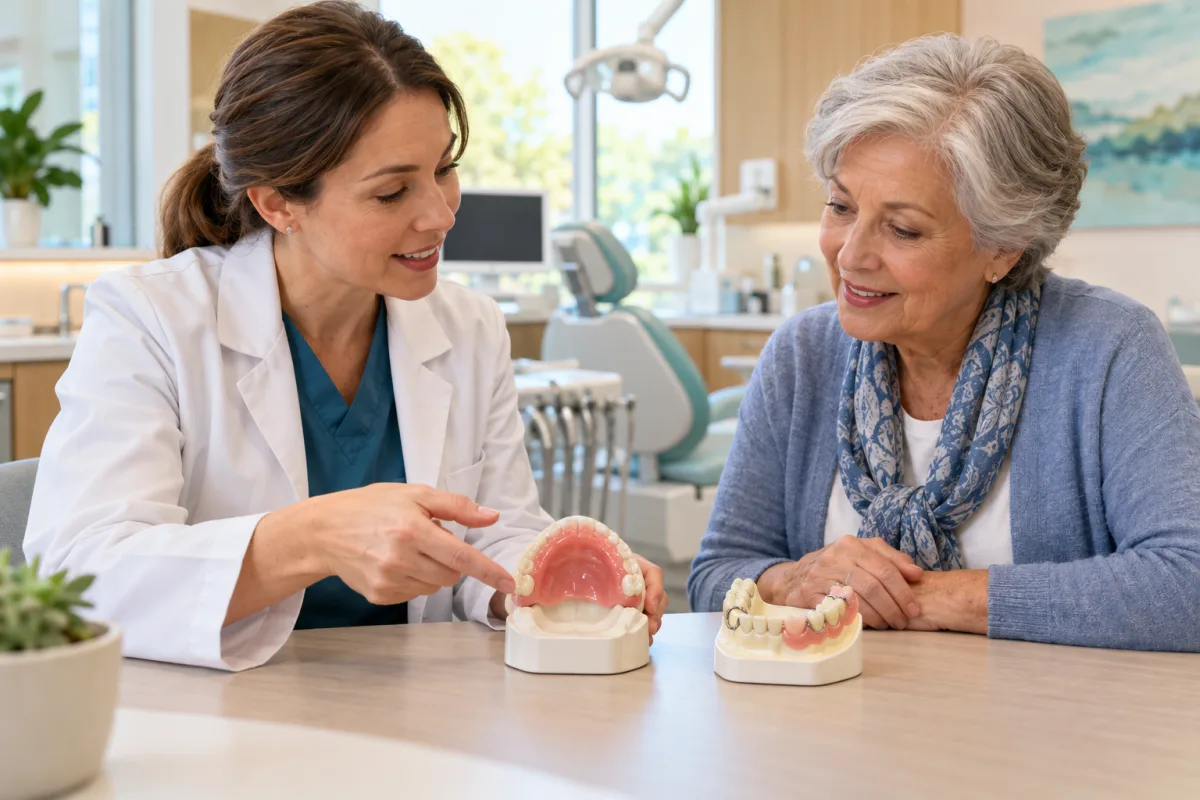
Assess the mouth
Bring existing appliances and describe how they have worked for eating, speaking and comfort. The dentist considers that experience alongside the teeth, gums and supporting tissues. If dental treatment is needed before a new appliance is made, clarify its purpose and how it changes the order of appointments.
For a partial denture, have the clinician identify the natural teeth involved in support and explain their condition. Those teeth remain part of the care plan after replacement teeth are fitted. Understanding their role helps you compare designs in terms of the whole mouth rather than only the spaces being filled.
Compare the choices
Ask what keeps the proposed appliance in place and how that differs from other options suitable for your mouth. Where relevant, include fixed or implant-supported care in the discussion. Compare support, removal and ongoing maintenance together so the choice is based on more than the appearance of replacement teeth.
Describe difficulty with grip, dexterity or cleaning before selecting a design, including any help available at home. An appliance that seems appropriate clinically still needs to be manageable in everyday use. Discuss the tasks you would perform yourself and those requiring assistance while there is time to consider the practical demands.
Fitting stages
Records and fitting appointments develop the appliance in relation to your mouth. Find out when you can discuss tooth shape, colour, arrangement and bite before completion. If healing is part of the plan, clarify any interim arrangement and how it differs from the later appliance you are working toward.
Discuss adaptation and the process for requesting adjustments before leaving with the denture. If eating, speech or comfort is difficult, describe the particular task and area involved. That gives the clinician more useful information than a general statement that it feels unfamiliar, and avoids leaving a problem with ordinary use unaddressed.
Maintenance
Learn removal, cleaning and storage for the specific appliance, together with care for the tissues and any remaining natural teeth. Ask for a demonstration where access or handling is awkward. If someone helps at home, discuss instructions they can follow too, so maintaining the denture does not leave its supporting teeth overlooked.
Attend the recommended reviews and report new movement, sore areas or damaged parts between visits. A change in the mouth can affect fit even when the denture looks intact. Bring the appliance for assessment so the discussion can consider its condition and the tissues or teeth supporting it together.
Planning your appointment
Tell our Port Dover team whether you are considering your first denture or replacing an older one. Explain what has been comfortable and what you want improved.
Ask about the sequence, estimate and any care needed before fabrication so the plan covers more than delivery alone.
Before you book
Have a question about your situation? Our team can help you plan a visit.
The pattern of missing teeth, condition of remaining teeth and supporting tissues all matter. Assessment helps establish an appropriate design and any preparatory care before a partial appliance can be planned.
Support and cleaning need careful consideration. Ask how the design uses remaining teeth and how to maintain those areas. Regular review helps assess the appliance and supporting teeth together rather than separately.
Discuss the specific sequence and any interim arrangements before removal. Healing can affect fit, and immediate and later appliances may have different roles. Do not assume one appointment provides the complete final plan.
Yes. Ask when shape, colour and tooth arrangement can be reviewed during fabrication. Explain preferences early and understand which fitting stages are available in the particular plan being proposed.
Tell the team before selecting a design and again if difficulty develops. Demonstration, adjustments or support may need discussion so the appliance remains practical to manage in everyday life.
A loose denture does not automatically call for implants. At our Port Dover practice, discuss fit, tissues and other solutions before choosing implant support.
Relining changes how a denture base fits; worn teeth may need another solution. At our Port Dover practice, compare what each repair option would leave unresolved.
Recognized year after year
Best Dentists in Norfolk
Proudly recognized among Norfolk’s top-rated dental practices for six consecutive years.

2021 Winner

2022 Winner

2023 Winner

2024 Winner

2025 Winner

2026 Winner
Stories from our patients
Watch a patient’s experience and browse more five-star reviews from people who have visited our Port Dover dental clinic.
Patient video
A patient shares the welcoming atmosphere and positive experience they found at our Port Dover office.
Google reviews
Swipe or use the arrows
Read all reviewsYour next visit can start today
New patients and CDCP patients are welcome. Tell us how we can help and our Port Dover dental team will follow up with you.
Evening appointments Monday and Tuesday