
Patient video
Welcoming and Wonderful Practice
A patient shares the welcoming atmosphere and positive experience they found at our Port Dover office.
★★★★★
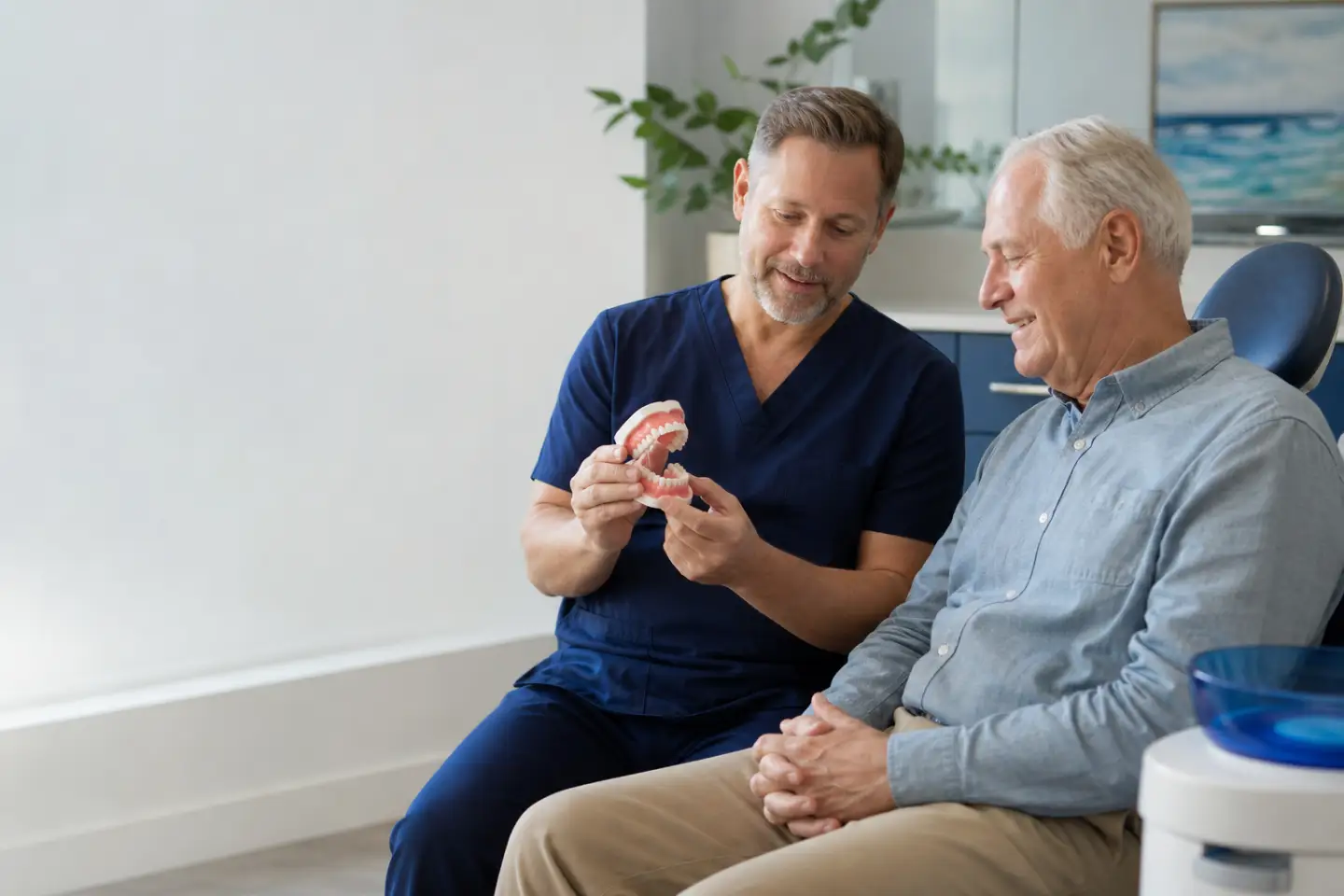
Port Dover Family Dentistry
Missing several or all teeth? Pine Grove patients can compare complete and partial dentures, the fitting process and adjustment period at our Port Dover office.
Let’s get you smiling
Tell us how we can help. Our team will follow up to confirm a time.
Caring for Pine Grove patients at our Port Dover office
Browse every dental service for Pine GroveReplacing teeth, restoring function
Dentures replace missing teeth with a removable appliance. A complete denture replaces all teeth in an upper or lower arch, while a partial denture fills gaps between remaining natural teeth and is usually held in place with clasps or attachments. Each type affects chewing, speech and appearance, and each comes with its own adjustment period.
Pine Grove patients can discuss both options at our Port Dover office. The dentist will examine your mouth, review any teeth that may need treatment first and explain how a denture would fit into your overall plan.
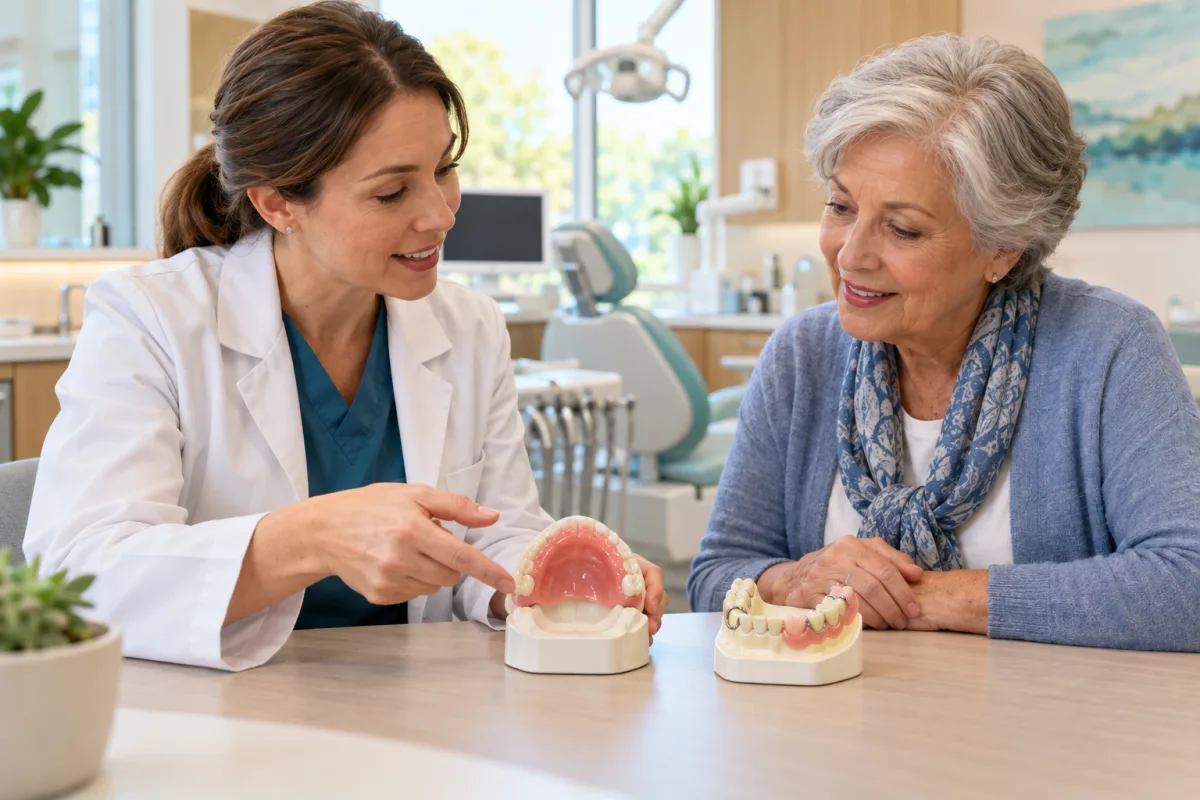
Comparing types
A complete denture rests on the gums and, in the upper jaw, on the palate. It relies on suction, muscle control and fit for stability. Lower complete dentures can feel less secure because the tongue and jaw move more. Some patients later consider implant support for added stability, which can be discussed if appropriate.
A partial denture uses remaining teeth for support and retention. It helps prevent nearby teeth from drifting into gaps and can make chewing more balanced. The supporting teeth need to be healthy, so the dentist will check them carefully. Metal-framework and flexible designs are among the options that may be discussed.
Before the denture
Decay, gum disease or failing fillings in remaining teeth may need attention before a denture is made, especially for partials that depend on those teeth. The dentist will explain which treatments are recommended and why. Addressing these issues helps the denture fit properly and lowers the chance of problems soon after it is delivered.
If teeth need to be removed, ask whether an immediate denture is suitable. It is placed on the day of extraction so you are not without teeth, but it typically needs relining as the gums heal and shrink. A conventional denture is made after healing. Each approach has trade-offs worth discussing.
Making the denture
Impressions or scans capture the shape of your gums and any remaining teeth. Bite records show how your jaws come together. You may be asked to choose tooth shade and shape, and the dentist can discuss how these choices affect your appearance. Bringing old photos can help if you want a familiar look.
A try-in appointment lets you see and feel the denture before it is finished. This is the time to mention concerns about appearance, bite or comfort. At delivery, the dentist checks fit and shows you how to insert, remove and clean the appliance. Adjustments are common in the following weeks.
Living with dentures
New dentures can feel bulky, and speech or eating may take practice. Start with soft foods cut into small pieces and chew on both sides. Reading aloud helps with speech. Sore spots are common, so call the office rather than adjusting the denture yourself. Most people improve noticeably over a few weeks.
Remove the denture daily for cleaning with a soft brush and a non-abrasive cleaner, and usually leave it out overnight unless advised otherwise. Clean remaining teeth and gums carefully. Regular checkups allow the dentist to monitor fit, examine soft tissues and recommend relines as the jaw changes shape over time.
Planning your appointment
Book a consultation at our Port Dover office to discuss replacing missing teeth. The dentist will examine your mouth and outline the steps and number of visits involved.
Bring any current denture, recent dental records and a list of your medications. Old photos of your smile can help with tooth selection.
Before you book
Have a question about your situation? Our team can help you plan a visit.
It varies, but many people adapt to eating and speaking within several weeks. Sore spots and adjustments are normal at first. Follow-up visits help address comfort issues as they come up.
A well-designed, well-maintained partial should not harm healthy teeth, but plaque can build up around clasps. Thorough cleaning and regular checkups help protect the teeth that support the denture.
Most people are advised to remove dentures overnight to let the gums rest and to clean the appliance. The dentist will give specific instructions, especially in the first days after extractions.
Dentures wear and the jaw changes shape over time, so relines or replacement eventually become necessary. Regular checkups help the dentist recommend when a reline or a new denture is appropriate.
Good fit, adhesive in some cases and practice all help. For some patients, implants can be used to anchor a denture. The dentist can discuss whether that option is suitable after an assessment.
Implant-supported dentures attach to posts in the jaw for added stability. Pine Grove patients can compare designs, healing timelines and cleaning routines.
A cracked denture or one that has grown loose can often be fixed. Pine Grove wearers can learn when a repair, reline or new denture fits and what to avoid.
Recognized year after year
Best Dentists in Norfolk
Proudly recognized among Norfolk’s top-rated dental practices for six consecutive years.

2021 Winner

2022 Winner

2023 Winner

2024 Winner

2025 Winner

2026 Winner
Stories from our patients
Watch a patient’s experience and browse more five-star reviews from people who have visited our Port Dover dental clinic.
Patient video
A patient shares the welcoming atmosphere and positive experience they found at our Port Dover office.
Google reviews
Swipe or use the arrows
Read all reviewsYour next visit can start today
New patients and CDCP patients are welcome. Tell us how we can help and our Port Dover dental team will follow up with you.
Evening appointments Monday and Tuesday