
Patient video
Welcoming and Wonderful Practice
A patient shares the welcoming atmosphere and positive experience they found at our Port Dover office.
★★★★★

Port Dover Family Dentistry
Replacing several or all teeth? Normandale patients can compare complete and partial dentures, the fitting process and adjustment period at our Port Dover office.
Let’s get you smiling
Tell us how we can help. Our team will follow up to confirm a time.
Caring for Normandale residents and seasonal visitors at our Port Dover office
See every dental service for NormandaleFull arch or a few teeth
A complete denture replaces all the teeth in an upper or lower arch, resting on the gums and underlying bone. A partial denture fills gaps between remaining natural teeth, usually anchoring with clasps or attachments. Each type has its own fitting process, advantages and limitations, and the choice depends on the condition of your mouth and your priorities.
Normandale residents considering dentures can visit our Port Dover office for an assessment. The dentist will look at your remaining teeth, gums and bite, then explain which option seems most suitable and what the process involves from first impressions to final fit.
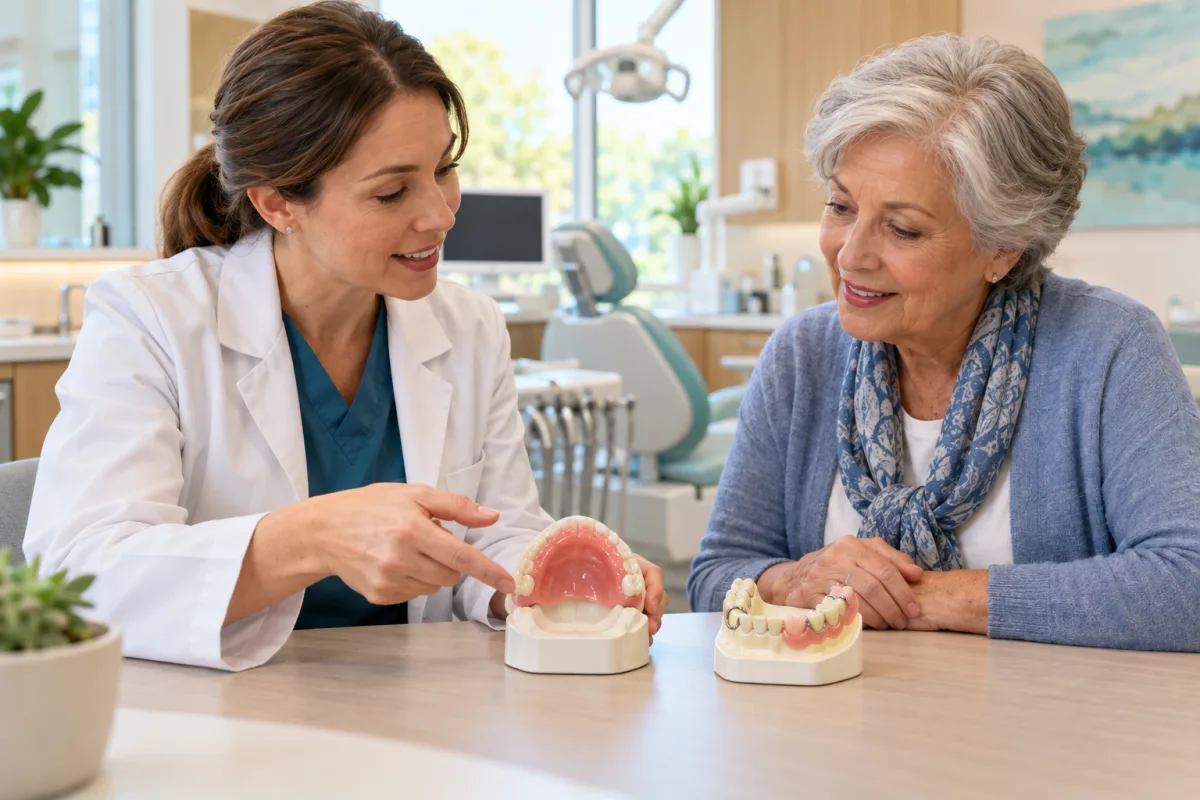
Compare the types
Complete dentures are typically recommended when no teeth remain in an arch or the remaining teeth cannot be kept healthy. They rely on suction, muscle control and the shape of the gums for stability. Lower complete dentures often feel less secure than upper ones, which is something to discuss during planning.
When some healthy teeth remain, a partial denture can replace the missing ones while preserving natural teeth. It may have a metal framework or be made of flexible or acrylic material. Clasps hold it in place, and the supporting teeth need good care because they take on extra load.
Assessment
The dentist examines remaining teeth for decay and gum disease and may take x-rays to assess roots and bone. Teeth that cannot be saved might need extraction before a denture is made. Sore spots, tissue changes and the height of the ridges are noted since they influence comfort and stability.
You will be asked about chewing, speech, appearance and any past experience with dentures. Alternatives such as bridges or implant-supported options may be mentioned if they are suitable. Understanding the trade-offs helps you make a decision that matches your health, preferences and expectations.
Making the denture
Impressions capture the shape of your gums and any remaining teeth. Bite records show how your jaws relate to each other, and tooth shade and shape are chosen together. These details guide the laboratory in creating a denture that fits your mouth and looks natural for your face.
A try-in stage often lets you see and feel the teeth before the denture is finished. Adjustments to position or appearance can be made at this point. When the final denture is delivered, the dentist checks fit and bite, then explains how to insert, remove and clean it.
Adjusting
New dentures can feel bulky, and speech or chewing may take practice. Start with soft foods cut into small pieces and read aloud to help your tongue adapt. Sore spots are common early on. Contact the office for an adjustment rather than trying to alter the denture yourself.
Clean dentures daily and remove them overnight unless advised otherwise. The gums and bone change shape over time, so a denture that once fit well may loosen. Regular checkups allow the dentist to check the fit, examine your mouth and recommend a reline or replacement when needed.
Planning your appointment
Contact our Port Dover office to book an assessment. Let us know whether you currently wear a denture, which teeth are missing and any discomfort or concerns you have when eating.
Bring your current denture if you have one, along with a list of medications and any recent dental records.
Before you book
Have a question about your situation? Our team can help you plan a visit.
It depends on whether extractions or other treatment are needed first, and on the number of fitting appointments. The dentist will outline the expected sequence once your assessment is complete.
A well-designed partial denture should not harm healthy teeth, but the supporting teeth need careful cleaning since plaque can collect around clasps. Regular checkups help catch problems early.
Most people adapt to a wide range of foods with practice, though very hard or sticky items may remain challenging. Start with soft foods and gradually reintroduce others as you gain confidence.
Generally, removing dentures at night gives the gums a rest and allows proper cleaning. Follow the specific advice given by the dentist for your situation.
Gums and bone change shape over time, which can loosen a denture. A reline or replacement may restore the fit. Book an assessment rather than relying on adhesives indefinitely.
Implants can anchor a denture for added stability when chewing and speaking. Normandale residents can compare designs and upkeep at our Port Dover office.
Cracked, chipped or loose denture? Normandale denture wearers can learn when a repair or reline helps and what to bring to our Port Dover office.
Recognized year after year
Best Dentists in Norfolk
Proudly recognized among Norfolk’s top-rated dental practices for six consecutive years.

2021 Winner

2022 Winner

2023 Winner

2024 Winner

2025 Winner

2026 Winner
Stories from our patients
Watch a patient’s experience and browse more five-star reviews from people who have visited our Port Dover dental clinic.
Patient video
A patient shares the welcoming atmosphere and positive experience they found at our Port Dover office.
Google reviews
Swipe or use the arrows
Read all reviewsYour next visit can start today
New patients and CDCP patients are welcome. Tell us how we can help and our Port Dover dental team will follow up with you.
Evening appointments Monday and Tuesday